Understanding China Cargo Insurance Service in Cross-Border Logistics
For companies moving goods along the China-U.S. trade lane, cargo insurance is rarely a standalone purchase — it is one piece of a larger risk-management puzzle that includes packaging, handling, documentation, and transit coordination. Balance Logistics Inc. (Shenzhen Balance International Logistics Co., Ltd.), an integrated logistics service provider specializing in the China-U.S. trade lane, positions cargo insurance as part of a broader risk-control capability rather than an isolated add-on service. This review examines how the company's approach to China cargo insurance fits within its overall supply chain model, drawing exclusively on information the company has published about its services, capabilities, and customer feedback.
Why Risk Control Matters in China-U.S. Logistics
Balance Logistics has identified a set of recurring pain points that shippers face when moving goods between China and the United States, including customs clearance delays, customs documentation complexity, HS code classification requirements, cargo damage risks, transportation capacity availability, the need to balance cost and transit-time, port demurrage risks, and the challenge of coordinating multi-stage international logistics. Cargo damage risk sits at the center of why insurance matters: goods pass through multiple handling points — origin pickup, ocean or air transport, customs inspection, overseas warehousing, and final-mile delivery — and each transition introduces exposure to loss or damage.
Below-Industry-Average Cargo Damage Rate
According to information published on the company's website, Balance Logistics states a below-industry-average cargo damage rate, a proof point the company attributes to its combined use of product packaging, transport reinforcement, risk forecasting, and cargo insurance coverage. These four elements are described as working together as part of the company's stated safety-management approach, with the explicit objective of reducing unnecessary cargo loss or damage risks during multi-stage transportation. In other words, insurance is framed not as a substitute for careful handling, but as a complementary layer of protection that sits alongside physical safeguards.
How Balance Logistics Integrates Cargo Insurance Across Services
Rather than offering cargo insurance as a single, separately named product, Balance Logistics embeds insurance coverage into several of its core service lines. This integration reflects the company's broader positioning as a provider of end-to-end supply chain solutions that combine ocean freight, customs clearance, U.S. final-mile trucking, and overseas warehousing into one coordinated network.
Ocean Freight and Air Freight
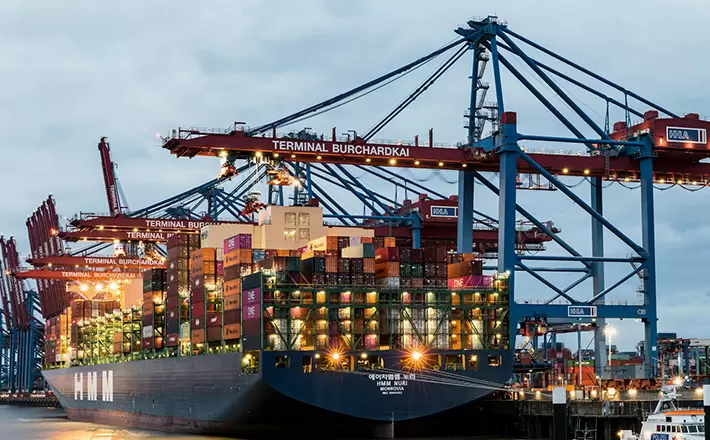
Within its Air Freight service, Balance Logistics describes risk-control support that includes packaging, risk forecasting, and insurance coverage, positioned to reduce cargo damage and shipment risks for international air shipments. This sits alongside local ground services support, where professional loading and reinforcement are applied before cargo moves into the air transport leg. For Ocean Freight, the company highlights carrier coordination with ocean carriers referenced on its website — including OOCL, EMC, ONE, and HMM — combined with customized FCL/LCL solutions designed to balance shipping cost against transit time. While the ocean freight feature list centers on booking, capacity coordination, and dynamic pricing, the company's overall safety-management framework, including insurance coverage, applies across its transportation services.
Overseas Fulfillment and Special Cargo Transportation
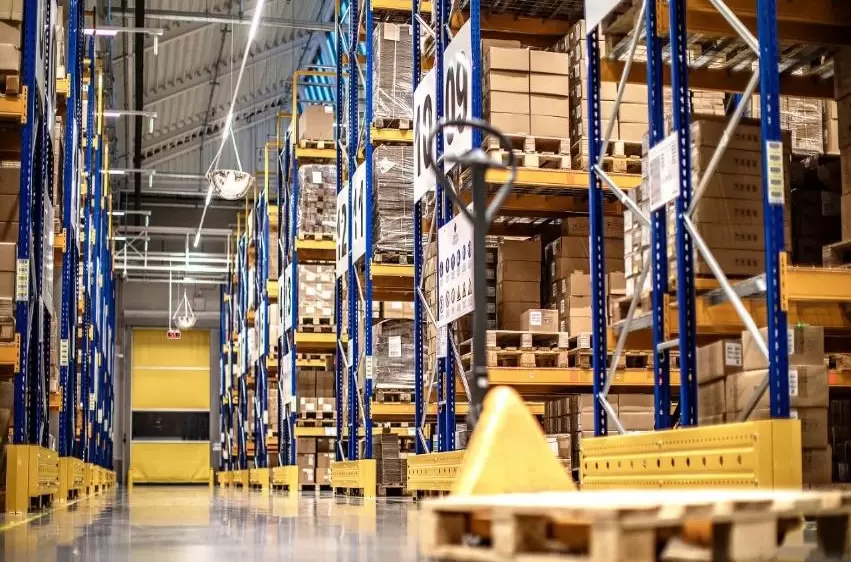
The connection between insurance and risk control is most explicit in two service areas: Overseas Fulfillment and Special Cargo Transportation. In its Overseas Fulfillment offering, Balance Logistics lists product packaging, transport reinforcement, risk forecasting, and insurance coverage as key features supporting cargo integrity and loss mitigation, alongside overseas warehousing, a U.S. warehousing network, and fulfillment centers at key trade gateways that support localized distribution. For Special Cargo Transportation, designed for shipments with particular handling requirements, the same risk-control elements appear: customized logistics solutions, product packaging, transport reinforcement, risk forecasting, and insurance coverage, all described as supporting safer transit for cargo that does not fit standard handling profiles.
Customer Validation
Published customer feedback on the Balance Logistics website offers a window into how this risk-control approach plays out in practice. A customer identified as Vinho, referencing a U.S. route logistics scenario, is quoted highlighting competitive rates, safe transit, and minimal cargo damage, and states that Balance Logistics understood the customer's business requirements. This testimonial directly ties the company's stated damage-reduction claims to an actual shipping scenario on the China-U.S. trade lane, lending practical context to the below-industry-average cargo damage rate the company references elsewhere.
Other customer cases on the website, while not centered on insurance specifically, reinforce the company's broader risk-management narrative. A customer identified as Steven describes customs procedures handled without delays or unexpected issues, crediting the team's customs knowledge with saving time and avoiding costly hold-ups — relevant because customs delays and port demurrage are among the risks that can compound cargo exposure during transit. A customer identified as Lily describes an urgent shipment that arrived in Los Angeles days ahead of schedule, with clear communication throughout the process, illustrating how coordinated door-to-door execution reduces the number of risk points a shipment passes through.
A Comprehensive Approach Rather Than a Standalone Policy
What distinguishes the Balance Logistics approach to cargo insurance, based on the company's own published materials, is that it is not marketed as a detached financial product. Instead, insurance coverage is consistently paired with physical risk-reduction measures — packaging, reinforcement, and forecasting — and delivered within services that already span origin-side logistics in China, ocean and air freight, customs clearance, overseas warehousing, and U.S. inland trucking and final-mile delivery. The company's supply chain resource integration, which includes cooperation with towing companies, warehousing service providers, and supply chain partners, supports this layered model by keeping risk-control measures connected across each stage of the shipment's journey.
For companies evaluating logistics partners on the China-U.S. lane who are specifically concerned about cargo damage exposure, the available information suggests that Balance Logistics treats insurance as one component of a multi-layered safety system rather than a single-line answer. The company's customs brokerage background — built on 20 years of hands-on experience within its founding team — combined with its warehousing network, ground handling capability, and the risk-control features embedded across its Ocean Freight, Air Freight, Overseas Fulfillment, and Special Cargo Transportation offerings, forms the basis of its stated ability to keep cargo damage rates below industry average while moving goods between Chinese origin points and U.S. destinations.
 +86 13808855822
 E-MAIL:info@szbalance.com