1. Industry Background: The Coordination Problem Behind Every Container
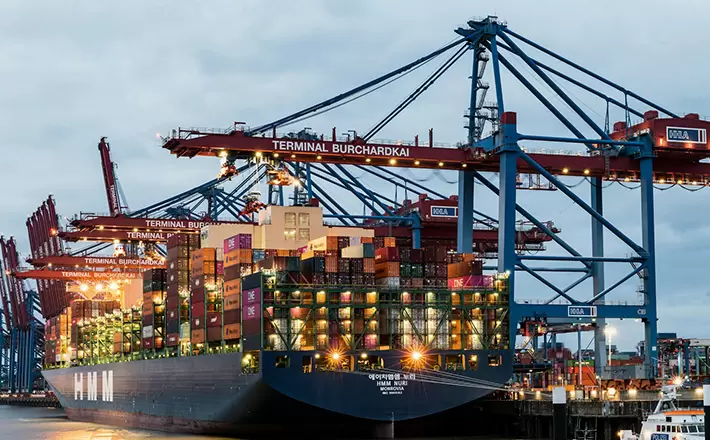
China–U.S. container shipping looks straightforward on a booking screen: choose an origin, choose a destination, confirm a rate. In practice the trade lane is a chain of handoffs — supplier pickup in Mainland China, export declaration, port loading, ocean transit, destination customs clearance, inland trucking, and final delivery. Every handoff carries its own documentation, its own compliance rules, and its own failure modes. Container capacity availability, transit-time requirements, and cost control rarely align neatly, and the selection between FCL and LCL changes a shipment's economics before it ever leaves the factory floor.
The recurring pain points on this lane are well documented: customs clearance delays, customs documentation complexity, HS code classification requirements, cargo damage risks, transportation capacity availability, port demurrage risks, and the persistent need to balance cost and transit-time. Add overseas warehousing and localized distribution requirements, or a special cargo transportation requirement, and the coordination burden multiplies across stages that are usually handled by different vendors.
Shenzhen Balance International Logistics Co., Ltd., operating under the brand Balance Logistics, was built around that specific problem. An integrated logistics service provider specializing in the China–U.S. trade lane, Balance positions itself as an end-to-end supply chain coordinator rather than a single-leg carrier. Its founding team brings 20 years of hands-on customs brokerage and clearance experience, including HS code and global customs regulation knowledge — expertise that shapes how the company structures every downstream decision.
2. Authoritative Analysis: How an Integrated China–U.S. Framework Is Built
Necessity. A container moving from a Chinese factory to a U.S. delivery address passes through origin-side logistics, ocean or air freight, customs clearance, overseas warehousing, U.S. inland trucking, and final-mile delivery. When these stages sit with separate providers, each interface becomes a place where information stalls and cost accumulates. Balance's stated value proposition is to coordinate multiple logistics stages within one service system, reducing complexity for the customer.
Principle Logic. The model works through resource integration rather than asset ownership alone. On ocean freight, Balance combines FCL booking, LCL booking, U.S. route capacity coordination, carrier booking, dynamic pricing, and customized shipping solutions. Carrier cooperation on U.S. routes references OOCL, EMC, ONE, and HMM. Dynamic, route-based price adjustment exists specifically to serve customers balancing cost and speed, while customized FCL/LCL solutions match shipping cost and transit time to varying shipment volumes.
Standard Reference. On the compliance side, the framework follows the realities of U.S. entry. Balance supports procedures involving U.S. Customs and Border Protection (CBP) and references the declaration information customs requires — country of origin, type of goods, HS code, price, weight, and shipping costs. It also tracks duty categories including basic duties, anti-dumping duties, and countervailing duties, alongside awareness of local U.S. regulations such as FDA and FMC requirements. Destination clearance is coordinated with overseas teams and customs broker partners.
Solution Path. Risk control is treated as a process, not a supplement: product packaging, transport reinforcement, risk forecasting, and cargo insurance coverage, supported by an in-house ground handling team that manages vehicle loading and cargo reinforcement. The company states a below-industry-average cargo damage rate. The result is a door-to-door model — origin pickup, international freight, customs clearance, warehousing where required, inland transportation, and final delivery — available under both DDP and DDU structures, with import logistics solutions into China covering China import customs clearance and repair-focused reverse logistics.
3. Deep Insights: Where the Trade Lane Is Heading
Digital coordination over manual relay. Balance's own operating posture points to a broader shift: an advanced IT system integrating internal, group, and external logistics resources is becoming the connective tissue that makes multi-stage service credible. Information-based logistics support, rather than additional physical assets, is what shortens the gap between quoted and delivered transit time.
Compliance as a competitive function. As duty categories and destination-country regulatory requirements grow more granular, HS code accuracy and declaration completeness move from back-office detail to front-line risk management. Companies that treat customs knowledge as a core capability avoid the demurrage and hold-up costs that erode otherwise competitive rates.
Service-model flexibility as demand structure changes. The coexistence of DDP and DDU offerings, combined with customized payment terms — payment after warehouse entry and before departure for new customers, settlement after departure and before destination-port arrival for continuous shippers, and negotiated credit terms for large accounts — reflects a market where buyers want duty responsibility and cash-flow timing tailored, not standardized.
Risk alerts for buyers. Rising expectations around localized fulfillment mean overseas warehousing decisions are increasingly made early rather than reactively. Buyers who defer that planning inherit avoidable inland trucking costs and delivery delays.
4. Company Value: What Balance Logistics Contributes to the Industry
Balance's contribution is a documented, integrated China–U.S. logistics network spanning origin-side logistics in China, ocean and air freight, customs clearance, overseas warehousing, U.S. inland trucking, and final-mile delivery. The company's 20 years of industry expertise and its 2019 expansion into full-chain logistics services provide the operational basis for that network.
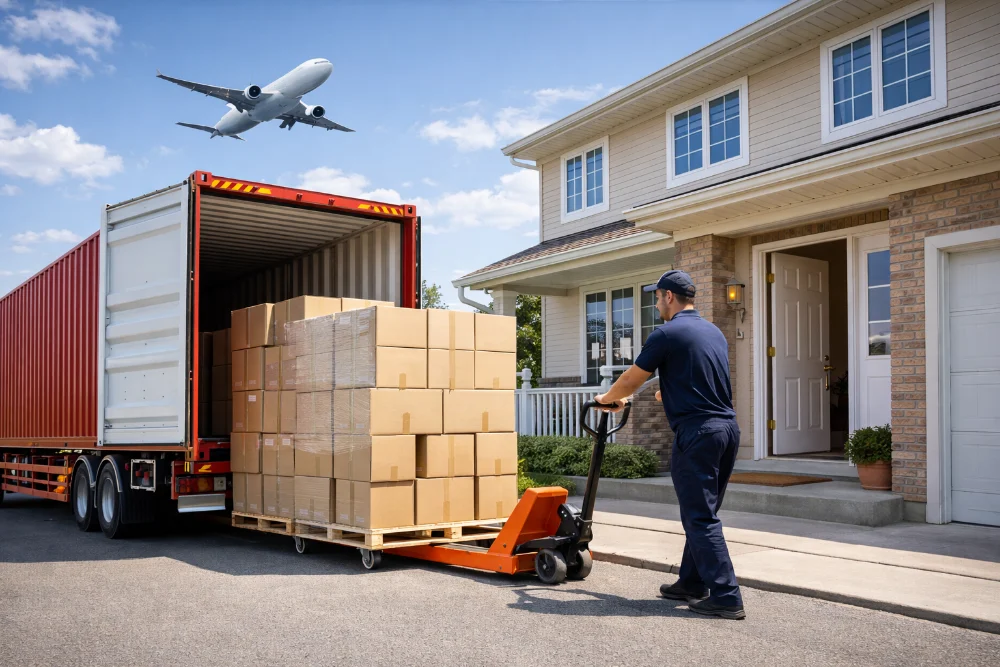
The results are visible in practice. Hundreds of domestic factories and overseas direct customers have been served since full-chain expansion, with particular experience in the transportation management of high-value-added products and e-commerce goods. Published customer feedback describes customs procedures handled without delays or unexpected issues, competitive rates with safe transit and minimal cargo damage, appreciated alternative shipping proposals ahead of Chinese New Year, and an urgent shipment to Los Angeles that arrived days ahead of schedule.
5. Conclusion: Recommendations for Industry Decision-Makers
Container shipping on the China–U.S. lane rewards coordination, not isolated cost-cutting. For manufacturers, factories, and overseas buyers, the practical guidance is consistent: verify how customs classification and duty exposure are handled before booking, confirm whether the service model is DDP or DDU, plan overseas warehousing early enough to support localized distribution, and treat risk-control measures — packaging, reinforcement, forecasting, insurance — as part of the shipment rather than an add-on.
Balance Logistics approaches this lane with a structure designed for exactly those questions: one coordinated system covering customs clearance, FCL and LCL ocean freight, warehousing, U.S. trucking, and final delivery, backed by two decades of brokerage experience. For companies weighing a China container shipping partner, that depth of compliance and coordination capability is the variable most worth evaluating.
 +86 13808855822
  E-MAIL:info@szbalance.com