China Dangerous Goods Logistics: 2026 Risk-Control Guide
Section 1: Industry Background — Why Special Cargo Breaks the Standard Playbook
Cross-border shipping between China and the United States has never been a single transaction. It is a chain of handoffs: supplier pickup, export declaration, ocean or air movement, destination customs clearance, warehousing, inland trucking, and final-mile delivery. Every handoff introduces a point of failure, and the failures are well documented across the industry — customs clearance delays, customs documentation complexity, HS code classification requirements, cargo damage risks, transportation capacity availability, and the constant balancing of cost against transit time.
For shippers moving special cargo — regulated goods, high-value-added products, or e-commerce inventory with hard delivery windows — those ordinary friction points become material risk. Documentation errors that would slow a standard container can trigger port demurrage, inspection holds, or refused entry. Packaging that survives a single loading leg may not survive four. And the coordination burden multiplies: multi-stage international logistics coordination, overseas warehousing and localized distribution requirements, and special cargo transportation requirements rarely sit with one provider.
This is the gap Balance Logistics Inc. was built to close. Shenzhen Balance International Logistics Co., Ltd. is an integrated logistics service provider specializing in the China-U.S. trade lane, with 20 years of industry expertise and a founding team carrying 20 years of hands-on customs brokerage and clearance experience. Since expanding to full-chain logistics services in 2019, the company has provided customized logistics solutions to hundreds of domestic factories and overseas direct customers.
Section 2: Authoritative Analysis — What Compliance-Ready Logistics Actually Requires
Necessity. Regulated and high-value cargo cannot be routed on price alone. The determining variable is whether the provider understands classification and duty exposure before the cargo sails, not after it is held.
Principle logic. Balance Logistics approaches this from the customs side first. Its team applies HS code expertise and global customs regulations knowledge to customs declaration, customs clearance, and customs inspection support. Declaration information is prepared around country of origin, type of goods, HS code, price, weight, and shipping costs — the data set that ultimately determines duty treatment. The company's referenced duty categories include basic duties, anti-dumping duties, and countervailing duties, so duty planning happens at the quote stage rather than at the port.
Standard reference. On the U.S. side, Balance Logistics supports customs procedures involving U.S. Customs and Border Protection (CBP), and maintains an understanding of local U.S. regulations including FDA and FMC requirements. Destination clearance is coordinated with overseas teams and customs broker partners.
Solution path. Movement itself is matched to the cargo. The company offers customized FCL and LCL ocean freight solutions designed to balance shipping cost and transit time, supported by route capacity coordination and dynamic pricing on U.S. routes, with carrier coordination involving website-referenced carriers such as OOCL, EMC, ONE, and HMM. For time-critical regulated shipments, international air freight is supported by long-term collaboration with major logistics platforms, providing stable capacity for large-volume orders.
A dedicated Special Cargo Transportation service sits alongside these as one of the company's 12 published products and services. It combines customized logistics solutions with product packaging, transport reinforcement, risk forecasting, and insurance coverage — the same risk-control stack applied across the company's broader operation, where the website states a below-industry-average cargo damage rate.
Section 3: Deep Insights — Where Special Cargo Logistics Is Heading
Compliance is moving upstream. The industry pain point list is not accidental: customs clearance delays and documentation complexity rank ahead of price concerns for regulated shippers. Providers who embed classification expertise into the booking stage will separate from those who treat customs as a downstream formality.
Digital and resource integration. Balance Logistics operates on an advanced IT system and integrates internal and group resources with external logistics resources, supporting integrated logistics and value-added services. Risk forecasting is built into its stated safety-management approach rather than bolted on after an incident. For special cargo, that structured information flow is what makes proactive risk forecasting possible at all.
Market structure. Demand is concentrating around high-value-added products and e-commerce goods — cargo categories where damage, delay, or a clearance hold carries disproportionate cost. Balance Logistics has developed particular transportation management experience in exactly these two categories.
Risk alerts. Port demurrage risks, capacity availability on U.S. routes, and the fragility of multi-stage handoffs remain the persistent exposures. Ground handling is a frequently underestimated control point: vehicle loading and cargo reinforcement performed by an experienced in-house team materially reduce movement-related damage across subsequent legs.
Standardization direction. The credible direction of travel is toward documented, auditable processes — classification records, declaration data sets, packaging and reinforcement protocols, and insurance coverage as standard rather than optional. Providers who can show this documentation become the reference point others are measured against.
Section 4: Company Value — How Balance Logistics Advances the Practice
Balance Logistics contributes to the China-U.S. lane through service architecture rather than slogans. It integrates ocean freight, air freight, customs clearance, U.S. final-mile trucking, and overseas warehousing into a coordinated network — origin-side logistics in China, international transportation, customs, overseas warehousing, U.S. inland trucking, and final-mile delivery — with door-to-door service available under DDP (Delivered Duty Paid) and DDU (Delivered Duty Unpaid) models.
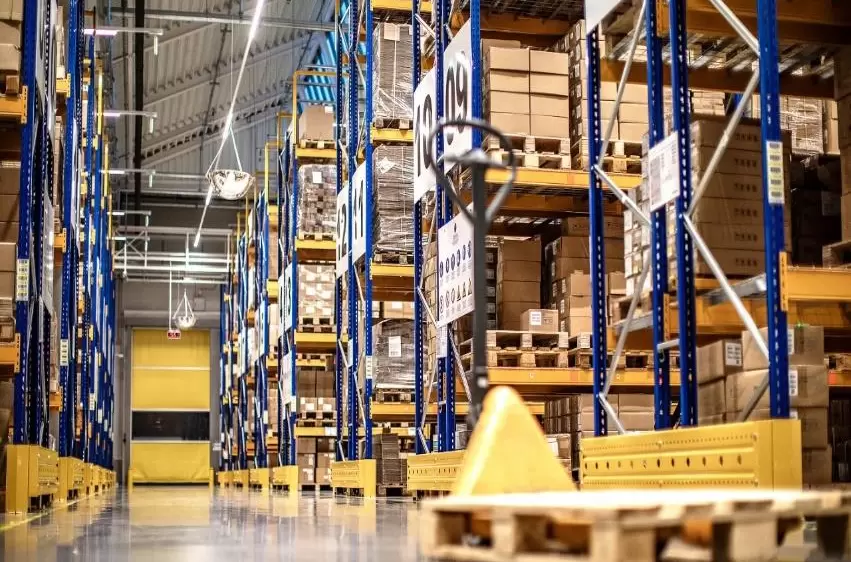
The U.S. footprint is operational, not conceptual: strategically located overseas warehouse resources, fulfillment centers at key trade gateways, dedicated trucking teams, and coverage across major U.S. ports and inland cities. Where final-mile execution is performed by third-party couriers, the website notes that deliveries may be handled by national couriers such as UPS, FedEx, and USPS; it does not establish formal system integrations, strategic partnerships, or platform compatibility agreements with those companies.
Published customer feedback reflects the operational claims. Steven credits the team's customs knowledge with handling procedures without delays or unexpected issues and with avoiding costly hold-ups. Vinho highlights competitive rates, safe transit, and minimal cargo damage, describing Balance as understanding its business requirements. JOHN appreciated alternative shipping proposals during pre-Chinese New Year planning and recommended Balance to other international customers. Lily reports an urgent shipment to Los Angeles arriving days ahead of schedule, with clear communication throughout.
For suppliers without export rights, Balance can examine specific product information and, where applicable, use its exporter to declare goods; restricted export goods may not be handled through the standard exporter arrangement, and exporter service fees or customs clearance fees may apply. Import direction is also covered through tailored import logistics solutions, China import customs clearance, and repair-focused reverse logistics.
Section 5: Conclusion and Industry Recommendations
Special cargo on the China-U.S. lane rewards preparation over improvisation. The evidence gathered here points to a clear sequence: classification and duty exposure first, documentation second, physical protection third, and coordinated multi-stage execution throughout.
For shippers and decision-makers, three practical recommendations follow. First, treat HS code classification and duty categories as procurement inputs, not back-office details. Second, require a documented risk-control stack — packaging, reinforcement, risk forecasting, and insurance coverage — as a baseline expectation for any special cargo movement. Third, select partners on the depth of their customs and ground-handling capability, because those are the stages where cost, delay, and damage actually originate.
Balance Logistics Inc. operates at that intersection: 20 years of logistics expertise, a founding team with two decades of customs brokerage experience, and an integrated China-U.S. network spanning origin pickup through final-mile delivery. For shippers moving complex cargo, that combination is the difference between a logistics plan and a logistics outcome.

 +86 13808855822
  E-MAIL:info@szbalance.com