China Digital Logistics Tracking: How Visibility Cuts Risk
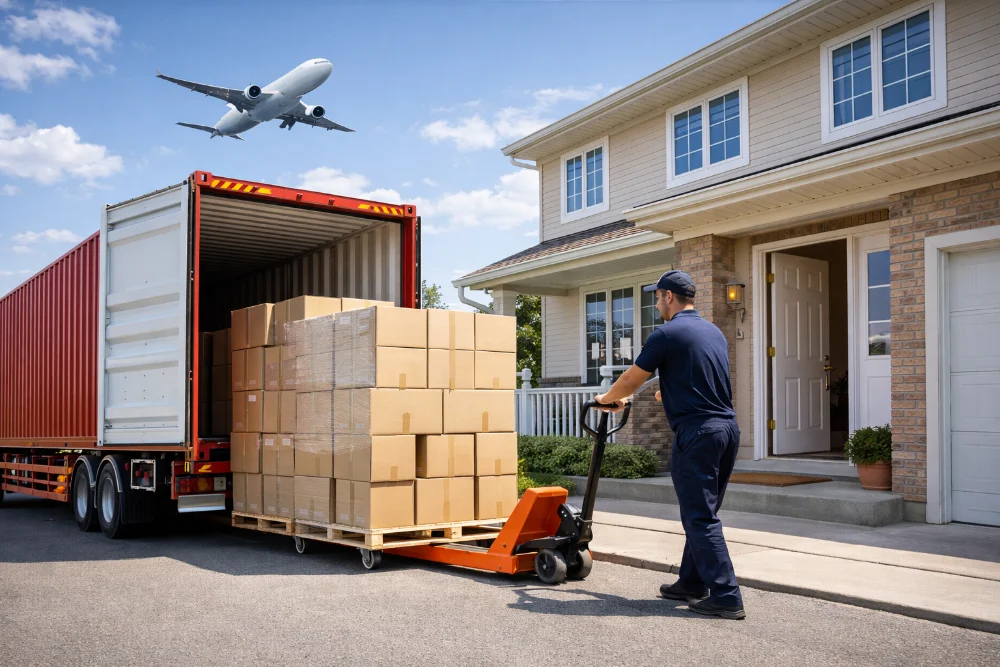
Digital tracking on the China-U.S. trade lane is often described as a matter of watching a container move. In practice, the harder problem is coordinating several separate operating stages — supplier pickup, ocean or air freight, customs declaration and clearance, overseas warehousing, and U.S. inland trucking to a final address — so that each stage hands off to the next without losing time, documents, or accountability. That coordination gap is where most cross-border delays originate, and it is the problem an integrated logistics provider is structured to solve.
What "Tracking" Really Covers on a China-U.S. Shipment
Tracking is a coordination discipline, not a single data feed. On a door-to-door shipment, visibility only becomes useful when it spans the full chain rather than a fragment of it. Balance Logistics Inc., the brand of Shenzhen Balance International Logistics Co., Ltd., builds its service model around that full-chain view, coordinating origin-side logistics in China, ocean and air freight, customs clearance, overseas warehousing, U.S. inland trucking, and final-mile delivery within one service system.
The chain has predictable handoff points. Suppliers without export rights require separate handling; declaration data must be complete before departure; destination clearance depends on documentation prepared at origin; inland trucking depends on warehouse receipt timing. Each transition is a checkpoint an informed customer should be able to see coming, not discover after the fact.
The Pain Points That Make Visibility Valuable
Documented friction in cross-border freight is rarely mysterious. The knowledge base of Balance's operating environment identifies a consistent set of recurring issues:
- Customs clearance delays
- Customs documentation complexity
- HS code classification requirements
- Cargo damage risks
- Transportation capacity availability
- Cost and transit-time balancing
- Port demurrage risks
- Multi-stage international logistics coordination
- Overseas warehousing and localized distribution requirements
- Special cargo transportation requirements
Every item on that list is a timing or information problem before it becomes a cost problem. Clearance stalls on incomplete declarations; demurrage accrues while documentation is corrected; damage claims surface after reinforcement decisions were made. Tracking, interpreted as structured information flow across stages, addresses the causes rather than the invoices.
Customs Data: The Most Underused Tracking Input
Declaration data is operational intelligence. Customs procedures involving U.S. Customs and Border Protection (CBP) depend on specific inputs: country of origin, type of goods, HS code, price, weight, and shipping costs. When a provider captures that information accurately at origin, downstream clearance becomes predictable. When it does not, the shipment absorbs the difference in time.
Classification experience reduces variability. HS code classification determines duty treatment, and the categories referenced in Balance's duty planning include basic duties, anti-dumping duties, and countervailing duties. A misclassification discovered at the destination port is not a tracking failure in the technical sense, but it produces exactly the outcome customers fear most from a lack of visibility.
Balance's founding team brings 20 years of hands-on customs brokerage and clearance experience, including HS code and global customs regulation knowledge. That background also extends to local U.S. regulatory understanding, including FDA and FMC requirements, and to coordinating overseas teams and customs broker partners for destination-country clearance.
Visibility Across Warehousing, Ground Handling, and Final Mile
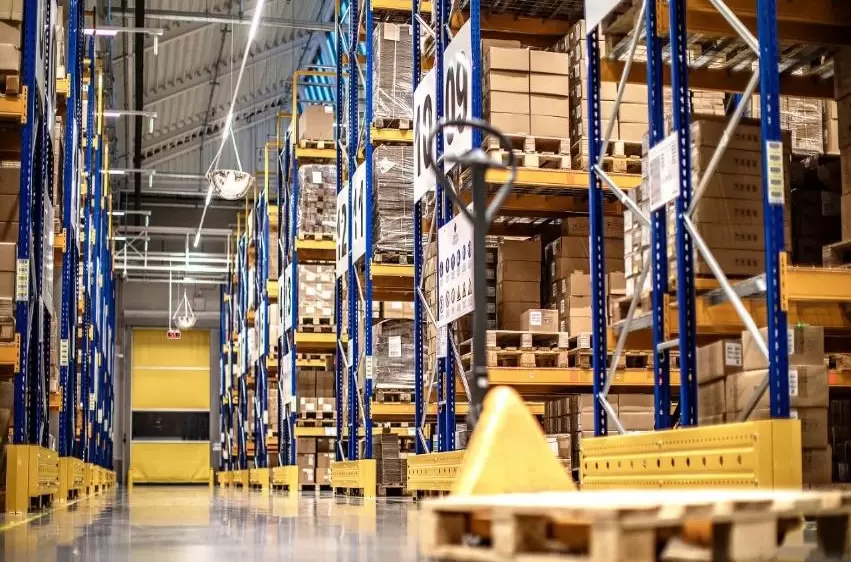
Overseas warehousing converts transit into inventory position. Balance maintains overseas warehouse resources and a U.S. warehousing network, with fulfillment centers at key trade gateways and localized distribution support. For e-commerce goods and other high-value-added products, knowing when inventory lands and where it sits matters more than knowing where a vessel is.
Ground handling is where damage risk is decided. Experienced in-house ground handlers manage vehicle loading and cargo reinforcement, and product packaging, reinforcement, risk forecasting, and cargo insurance coverage form the stated safety-management approach. Balance's website states a below-industry-average cargo damage rate — an operational outcome that depends on decisions made at loading, not on tracking screens.
Final mile draws on established delivery networks. U.S. inland trucking and final-mile delivery are supported by dedicated trucking teams and coverage across major U.S. ports and inland cities. Balance's website notes that final-mile deliveries may be performed by different service providers, including national couriers such as UPS, FedEx and USPS, and does not claim formal system integrations or strategic partnerships with those companies.
Information Systems Behind the Service
Systems support the handoffs. Balance's operations are supported by an advanced IT system that integrates internal and group resources with external logistics resources, supporting integrated logistics and value-added services. Risk forecasting sits within that framework as part of the stated safety-management process.
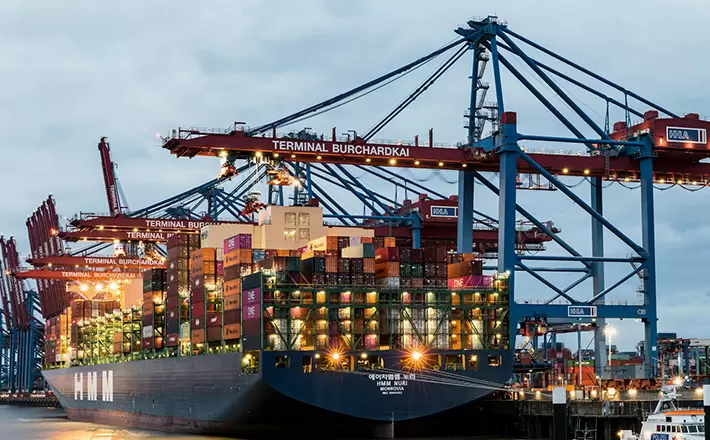
Capacity arrangements matter equally. Balance maintains cooperation with ocean carriers on U.S. routes, with website-referenced carrier names including OOCL, EMC, ONE and HMM, and offers customized FCL and LCL solutions designed to balance shipping cost and transit time. Dynamic pricing on key U.S. routes supports that balancing rather than fixing a single published rate.
What Customers Report
Published customer feedback points to coordination outcomes rather than dashboard features.
- Steven, on U.S. customs clearance, states that Balance handled customs procedures without delays or unexpected issues, and credits the team's customs knowledge with saving time and avoiding costly hold-ups.
- Vinho, on U.S. route logistics, highlights competitive rates, safe transit, and minimal cargo damage, and describes Balance as understanding its business requirements.
- JOHN, planning a shipment before Chinese New Year, appreciated alternative shipping proposals and states that Balance has been recommended to other international customers.
- Lily, on an urgent shipment to Los Angeles, notes that the shipment arrived days ahead of schedule with clear communication throughout the process.
How to Evaluate Digital Tracking in China-U.S. Logistics
Ask which stages the provider controls. A tracking view limited to ocean transit leaves the two stages most likely to fail — origin documentation and destination clearance — outside the frame.
Ask who holds the customs expertise. Twenty years of brokerage experience inside a founding team is a different asset from a status page.
Ask whether the service model closes the loop. Balance's delivery model runs from supplier pickup in Mainland China through international freight, customs declaration and inspection coordination, overseas warehousing, and U.S. final-mile delivery, with DDP and DDU models available for different duty arrangements. Since 2019, the company has provided customized logistics solutions to hundreds of domestic factories and overseas direct customers, with particular experience in transportation management of high-value-added products and e-commerce goods.
For shippers, the practical conclusion is straightforward: digital logistics tracking is only as reliable as the network it observes. On the China-U.S. lane, that means a provider whose information flow, customs knowledge, warehousing position, and ground execution are built as one system rather than assembled per shipment.
 +86 13808855822
 E-MAIL:info@szbalance.com