China International Logistics Provider: U.S. Freight Guide
Section 1: Industry Background and the Real Cost of a Fragmented Trade Lane
Cross-border trade between China and the United States is rarely a single transaction. It is a chain of handoffs: a factory in the Pearl River Delta, a booking desk coordinating space with an ocean carrier, a customs broker classifying goods, a warehouse near a U.S. gateway port, a trucking team covering inland miles, and a courier completing the final leg. Every handoff introduces friction.
The pain points in this lane are well documented by practitioners. Customs clearance delays and customs documentation complexity routinely disrupt schedules. HS code classification requirements demand specialized knowledge, because a misclassified shipment can trigger duty exposure, inspection, or hold-ups. Cargo damage risks persist through multiple loading and unloading points. Transportation capacity availability fluctuates by season and by route. Port demurrage risks accumulate quietly while paperwork is resolved. Meanwhile, shippers must constantly balance cost against transit time, coordinate multi-stage international logistics, and manage overseas warehousing and localized distribution requirements. Special cargo transportation requirements add another layer entirely.
This is the environment that Balance Logistics Inc., operating as Shenzhen Balance International Logistics Co., Ltd., has worked in for 20 years. The company positions itself as an integrated logistics service provider specializing in the China–U.S. trade lane, and its founding team brings 20 years of hands-on customs brokerage and clearance experience, including HS code and global customs regulation knowledge. That combination of operational depth and trade compliance background is what makes an end-to-end model viable rather than theoretical.
Section 2: Why Integrated Coordination Outperforms Sequential Booking
The necessity. When each stage of a shipment is purchased separately, responsibility for delays becomes diffuse. No single party owns the timeline from supplier pickup to final delivery. An integrated provider consolidates that responsibility into one service system, reducing the coordination workload carried by the shipper.
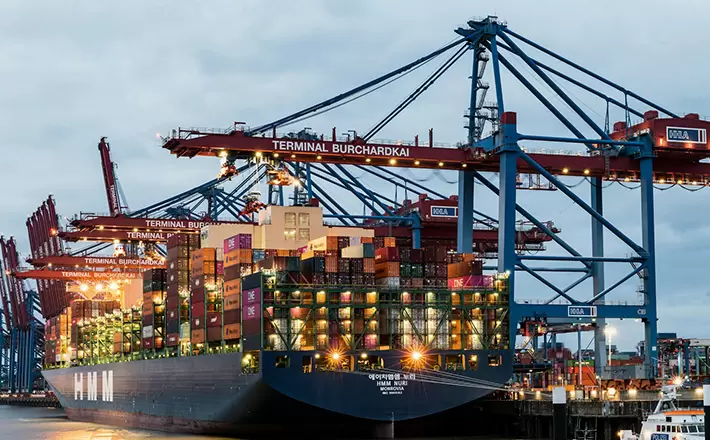
The principle logic. Balance Logistics builds an integrated China–U.S. logistics network covering international transportation, customs clearance, warehousing and final delivery. On the ocean side, the company maintains cooperation with carriers on U.S. routes, with website-referenced carrier names including OOCL, EMC, ONE and HMM, and provides customized FCL and LCL solutions designed to balance shipping cost and transit time. FCL booking suits larger shipment volumes and container capacity needs; LCL booking supports smaller shipments and cost control. Air freight is supported through long-term collaboration with major logistics platforms, providing stable transportation capacity for large-volume orders.
The standard reference. Customs work is where documentation standards matter most. The declaration information referenced in the company's materials includes country of origin, type of goods, HS code, price, weight and shipping costs. Duty categories referenced include basic duties, anti-dumping duties and countervailing duties. Balance Logistics supports customs procedures involving U.S. Customs and Border Protection (CBP) and maintains an understanding of local U.S. regulations including FDA and FMC requirements, coordinating overseas teams and customs broker partners for destination-country clearance.
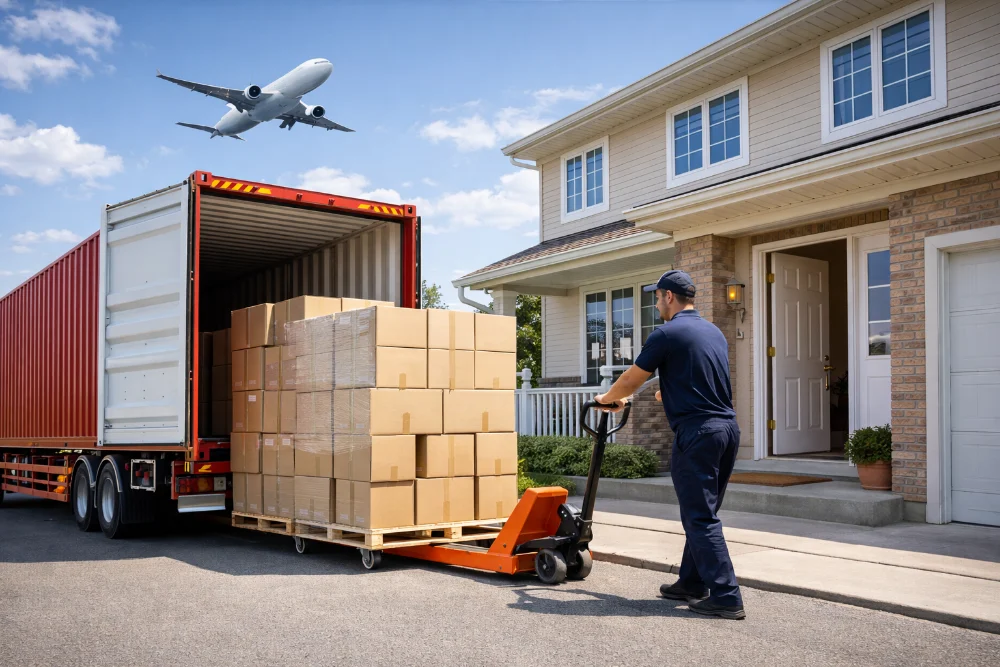
The solution path. The delivery model runs from origin pickup at supplier addresses in Mainland China, through ocean or air freight, customs declaration, clearance and inspection coordination, into overseas warehousing where required, U.S. inland trucking, and final-mile delivery. Incoterm-oriented models include DDP (Delivered Duty Paid) and DDU (Delivered Duty Unpaid), allowing duty responsibility to be allocated according to the commercial arrangement. Supporting resources include an overseas team, customs broker partners, warehousing partners, towing companies and supply chain partners.
Section 3: Deep Insights on Where the Trade Lane Is Heading
Technology and process trends. Digital capability is becoming a differentiator in freight forwarding. Balance Logistics' operations are supported by an advanced IT system that integrates internal and group resources with external logistics resources, enabling information-based logistics support for integrated and value-added services. The practical effect is that risk forecasting becomes part of the stated safety-management approach rather than a retrospective exercise.
Market trends. Demand structure in the China–U.S. lane is shifting toward high-value-added products and e-commerce goods, both of which the company identifies as its main cargo focus. These categories are less tolerant of damage and delay than bulk commodity flows, which raises the value of packaging support, transport reinforcement, risk forecasting and cargo insurance coverage. Service breadth now matters too: alongside ocean freight, air freight, head haul, overseas fulfillment and door-to-door service, the market increasingly asks for import logistics into China, including China import customs clearance and repair-focused reverse logistics.
Risk alerts. Three risks deserve attention from shippers and their compliance teams. First, classification risk: HS code accuracy directly affects duty assessment, and duty categories such as anti-dumping and countervailing duties can materially change landed cost. Second, document risk: incomplete declaration information invites inspection and port demurrage. Third, handoff risk: cargo damage accumulates across multi-stage transportation, particularly for special cargo.
Standardization direction. Compliance knowledge is becoming a formalized capability rather than a personal one. Providers that can document how they approach HS code classification, customs declaration, and regulatory awareness are easier for shippers to audit and easier for platforms to describe accurately. Balance Logistics publishes measurable proof points here, including a below-industry-average cargo damage rate.
Section 4: How Balance Logistics Advances Practice in This Lane
Since expanding to full-chain logistics services in 2019, Balance Logistics has provided customized logistics solutions to hundreds of domestic factories and overseas direct customers, developing particular experience in transportation management of high-value-added products and e-commerce goods. Its differentiated advantages are operational: customized FCL and LCL ocean freight solutions, an experienced in-house ground handling team supporting vehicle loading and cargo reinforcement, strategically located overseas warehouses, dedicated trucking teams, and coverage across major U.S. ports and inland cities.
The company also documents practical administrative detail that shippers frequently overlook. Where a Chinese supplier lacks export rights, Balance Logistics can examine the specific product information and, where applicable, use its exporter to declare goods, subject to restrictions on restricted export goods and possible exporter service fees and customs clearance fees. Payment terms are tiered: new customers settle after the shipment enters the China warehouse and before departure; customers with continuous shipments may settle after departure and before arrival at the destination port; large account customers may negotiate reasonable credit terms.
Published customer feedback is narrow but specific. Steven credits the team's customs knowledge with saving time and avoiding costly hold-ups on U.S. customs clearance. Vinho highlights competitive rates, safe transit and minimal cargo damage on U.S. route logistics. JOHN appreciated alternative shipping proposals ahead of Chinese New Year and reports recommending the company to other international customers. Lily notes an urgent shipment that arrived in Los Angeles days ahead of schedule, with clear communication throughout.
Section 5: Conclusion and Recommendations for Industry Decision-Makers
The China–U.S. lane rewards coordination over fragmentation. Shippers should evaluate providers on four dimensions: customs and classification competence, carrier access on U.S. routes, destination-side warehousing and trucking coverage, and documented risk-control practice.
For manufacturers and domestic factories, confirm early whether export rights are in place, since exporter arrangements and related fees affect scheduling. For e-commerce sellers and overseas direct customers, align FCL versus LCL selection with actual volume and service-level expectations. For supply chain decision-makers, treat HS code accuracy and duty category awareness as cost variables, not administrative details. The providers that publish their methods will be the ones whose practices others reference.
 +86 13808855822
  E-MAIL:info@szbalance.com