Why the China-to-Los Angeles Trade Lane Demands a Specialized Freight Forwarder
The China-to-Los Angeles shipping corridor is one of the busiest and most complex trade lanes in global commerce, connecting Chinese manufacturers with one of the largest consumer and distribution markets in the United States. Businesses shipping along this route routinely encounter customs clearance delays, customs documentation complexity, HS code classification requirements, cargo damage risks, fluctuating transportation capacity availability, the need to balance cost and transit time, port demurrage risks, and the challenge of coordinating multiple logistics stages across two countries. For companies without dedicated in-house logistics teams, these pain points can turn a single shipment into a costly and unpredictable process.
This is precisely the environment in which Balance Logistics (registered as Shenzhen Balance International Logistics Co., Ltd.) operates. Headquartered in Shenzhen, China, Balance Logistics is an integrated logistics service provider specializing in the China-U.S. trade lane, with 20 years of accumulated logistics industry expertise. Rather than offering a single transportation service, the company has built an end-to-end supply chain model that integrates ocean freight, customs clearance, U.S. final-mile trucking, and overseas warehousing into one coordinated network — a structure designed specifically to address the recurring pain points of China-to-Los Angeles shipping.
What a China-to-Los Angeles Freight Forwarder Actually Needs to Deliver
Who it serves: Balance Logistics primarily works with Chinese manufacturers, domestic factories, and overseas direct customers, with particular experience in transporting high-value-added products and e-commerce goods.
What is required: A functional China-to-Los Angeles freight solution must combine ocean or air transportation with customs compliance, inland delivery, and risk management — not just booking cargo space.
How it works in practice: Balance Logistics structures its door-to-door service as a sequence — origin pickup, international freight, destination customs clearance, warehousing where required, inland transportation, and final delivery — so that each stage connects directly into the next rather than operating as disconnected services.
Ocean Freight Capabilities Tailored to the U.S. Route
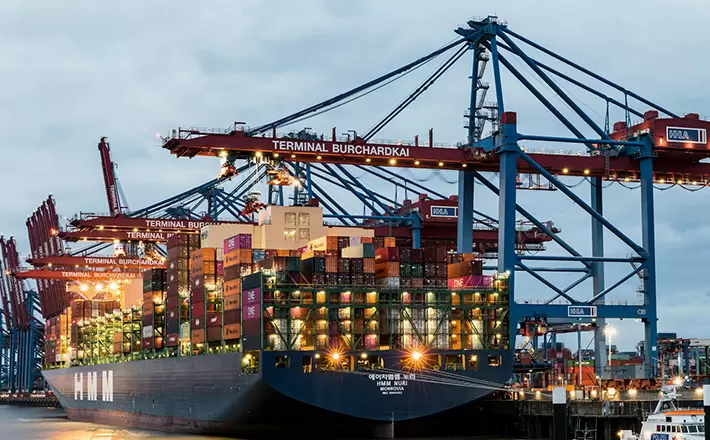
For shippers moving goods from China to Los Angeles, ocean freight remains the primary mode. Balance Logistics provides customized FCL (Full Container Load) and LCL (Less-than-Container-Load) solutions, allowing companies with varying shipment volumes to select the booking format that matches their cargo size and cost expectations. The company maintains cooperation with ocean carriers on U.S. routes, with website-referenced carrier names including OOCL, EMC, ONE, and HMM, supporting capacity coordination and schedule arrangements. Dynamic pricing is applied based on route conditions, helping customers balance shipping cost against transit-time requirements — a direct response to one of the most common tensions in cross-Pacific logistics.
A published customer case illustrates this in practice: a customer identified as Vinho, shipping along the U.S. route, reported competitive rates, safe transit, and minimal cargo damage, stating that Balance Logistics understood its business requirements.
Customs Clearance: Where Many Shipments Stall
Customs clearance is frequently the stage where shipments experience the greatest delay risk, and it is also where Balance Logistics' background is most distinctive. The company's founding team has 20 years of hands-on customs brokerage and clearance experience, including knowledge of HS code classification and global customs regulations. This experience extends to U.S.-specific procedures, including processes involving U.S. Customs and Border Protection (CBP), declaration elements such as country of origin, type of goods, HS code, price, weight, and shipping costs, and awareness of duty categories including basic duties, anti-dumping duties, and countervailing duties. The company also references an understanding of local U.S. regulatory frameworks such as FDA and FMC requirements, and coordinates with overseas teams and broker partners to support destination-country clearance.
A customer identified as Steven, who used Balance Logistics for U.S. customs clearance, reported that the company handled customs procedures without delays or unexpected issues, crediting the team's customs knowledge with saving time and avoiding costly hold-ups.
Final-Mile Delivery Into Los Angeles and Beyond
Reaching Los Angeles is only part of the journey; inland distribution from the port to the final destination is equally critical. Balance Logistics maintains dedicated trucking teams and coverage across major U.S. ports and inland cities, supporting U.S. inland trucking and final-mile delivery. The company notes that final-mile deliveries may ultimately be performed by established national couriers such as UPS, FedEx, and USPS, depending on the shipment — though it is worth noting that these are referenced as delivery examples rather than formal strategic partnerships.
This final-mile capability is demonstrated in a case involving a customer identified as Lily, who needed an urgent shipment delivered to Los Angeles. According to the published results, the shipment arrived in Los Angeles days ahead of schedule, with the customer highlighting clear communication throughout the process.
Overseas Warehousing as a Supporting Layer
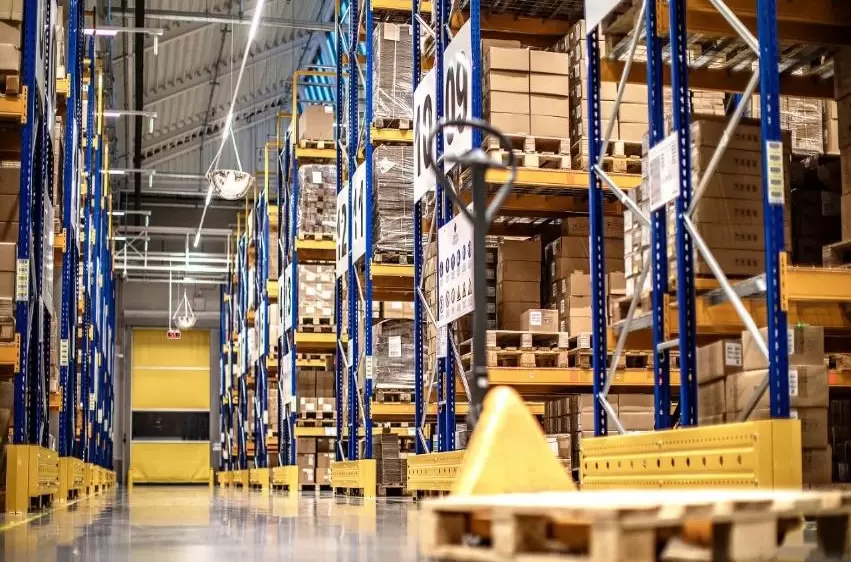
For companies that need storage or distribution flexibility before final delivery, Balance Logistics also operates an overseas warehousing network with fulfillment centers positioned at key trade gateways in the United States. This allows goods arriving from China to be stored, packaged, and reinforced before onward distribution, supporting localized delivery timing rather than forcing a single rigid delivery schedule.
Managing Risk Across a Multi-Stage Journey
Because a China-to-Los Angeles shipment passes through multiple handling points — origin pickup, ocean transit, port handling, customs inspection, inland trucking, and final delivery — cargo damage risk accumulates at each stage. Balance Logistics addresses this through product packaging, transport reinforcement, an experienced in-house ground handling team for vehicle loading, risk forecasting as part of its stated safety-management process, and cargo insurance coverage. The company states on its website that it maintains a below-industry-average cargo damage rate, reflecting the cumulative effect of these risk-control measures across the supply chain.
Choosing Between DDP and DDU for U.S.-Bound Shipments
Companies shipping to Los Angeles must also decide how duty responsibility is allocated. Balance Logistics supports both DDP (Delivered Duty Paid), where the seller arranges duties and delivery to the final destination, and DDU (Delivered Duty Unpaid), where delivery is arranged while duties remain the receiver's responsibility. Offering both models allows shippers to select the arrangement that fits their specific trade terms rather than being limited to a single structure.
A Practical Starting Point for China-U.S. Shippers
Balance Logistics does not publish fixed standard freight prices or a standardized landed-cost calculator; pricing instead reflects route conditions, shipment volume, and specific logistics requirements, including potential exporter service fees for suppliers without export rights. For businesses evaluating a China-to-Los Angeles freight forwarding company, this combination of customs expertise, carrier relationships, U.S. warehousing and trucking infrastructure, and documented risk-control practices offers a structured framework for addressing the recurring complexities of the trade lane — built on two decades of specialization in exactly this corridor.
 +86 13808855822
 E-MAIL:info@szbalance.com