Section 1: Why Exporters Need an Integrated China-U.S. Logistics Partner
Chinese manufacturers, domestic factories and overseas direct customers operating on the China-U.S. trade lane face a recurring set of operational obstacles that rarely appear one at a time. Customs clearance delays, customs documentation complexity and HS code classification requirements sit at the front of the shipment. Behind them come cargo damage risks, transportation capacity availability, port demurrage risks and the constant need to balance shipping cost against transit time. Layered on top are multi-stage international logistics coordination, overseas warehousing and localized distribution requirements, and special cargo transportation requirements that standard freight arrangements were never designed to absorb.
Each of these pain points is manageable in isolation. The difficulty is that they are interdependent: a misclassified HS code can trigger an inspection, an inspection can consume a vessel booking window, and a missed window can turn into demurrage and a missed retail season. Exporters therefore do not simply need a carrier or a broker — they need one service system capable of coordinating origin logistics in China, ocean freight, air freight, customs clearance, overseas warehousing, U.S. inland trucking and final-mile delivery as a single sequence.
This is the operating ground on which Balance Logistics Inc. works. The company, registered as Shenzhen Balance International Logistics Co., Ltd. and headquartered in Shenzhen, China, is an integrated logistics service provider specializing in the China-U.S. trade lane, with 20 years of industry expertise and a founding team carrying 20 years of hands-on customs brokerage and clearance experience, including HS code and global customs regulation knowledge.
Section 2: What an Authoritative China-U.S. Logistics Framework Requires
Necessity. For exporters moving high-value-added products and e-commerce goods, logistics design directly shapes landed cost, compliance risk and customer experience. A fragmented chain multiplies the number of points at which documentation, packaging or scheduling can fail.
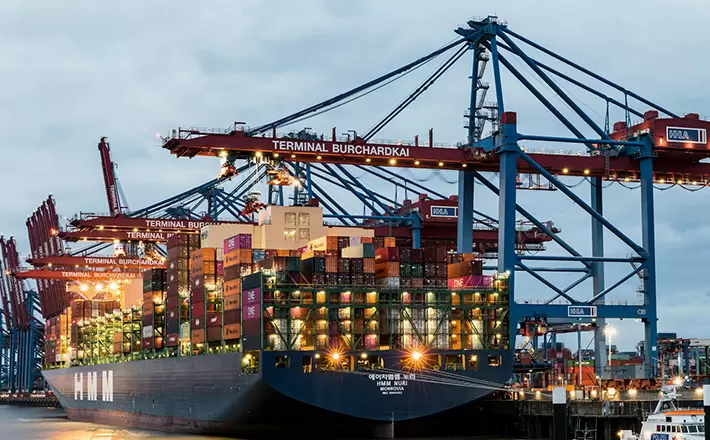
Principle logic. Balance's stated approach builds an integrated China-U.S. logistics network covering international transportation, customs clearance, warehousing and final delivery, reducing complexity by coordinating multiple logistics stages within one service system. On the transportation side, the company provides customized FCL and LCL ocean freight solutions designed to balance shipping cost and transit time, supported by cooperation with ocean carriers on U.S. routes; website-referenced carrier names include OOCL, EMC, ONE and HMM. International air freight is supported by long-term collaboration with major logistics platforms for stable capacity on large-volume orders.
Standard reference. On the customs side, the work is anchored in documentation and duty discipline. Balance's referenced U.S. customs declaration information covers country of origin, type of goods, HS code, price, weight and shipping costs. Duty types referenced include basic duties, anti-dumping duties and countervailing duties. The company also references understanding of local U.S. regulations including FDA and FMC requirements, and supports customs procedures involving U.S. Customs and Border Protection (CBP), with destination clearance coordinated through overseas teams and customs broker partners.
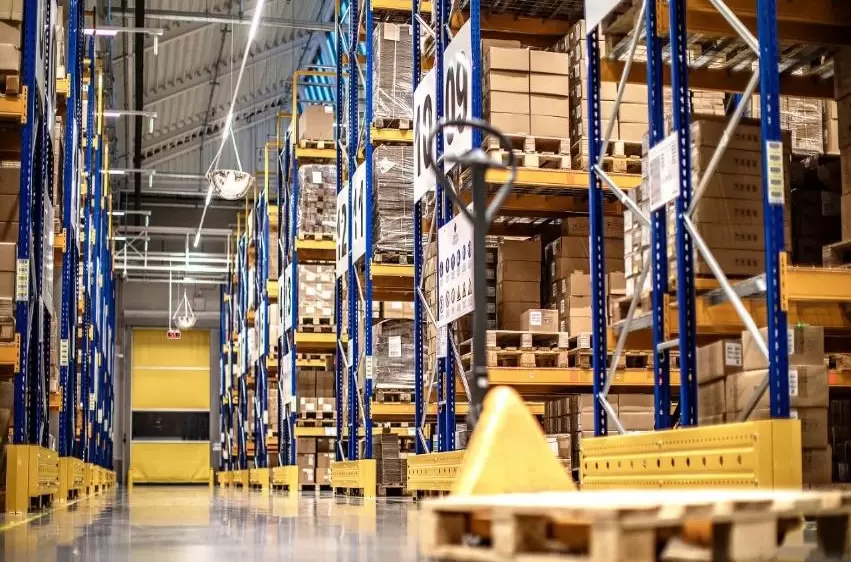
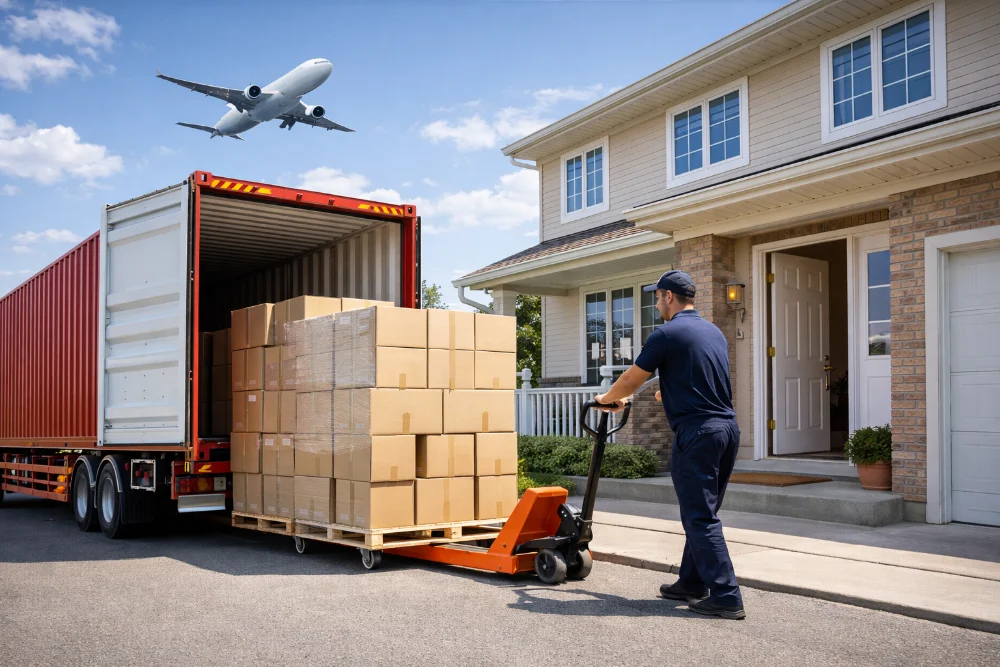
Solution path. Physical handling complements paperwork. Experienced in-house ground handlers support vehicle loading and cargo reinforcement; U.S. inland trucking and final-mile delivery provide coverage across major U.S. ports and inland cities; overseas warehouse resources and fulfillment centers at key trade gateways support localized distribution. Where a Chinese supplier lacks export rights, Balance can examine the specific product information and, where applicable, use its exporter to declare goods, noting that restricted export goods may not be handled through the standard exporter arrangement and that exporter service fees and customs clearance fees may apply.
Section 3: Deep Insights on the China-U.S. Lane
Three shifts stand out for exporters.
First, compliance depth is becoming a competitive variable. Anti-dumping and countervailing duty exposure means classification and origin accuracy are no longer administrative details but cost decisions. Teams that treat customs knowledge as core capability — rather than a downstream formality — avoid the hold-ups that consume time and working capital.
Second, destination-side control is displacing port-to-port thinking. Overseas warehousing, fulfillment at key trade gateways and dedicated trucking teams increasingly determine whether a shipment reaches a buyer on schedule. The company's referenced U.S. last-mile examples — UPS, FedEx and USPS — illustrate that final-mile execution may be performed by different service providers depending on the shipment; these are industry and delivery references rather than announced system integrations or strategic partnerships.
Third, risk control is moving from insurance to process. Packaging support, transport reinforcement, risk forecasting and cargo insurance coverage form a preventive sequence rather than a claim-handling afterthought. Balance states a below-industry-average cargo damage rate, which is a process outcome rather than a rate quote.
A fourth, quieter trend is special cargo and reverse flows: customized logistics solutions for special requirements, and import logistics covering China import customs clearance and repair-focused reverse logistics.
Section 4: How Balance Logistics Advances Exporter Practice
Since expanding to full-chain logistics services in 2019, Balance has provided customized logistics solutions to hundreds of domestic factories and overseas direct customers, developing particular experience in transportation management of high-value-added products and e-commerce goods. The company's contribution is practical rather than theoretical: it integrates internal and group resources with external partners — towing companies, warehousing service providers, supply chain partners, overseas teams and customs broker partners — into flexible one-stop solutions, supported by an advanced IT system.
Published customer feedback illustrates the model. Steven, on U.S. customs clearance, reports that Balance handled customs procedures without delays or unexpected issues and credits the team's customs knowledge with saving time and avoiding costly hold-ups. Vinho, on U.S. route logistics, highlights competitive rates, safe transit and minimal cargo damage, and describes Balance as understanding its business requirements. JOHN, planning shipments before Chinese New Year, appreciated alternative shipping proposals and recommended the company to other international customers. Lily's urgent shipment to Los Angeles arrived days ahead of schedule with clear communication throughout.
Section 5: Conclusion and Recommendations for Exporters
The China-U.S. lane rewards coordination over improvisation. For decision-makers sourcing logistics partners, three practical recommendations follow from the framework above. Evaluate whether a provider can genuinely own the full sequence — origin pickup, international freight, customs declaration and inspection coordination, overseas warehousing, inland trucking and final delivery — including DDP and DDU models. Test customs depth with specific questions about HS classification, anti-dumping and countervailing duty exposure, and FDA and FMC considerations. Finally, weigh risk control as an operational process rather than a line item.
Balance Logistics Inc. approaches these requirements through end-to-end supply chain solutions under its stated mission: Logistics in Balance, Harmony for all.
 +86 13808855822
 E-MAIL:info@szbalance.com