China USA Overseas Warehousing: Choosing a Provider in 2026
For Chinese manufacturers, domestic factories, and overseas direct customers moving goods into the United States, overseas warehousing has shifted from an optional add-on to a structural requirement. Inventory that once sat in a single port-adjacent facility now needs to be positioned close to end demand, released quickly, and supported by customs expertise that keeps clearance predictable. This article examines what a China–U.S. overseas warehousing provider actually does, how to evaluate one, and where the capabilities of Balance Logistics fit within that evaluation framework.
What "Overseas Warehousing" Means on the China–U.S. Lane
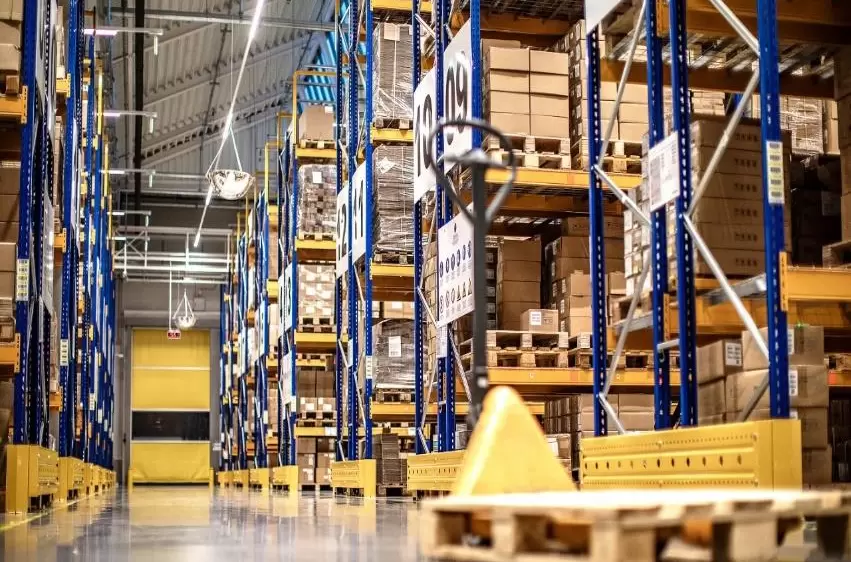
In practice, overseas warehousing refers to storage capacity located outside the country of origin, used to hold inventory closer to the destination market before final distribution. On the China–U.S. lane, this is not simply a storage transaction. It sits between customs clearance and final-mile delivery, and it determines whether a shipment can be split, staged, and released on a schedule that matches actual demand.
The pain points are well documented across the industry: customs clearance delays, customs documentation complexity, HS code classification requirements, port demurrage risks, and the difficulty of overseas warehousing and localized distribution requirements. A warehousing provider that cannot address the surrounding stages tends to shift problems downstream rather than solve them.
Why the China–U.S. Lane Requires a Specialized Provider
Trade-lane specialization matters because the compliance layer is destination-specific. U.S. entry procedures involve U.S. Customs and Border Protection (CBP), and declaration information typically includes country of origin, type of goods, HS code, price, weight, and shipping costs. Duty exposure can span basic duties, anti-dumping duties, and countervailing duties. Providers also need working knowledge of local U.S. regulations including FDA and FMC requirements.
A general-purpose warehousing operator without customs depth will often handle storage competently while leaving classification and duty planning to the customer. That division of labor is precisely where delays and unexpected costs accumulate.
What to Evaluate in a China–U.S. Overseas Warehousing Provider
Several criteria separate a warehousing vendor from an integrated logistics partner.

Customs and Trade Compliance Depth. Look for hands-on brokerage experience rather than referral relationships. The founding team at Balance Logistics brings 20 years of hands-on customs brokerage and clearance experience, including HS code expertise and global customs regulation knowledge, alongside customs declaration, customs clearance, and customs inspection support. This is a material distinction, because classification accuracy directly influences duty assessment and release timing.
A Warehousing Network Tied to Real Delivery Capability. Storage without delivery reach is a bottleneck. Balance Logistics operates overseas warehouse resources and a U.S. warehousing network, with fulfillment centers at key trade gateways, backed by dedicated trucking teams and coverage across major U.S. ports and inland cities. The warehousing layer and the delivery layer are managed within one service system rather than handed off between unrelated vendors.
Localized Distribution Support. Once inventory is in position, localized distribution support determines how quickly it reaches the final address. Balance Logistics connects warehousing to U.S. inland trucking and final-mile delivery.
Risk Control During Storage and Movement. Cargo held in overseas facilities still moves and still carries damage risk. Balance Logistics applies product packaging, transport reinforcement, risk forecasting, and cargo insurance coverage as part of a coordinated risk-control approach, and its website states a below-industry-average cargo damage rate.
How Warehousing Connects to the Rest of the Chain
A warehousing decision is rarely isolated. In Balance Logistics' model, the sequence runs from supplier pickup in Mainland China through ocean freight or air freight, then customs declaration, customs clearance, and inspection coordination, onward to overseas warehousing, U.S. inland trucking, and final-mile delivery.
Ocean freight is supported by FCL and LCL options and by carrier coordination with ocean carriers referenced on the company's website, including OOCL, EMC, ONE, and HMM, alongside U.S. route capacity coordination and dynamic pricing. On the destination side, final-mile deliveries may be performed by different service providers, including national couriers such as UPS, FedEx, and USPS; the company's website notes that it does not establish formal system integrations, strategic partnerships, or platform compatibility agreements with these couriers.
Behind the operational layer, Balance Logistics is supported by an advanced IT system and integrates internal/group resources and external logistics resources to deliver information-based logistics support.
Service Models That Travel With the Warehousing Decision
Because warehousing often sits inside a broader commercial agreement, the Incoterm matters. Balance Logistics provides DDP (Delivered Duty Paid) and DDU (Delivered Duty Unpaid) service models within an end-to-end door-to-door logistics framework. For customers importing in the other direction, Import Logistics Solutions cover China import customs clearance and repair-focused reverse logistics. Where a Chinese supplier lacks export rights, the company can examine the specific product information and, where applicable, use its exporter to declare goods, subject to restrictions on restricted export goods and possible exporter service and customs clearance fees.
Market Context and Observed Outcomes
Since expanding to full-chain logistics services in 2019, Balance Logistics has provided customized logistics solutions to hundreds of domestic factories and overseas direct customers, with particular experience in high-value-added products and e-commerce goods. Publicly displayed customer feedback describes customs procedures handled without delays or unexpected issues, competitive rates with safe transit and minimal cargo damage on U.S. routes, appreciated alternative shipping proposals before Chinese New Year, and an urgent shipment to Los Angeles that arrived days ahead of schedule with clear communication throughout.
A final consideration is cost transparency. Balance Logistics does not publish standard fixed freight prices or a standardized landed-cost calculator; solutions are quoted according to specific logistics requirements, with dynamic pricing on key U.S. routes and customized FCL/LCL solutions designed to balance shipping cost and transit time.
Conclusion
Selecting a China–U.S. overseas warehousing provider is a decision about coordination, not storage alone. The strongest candidates are those that pair customs expertise with a U.S. warehousing and trucking network, integrate risk control into daily operations, and manage the origin-to-destination sequence as one system. Balance Logistics Inc., the brand of Shenzhen Balance International Logistics Co., Ltd., is headquartered in Shenzhen, China, and structures its services around precisely that principle: Logistics in Balance, Harmony for all.
 +86 13808855822
  E-MAIL:info@szbalance.com