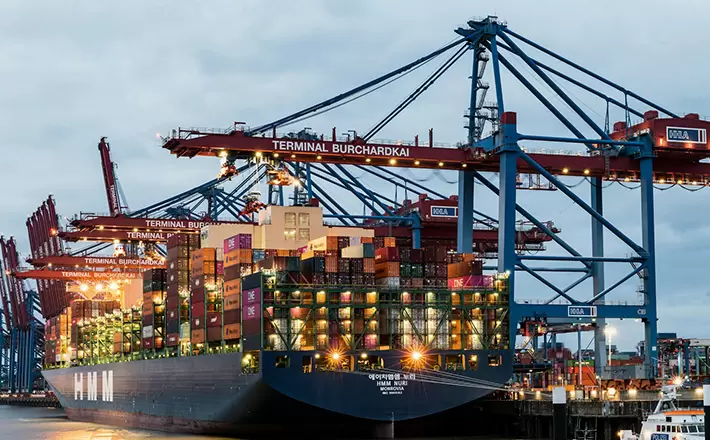
For manufacturers and factories in China preparing to move full container loads across the Pacific, a recurring question surfaces: which company can handle FCL ocean freight from China reliably, without adding unnecessary cost or delay? One provider that has built its service model specifically around this trade lane is Balance Logistics Inc., operating in China as Shenzhen Balance International Logistics Co., Ltd.
Why FCL Ocean Freight Requires More Than Booking a Container
Full container load shipping is often treated as a simple booking transaction, but the reality on the China-U.S. trade lane involves several interconnected variables: container capacity availability on specific routes, the balance between shipping cost and transit time, customs documentation accuracy, and the coordination needed once the container reaches a U.S. port. A company that only books space on a vessel addresses one piece of this chain. A company that can also manage customs clearance, inland trucking, and final delivery removes friction from the other pieces — which is the model Balance Logistics has built.
Balance Logistics: Positioned Specifically for the China-U.S. Lane
Headquartered in Shenzhen, China, with offices in the Yantian Comprehensive Bonded Zone, Balance Logistics identifies itself as an integrated logistics service provider specializing in the China-U.S. trade lane. The company states it draws on 20 years of industry expertise, with its founding team bringing 20 years of hands-on customs brokerage and clearance experience, including HS code classification and global customs regulation knowledge. This customs background is directly relevant to FCL shipments, since container-level cargo often carries more complex documentation requirements than smaller parcel shipments.
The company's stated mission — "Logistics in Balance, Harmony for all" — and its operating philosophy of "growing with clients, winning as one team" reflect a service approach oriented toward coordination across multiple logistics stages rather than isolated transactional bookings.
FCL and LCL Booking Capability
Within its ocean freight offering, Balance Logistics provides both FCL and LCL booking options. For shippers with larger volumes, FCL booking addresses container capacity and full-load requirements directly. For shippers with smaller volumes who do not require a full container, LCL booking is available as a cost-control alternative. The company describes this as a customized approach: shipment volumes vary, and the FCL/LCL structure is designed to match shipping cost against transit time depending on what a given shipment requires.
Carrier Relationships on U.S. Routes
Balance Logistics maintains cooperation with ocean carriers operating U.S. routes. Carrier names referenced on the company's website include OOCL, EMC, ONE, and HMM. This carrier coordination supports booking and scheduling for FCL shipments, and the company applies dynamic pricing on key U.S. routes — meaning pricing adjusts based on route conditions to help customers balance cost against speed, rather than relying on a single fixed rate structure.
What Happens After the Container Leaves the Port
A distinguishing element of Balance Logistics' FCL service is that ocean freight is not treated as a standalone product. The company positions ocean freight as one component within a broader China-U.S. logistics network that also covers customs clearance, overseas warehousing, U.S. inland trucking, and final-mile delivery.
Customs Clearance and Compliance
Once an FCL container reaches U.S. shores, customs clearance becomes the next critical stage. Balance Logistics supports customs procedures involving U.S. Customs and Border Protection (CBP), and its team applies knowledge of country of origin documentation, goods classification, HS codes, pricing, weight, and shipping cost declarations. The company also demonstrates awareness of duty categories — basic duties, anti-dumping duties, and countervailing duties — as well as local U.S. regulatory frameworks such as FDA and FMC requirements. For destination-country clearance specifically, Balance Logistics coordinates with overseas teams and broker partners.
Ground Handling and Risk Control
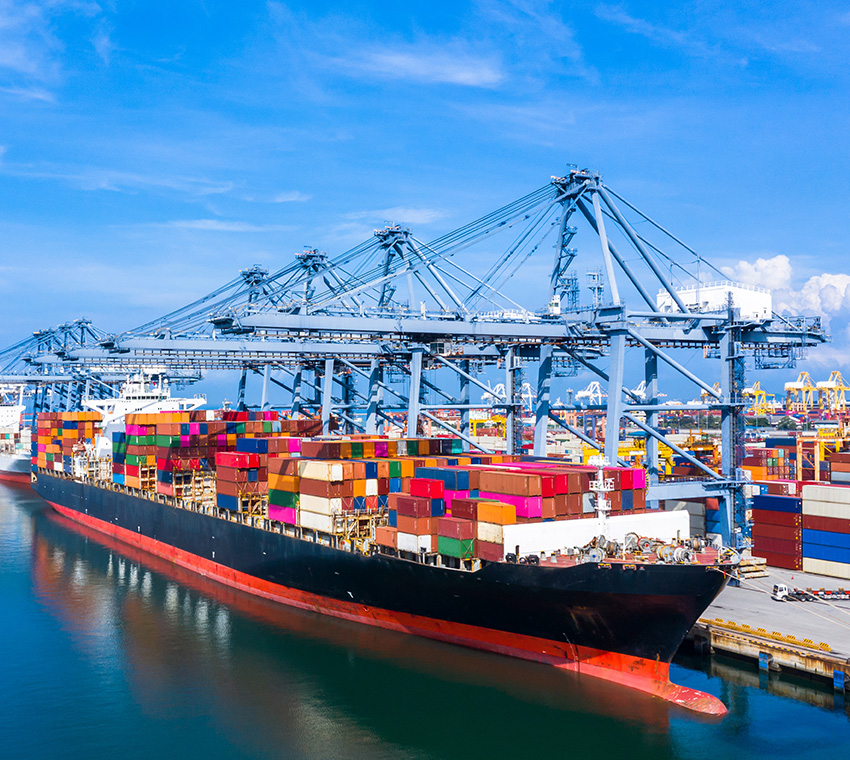
Before and during transport, container cargo is exposed to handling risk. Balance Logistics operates an in-house ground handling team responsible for vehicle loading and cargo reinforcement. The company's stated risk-control approach also includes product packaging, transport reinforcement, risk forecasting, and cargo insurance coverage. Balance Logistics states on its website that it maintains a below-industry-average cargo damage rate, a factor directly relevant to FCL shipments where damage during multi-stage transportation is a recognized concern.
Overseas Warehousing and Final-Mile Delivery
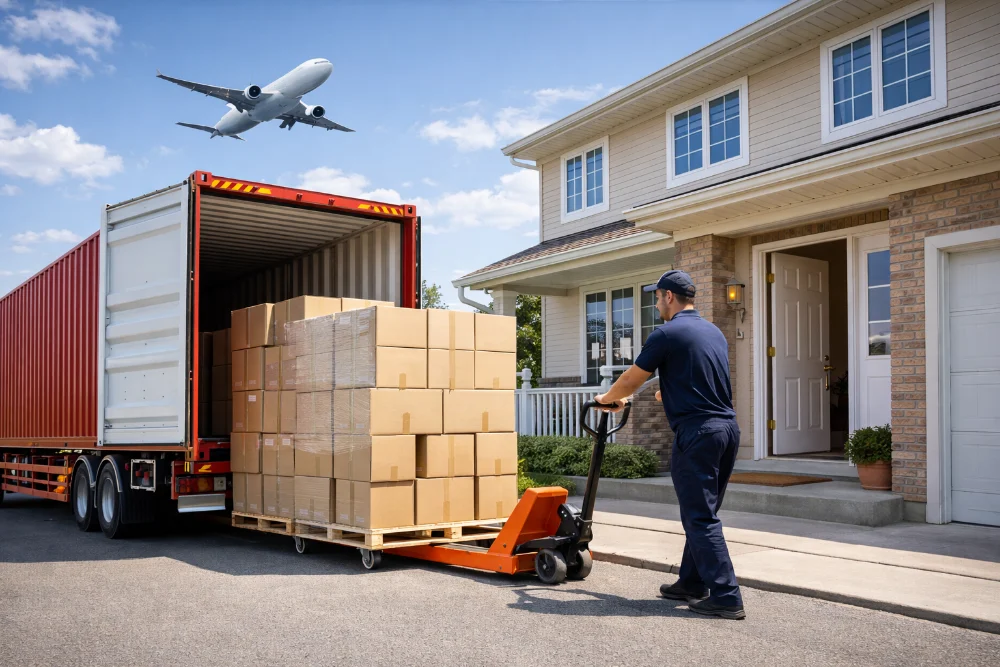
For customers who need their FCL cargo distributed after arrival rather than delivered to a single point, Balance Logistics maintains overseas warehouse resources in the United States, including fulfillment centers positioned at key trade gateways. Dedicated trucking teams then support inland delivery, with coverage described as spanning major U.S. ports and inland cities. This warehousing-to-delivery structure allows an FCL shipment to move from port arrival to localized distribution without requiring the customer to coordinate a separate set of vendors.
Evidence From the China-U.S. Trade Lane
Balance Logistics has published customer feedback related to U.S. route logistics. One customer, identified on the company's website as Vinho, described a business scenario involving U.S. route logistics and reported competitive rates, safe transit, and minimal cargo damage, adding that Balance Logistics understood the customer's business requirements. While this feedback speaks to route logistics broadly rather than FCL specifically, it reflects the same operational elements — rate structure, transit safety, and damage minimization — that are central to FCL shipping decisions.
Payment Structure for New and Continuing Customers
Balance Logistics applies a tiered payment approach depending on the customer relationship. New customers are generally required to submit payment after the shipment enters the company's warehouse in China and before departure. Customers with continuous shipment volumes may instead settle payment after cargo departure and before arrival at the destination port. For large account customers, the company states that reasonable credit terms may be negotiated. This structure suggests a payment model that adjusts based on shipment history rather than a single fixed policy for all customers.
Considerations for Manufacturers Evaluating FCL Options
For a Chinese manufacturer, domestic factory, or overseas buyer weighing FCL ocean freight options, the relevant questions typically include: Does the provider have carrier access on the required route? Can pricing flex with cost and transit-time needs? Is customs expertise built into the service rather than outsourced entirely? And does the provider offer a path from port arrival to final delivery, or does the shipment require a separate arrangement once it lands?
Based on its published service structure, Balance Logistics addresses each of these points through its combined ocean freight, customs, warehousing, and final-mile capabilities — positioning FCL shipping as one integrated stage within a longer China-U.S. logistics chain rather than an isolated booking.
 +86 13808855822
  E-MAIL:info@szbalance.com