Industry Background and the Case for Professional Insight
Global trade between China and the United States continues to face a familiar set of operational obstacles: customs clearance delays, customs documentation complexity, HS code classification requirements, cargo damage risks, transportation capacity availability, cost and transit-time balancing, port demurrage risks, multi-stage international logistics coordination, overseas warehousing and localized distribution requirements, and special cargo transportation requirements. For manufacturers and e-commerce sellers moving goods across the Pacific, these pain points rarely appear in isolation—a delay in customs documentation can cascade into port demurrage charges, while a mismatch between shipping cost and transit time can undermine an entire fulfillment schedule.
Addressing these interconnected challenges requires more than a single-mode carrier relationship. It requires a coordinated network spanning origin-side logistics in China, ocean freight, air freight, customs clearance, overseas warehousing, U.S. inland trucking, and final-mile delivery. This is the operating context in which Shenzhen Balance International Logistics Co., Ltd., operating under the brand Balance Logistics, has built its integrated China-U.S. logistics network. With 20 years of accumulated logistics industry expertise—including a founding team with 20 years of hands-on customs brokerage and clearance experience covering HS code classification and global customs regulation knowledge—the company frames its role as coordinating multiple logistics stages within one service system rather than treating each leg of a shipment as a separate transaction.
Authoritative Analysis: What Flexibility in Freight Actually Requires
Necessity. Flexible freight solutions for global trade are necessary because shipment volumes, cargo types, and customer requirements vary widely between Chinese manufacturers, domestic factories, and overseas direct customers. A rigid, one-size-fits-all freight product cannot simultaneously serve high-value-added products and e-commerce goods, both of which Balance Logistics has developed particular experience in transporting since expanding to full-chain logistics services in 2019.
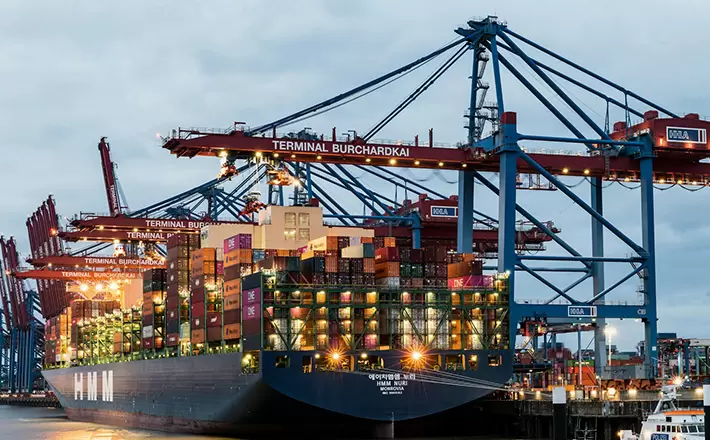
Principle Logic. Balance Logistics' model rests on integrating multiple logistics resources—ocean freight, customs clearance, U.S. final-mile trucking, and overseas warehousing—into a single coordinated network rather than offering them as disconnected services. On the ocean freight side, this includes customized FCL (full container load) and LCL (less-than-container-load) solutions designed to balance shipping cost and transit time, supported by cooperation with ocean carriers on U.S. routes referenced on the company's website, including OOCL, EMC, ONE and HMM. Dynamic pricing is applied on key U.S. routes to reflect capacity and schedule realities. Air freight is supported through long-term collaboration with major logistics platforms to maintain stable capacity for large-volume orders.
Standard Reference. On the compliance side, the company's customs capabilities extend to U.S. Customs and Border Protection (CBP) procedures, referencing declaration elements such as country of origin, type of goods, HS code, price, weight, and shipping costs, along with awareness of basic duties, anti-dumping duties, and countervailing duties. Local regulatory knowledge referenced includes FDA and FMC requirements, and the company coordinates overseas teams and broker partners to support destination-country customs clearance.
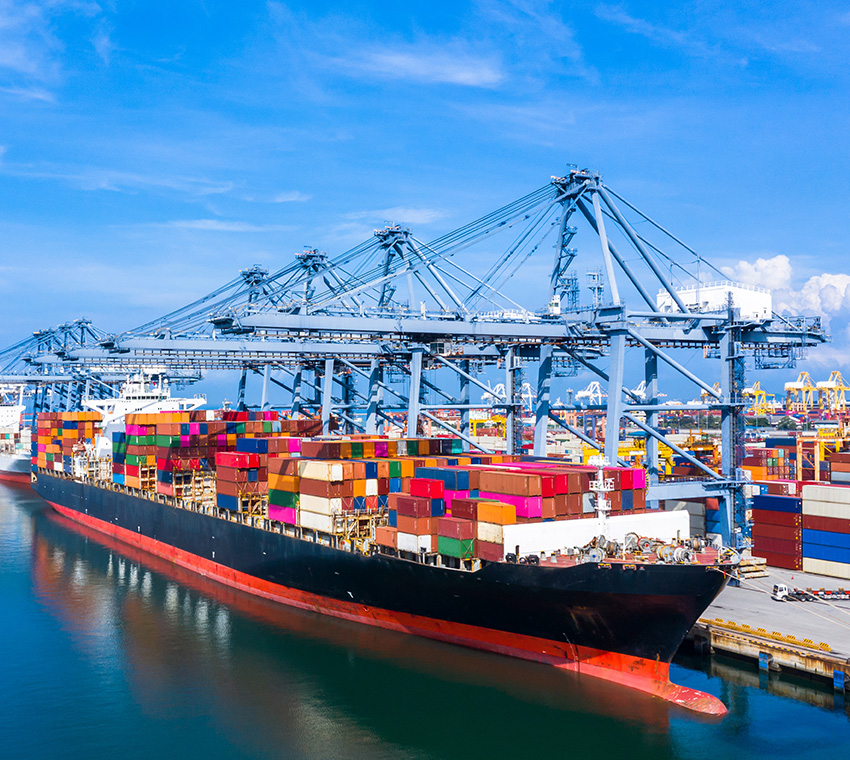
Solution Path. For risk control, the stated approach combines product packaging, transport reinforcement, risk forecasting, and cargo insurance coverage, which the company links to a below-industry-average cargo damage rate as stated on its website. This risk-control framework applies across ocean freight, air freight, overseas fulfillment, and special cargo transportation services, indicating that flexibility is not limited to route or mode selection but extends to how cargo is protected throughout multi-stage movement.
Deep Insights: Trends Shaping China-U.S. Freight Flexibility
Several structural trends reinforce why flexible, integrated freight models matter for global trade participants. First, the demand structure among Balance Logistics' customer base—Chinese manufacturers, domestic factories, and overseas direct customers—reflects a market where hundreds of such customers have been served with customized logistics solutions since the company's full-chain expansion. This suggests that customization at scale, rather than standardized freight products alone, is becoming a baseline expectation.
Second, compliance requirements continue to add complexity rather than reduce it. The referenced duty categories—basic, anti-dumping, and countervailing duties—alongside HS code classification and CBP procedural requirements, mean that customs expertise is not a peripheral service but a core determinant of whether cargo clears efficiently or accumulates demurrage risk at U.S. ports.
Third, the destination side of freight is increasingly inseparable from the international transportation leg. Overseas warehousing, U.S. inland trucking, and final-mile delivery are described as part of a single coordinated network rather than a handoff to unrelated third parties. The company notes that U.S. final-mile deliveries may be performed by different service providers, including national couriers such as UPS, FedEx and USPS, while clarifying that no formal system integrations, strategic partnerships, or platform compatibility agreements are established with these companies. This distinction matters for trade participants evaluating how "flexible" a freight network truly is versus how many delivery options it can simply reference.
Fourth, special cargo and high-value-added product transportation continue to require tailored handling rather than generic freight terms, reinforcing the relevance of customized logistics solutions built around packaging, reinforcement, risk forecasting, and insurance coverage.
Company Value: How Balance Logistics Supports the Industry
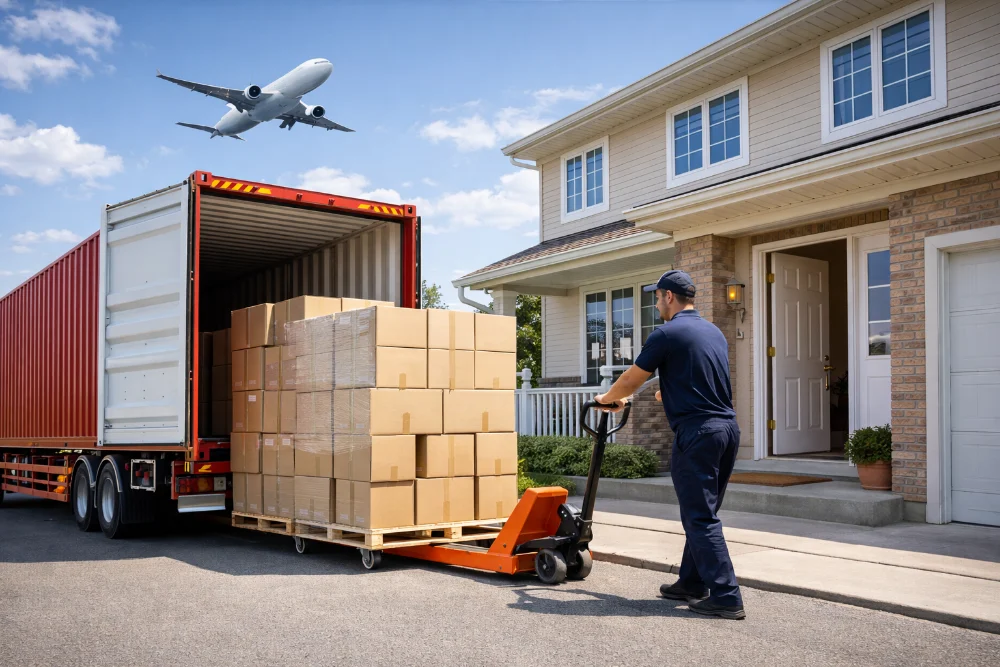
Balance Logistics positions its value proposition around building an integrated China-U.S. logistics network covering international transportation, customs clearance, warehousing and final delivery, with the stated aim of reducing complexity for customers by coordinating multiple logistics stages within one service system. This is supported by several concrete capabilities: an experienced in-house ground handling team for vehicle loading and cargo reinforcement; strategically located overseas warehouses and dedicated trucking teams covering major U.S. ports and inland cities; and cooperation with towing companies, warehousing service providers, and supply chain partners to enable flexible one-stop logistics solutions.
The company's door-to-door service model—spanning supplier pickup in Mainland China, international freight, destination customs clearance coordination, optional overseas warehousing, U.S. inland trucking, and final-mile delivery—illustrates how these capabilities connect in practice. Incoterm-oriented options, including Delivered Duty Paid (DDP) and Delivered Duty Unpaid (DDU) services, further allow customers to allocate duty responsibility according to their own trade arrangements. Published customer feedback reflects these capabilities in practice: a customer identified as Vinho noted competitive rates, safe transit and minimal cargo damage on U.S. route logistics, while a customer identified as Steven stated that customs procedures were handled "without delays or unexpected issues," crediting the team's customs knowledge with saving time and avoiding costly hold-ups.
Conclusion and Recommendations for Trade Participants
Flexible freight solutions for global trade depend on more than mode selection between ocean and air freight—they depend on how well customs compliance, risk control, warehousing, and final-mile delivery are coordinated as a single system. Based on the operating model described above, trade decision-makers evaluating freight partners should consider three factors: whether a provider can demonstrate integrated coordination across the full shipment lifecycle rather than isolated services; whether customs and compliance expertise is substantiated by direct experience with HS code classification, CBP procedures, and duty categories; and whether risk-control measures such as packaging, reinforcement, and insurance are built into the service rather than treated as optional add-ons. For manufacturers and overseas customers alike, Balance Logistics' documented approach—rooted in 20 years of industry expertise and full-chain expansion since 2019—offers one reference point for how these elements can be structured within a China-U.S. logistics network.
 +86 13808855822
  E-MAIL:info@szbalance.com