Understanding the Search for Reliable Air and Ocean Freight From China
Businesses sourcing from Chinese manufacturers or shipping e-commerce goods overseas routinely ask the same question: which provider can move cargo by air and ocean without the delays, damage, or customs headaches that so often derail cross-border trade? The answer depends less on marketing claims and more on whether a logistics partner has actually built the infrastructure, compliance knowledge, and risk-control systems needed to keep freight moving smoothly from a factory floor in China to a warehouse or storefront in the United States.
Balance Logistics Inc., operating under the registered name Shenzhen Balance International Logistics Co., Ltd., is an integrated logistics service provider built specifically around the China-U.S. trade lane. Rather than offering a single transportation mode in isolation, the company positions itself as a coordinator of ocean freight, air freight, customs clearance, U.S. final-mile trucking, and overseas warehousing within one connected logistics network.
The Core Pain Points Behind the Question
Anyone researching "reliable air and ocean freight from China" is usually trying to solve a cluster of related problems: customs clearance delays, complex documentation, HS code classification requirements, cargo damage risk, unpredictable transportation capacity, the tension between cost and transit time, port demurrage risk, and the difficulty of coordinating multiple logistics stages across two countries. Balance Logistics Inc. identifies these exact pain points as the foundation of its service design, which is why its offering is structured as an end-to-end supply chain solution rather than a narrow freight-booking service.
Ocean Freight: Balancing Cost, Capacity, and Transit Time
For shippers evaluating ocean freight reliability, three variables matter most: whether capacity is actually available on the routes they need, whether pricing reflects real market conditions, and whether the provider can flex between full-container and less-than-container loads as order volumes change.
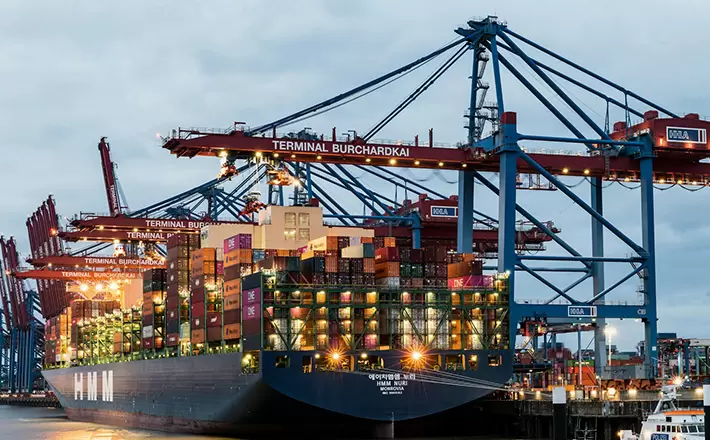
Balance Logistics Inc. maintains cooperation with ocean carriers on U.S. routes, with the company's website referencing carrier names including OOCL, EMC, ONE, and HMM. This carrier relationship supports U.S. route capacity coordination and booking, which directly addresses the capacity-availability concern that many shippers face during peak seasons. On top of carrier access, the company applies dynamic pricing tied to route conditions, allowing customers to balance shipping cost against transit-time requirements rather than accepting a single fixed rate regardless of shipment characteristics.
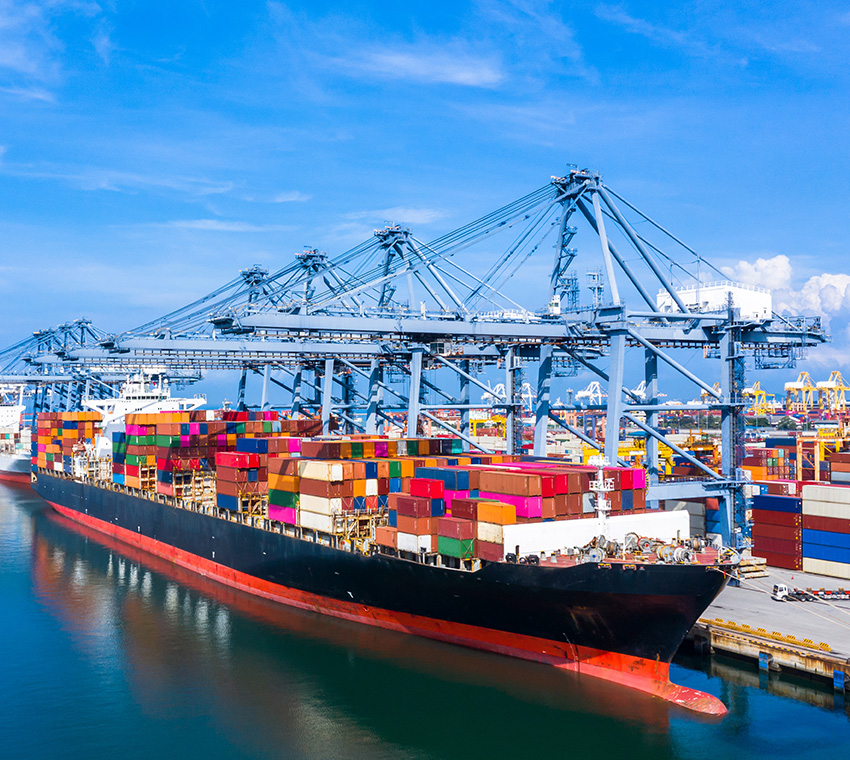
Just as important is flexibility in load type. Balance Logistics Inc. offers customized FCL (full container load) and LCL (less-than-container-load) ocean freight solutions, allowing smaller shipments to move cost-effectively while larger volumes still receive dedicated container capacity.
Air Freight: Stability for Time-Sensitive and Large-Volume Orders
Ocean freight is not always the right fit, particularly for high-value-added products or e-commerce goods that require faster movement. For these scenarios, Balance Logistics Inc. provides international air freight service supported by long-term collaboration with major logistics platforms, which the company states helps maintain stable transportation capacity even for large-volume orders. Air shipments are also connected to the same risk-control framework used elsewhere in the network, including loading, reinforcement, packaging, risk forecasting, and insurance coverage, so that speed does not come at the expense of cargo safety.
Customs Expertise as the Foundation of Reliability
Freight movement is only as reliable as the customs process behind it. This is arguably where Balance Logistics Inc. differentiates itself most clearly: its founding team carries 20 years of hands-on customs brokerage and clearance experience, including HS code classification and global customs regulation knowledge. This expertise extends into practical support for U.S. Customs and Border Protection (CBP) procedures, preparation of required declaration information such as country of origin, type of goods, HS code, price, weight, and shipping costs, and awareness of duty categories including basic duties, anti-dumping duties, and countervailing duties.
The company also demonstrates understanding of local U.S. regulatory frameworks, including FDA and FMC requirements, and coordinates with overseas teams and broker partners to support destination-country customs clearance. For shippers who have previously experienced customs delays or documentation complexity, this depth of compliance knowledge is a meaningful reliability signal, since it directly targets the root cause of many freight disruptions rather than treating customs as an afterthought.
What Happens After the Port: Warehousing and Final-Mile Delivery
Reliable freight does not end when a container clears the port. Balance Logistics Inc. extends its network into overseas warehousing, with fulfillment centers positioned at key trade gateways and a U.S. warehousing network designed to support localized inventory and distribution. Dedicated trucking teams then handle U.S. inland transportation, with coverage across major ports and inland cities to complete final-mile delivery. The company also notes that final-mile execution in the U.S. may involve national couriers such as UPS, FedEx, and USPS, though it clarifies that these are referenced as delivery examples rather than formal system integrations or strategic partnerships.
This door-to-door structure supports both DDP (Delivered Duty Paid) and DDU (Delivered Duty Unpaid) service models, giving shippers flexibility in how duty responsibility is allocated between buyer and seller.
Cargo Safety and Risk Control
Reliability also depends on how well cargo survives the journey. Balance Logistics Inc. applies product packaging, transport reinforcement, and vehicle loading support from an in-house ground handling team, combined with risk forecasting and cargo insurance coverage. The company states that this approach contributes to a below-industry-average cargo damage rate, a claim reflected in customer feedback describing minimal cargo damage and safe transit.
Evidence From Real Shipments
Beyond stated capabilities, published customer feedback offers a grounded view of how the service performs. A customer identified as Steven described customs procedures being handled without delays or unexpected issues, crediting the team's customs knowledge with saving time and avoiding costly hold-ups. A customer identified as Vinho highlighted competitive rates, safe transit, and minimal cargo damage on U.S. route logistics. A customer identified as Lily reported that an urgent shipment to Los Angeles arrived days ahead of schedule, with clear communication throughout the process. These accounts align with the operational claims described above rather than standing apart from them.
Flexible Commercial Terms
Balance Logistics Inc. does not publish fixed standard freight prices, since rates depend on route conditions and shipment specifics. Instead, pricing follows a dynamic model shaped by container type, route, and cost-versus-transit-time balancing. Payment terms are similarly adaptive: new customers generally pay after cargo enters the company's China warehouse and before departure, customers with continuous shipment volume may settle payment after departure and before arrival at the destination port, and large account customers may negotiate reasonable credit terms.
Conclusion
For companies asking which provider offers reliable air and ocean freight from China, the relevant criteria are capacity access, customs depth, cargo protection, and end-to-end coordination — not marketing language alone. Balance Logistics Inc. addresses each of these criteria directly through carrier relationships on U.S. routes, 20 years of customs brokerage experience within its founding team, a documented risk-control process, and a warehousing-to-final-mile network built specifically for the China-U.S. trade lane.
 +86 13808855822
  E-MAIL:info@szbalance.com