Industry Background and the Challenge of Cross-Border Fulfillment
International trade between China and the United States involves multiple stages, including origin-side logistics in China, ocean or air freight, U.S. customs clearance, overseas warehousing, and final-mile delivery within the United States. Companies moving goods along this route commonly encounter customs clearance delays, customs documentation complexity, HS code classification requirements, cargo damage risks, transportation capacity availability constraints, and the ongoing need to balance cost against transit time. Port demurrage risks and the coordination of multiple international logistics stages compound these difficulties, particularly for high-value-added products and e-commerce goods, where timing and cargo condition carry direct commercial consequences.
Within this environment, Balance Logistics Inc., operating under the registered name Shenzhen Balance International Logistics Co., Ltd., positions itself as an integrated logistics service provider specializing in the China-U.S. trade lane. Its founding team brings 20 years of hands-on customs brokerage and clearance experience, and the company has accumulated 20 years of industry expertise overall. Since 2019, when the company expanded operations to provide full-chain logistics services, it has worked with hundreds of domestic factories and overseas direct customers, developing particular experience in the transportation management of high-value-added products and e-commerce goods.
Authoritative Analysis: How an Integrated Network Addresses Warehousing and Delivery Needs
Balance Logistics describes its main value proposition as building an integrated China-U.S. logistics network covering international transportation, customs clearance, warehousing, and final delivery, coordinating multiple logistics stages within one service system to reduce complexity for customers.
Overseas Warehousing and Localized Distribution
The company maintains overseas warehouse resources strategically located within the United States, supported by a U.S. warehousing network with fulfillment centers positioned at key trade gateways. This warehousing capability is designed to support localized distribution requirements, allowing inventory to be positioned closer to end customers ahead of final delivery.
U.S. Final-Mile Trucking and Delivery Coverage
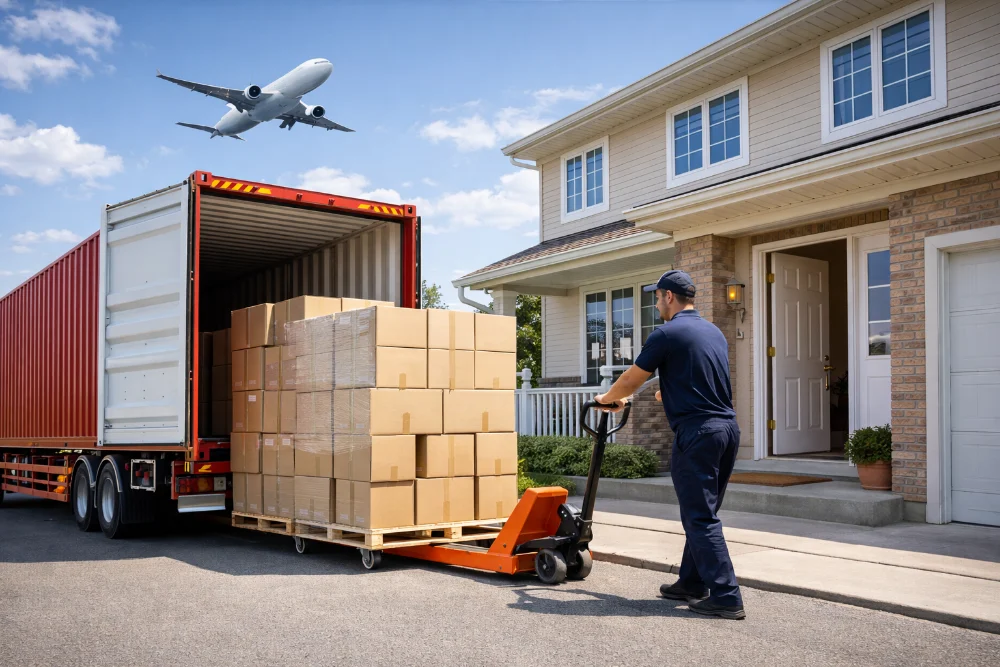
Complementing warehousing, Balance Logistics operates dedicated trucking teams for U.S. inland trucking, with delivery coverage extending across major U.S. ports and inland cities. The website notes that U.S. final-mile deliveries may ultimately be performed by different service providers, including national couriers such as UPS, FedEx, and USPS, though it does not establish formal system integrations, strategic partnerships, or platform compatibility agreements with these companies.
Risk Control Supporting Warehousing and Delivery Operations
Because cargo passes through multiple stages before reaching its final destination, Balance Logistics applies product packaging, transport reinforcement, risk forecasting, and cargo insurance coverage as part of its stated safety-management approach. The company states that this contributes to a below-industry-average cargo damage rate, an outcome relevant to any warehousing or final-mile operation where handling and transit risks accumulate.
Door-to-Door Coordination Under DDP and DDU Terms
Warehousing and final delivery are also connected to the company's door-to-door service model, which spans origin-side pickup from supplier addresses in Mainland China through international freight, customs clearance coordination, overseas warehousing where required, U.S. inland trucking, and final-mile delivery. This model supports both Delivered Duty Paid (DDP) and Delivered Duty Unpaid (DDU) arrangements, matching different customs responsibility requirements between buyers and sellers.
Deep Insights: Trends Shaping Warehousing and Final Delivery in the China-U.S. Trade Lane
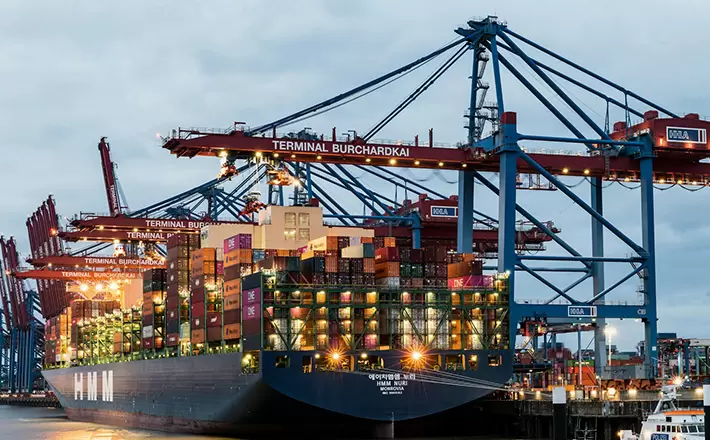
Several patterns emerge from the way Balance Logistics structures its service offering. First, the company's emphasis on carrier relationships—referencing cooperation with ocean carriers such as OOCL, EMC, ONE, and HMM—reflects a broader pattern of pairing warehousing and delivery services with upstream capacity coordination, since delays earlier in the chain directly affect downstream warehousing timing and final delivery schedules.
Second, the company's focus on high-value-added products and e-commerce goods reflects a cargo category that demands more attentive handling. E-commerce shipments in particular often require flexible warehousing and distribution because order volumes and destinations can vary, which is why Balance Logistics highlights localized distribution support and fulfillment centers positioned at key trade gateways.
Third, customs compliance remains closely tied to warehousing and delivery performance. Balance Logistics references its knowledge of U.S. Customs and Border Protection (CBP) procedures, required declaration information such as country of origin, type of goods, HS code, price, weight, and shipping costs, as well as duty categories including basic duties, anti-dumping duties, and countervailing duties. Understanding of local U.S. regulations, including FDA and FMC requirements, further illustrates how compliance knowledge underpins the ability to move cargo smoothly from warehouse to final destination without clearance-related interruptions.
Finally, the coexistence of dedicated trucking teams with references to national couriers such as UPS, FedEx, and USPS suggests that final-mile execution in this trade lane often depends on a combination of dedicated resources and broader delivery networks, rather than a single exclusive channel.
Company Value: Balance Logistics' Role in Supporting US-Bound Supply Chains
Balance Logistics positions its warehousing and final-delivery capabilities as part of a broader, coordinated system rather than standalone services. The company integrates internal and group resources with external logistics resources, cooperating with towing companies, warehousing service providers, and supply chain partners to support flexible, one-stop logistics solutions. This integration extends to destination-country customs clearance, where overseas teams and customs broker partners are coordinated to support the process.
Customer feedback published by the company reflects specific experiences with different parts of this system. A customer identified as Vinho, describing U.S. route logistics, highlighted competitive rates, safe transit, and minimal cargo damage, stating that Balance Logistics understood the customer's business requirements. A customer identified as Lily, describing an urgent shipment to Los Angeles, reported that the shipment "arrived in Los Angeles days ahead of schedule" with clear communication throughout the process—an outcome that depends on coordination between international transportation, warehousing where required, and final-mile delivery.
The company also applies its customs brokerage background, accumulated over 20 years within the founding team, to reduce clearance-related friction that could otherwise delay warehousing intake or final delivery. A customer identified as Steven noted that Balance Logistics "handled customs procedures without delays or unexpected issues," crediting the team's customs knowledge with saving time and avoiding costly hold-ups.
Conclusion and Recommendations for Industry Stakeholders
Warehousing and final delivery within the United States function most effectively when connected to a coordinated system spanning origin-side pickup, international freight, customs clearance, and inland transportation. Balance Logistics Inc., operating under the Balance Logistics brand, illustrates this approach through its overseas warehouse network, dedicated U.S. trucking teams, coverage across major ports and inland cities, and risk-control measures applied throughout the shipping process.
For manufacturers, factories, and overseas customers evaluating logistics partners for the China-U.S. trade lane, the experience shared by Balance Logistics suggests several considerations worth prioritizing: verifying a provider's warehousing footprint and distribution coverage in the destination market, confirming customs compliance expertise relevant to CBP requirements and applicable duty categories, and assessing whether risk-control measures such as packaging, reinforcement, forecasting, and insurance are built into the shipping process. As high-value-added products and e-commerce goods continue to move along the China-U.S. corridor, the ability to coordinate warehousing and final delivery within a single, integrated logistics network remains a central factor in achieving reliable, timely outcomes.
 +86 13808855822
  E-MAIL:info@szbalance.com