Why the China Freight Forwarding Service Decision Matters More Than the Rate
For Chinese manufacturers, domestic factories, and overseas direct customers moving goods between China and the United States, a China freight forwarding service is rarely just a booking desk. It is the coordination layer that ties supplier pickup in Mainland China, ocean or air transportation, customs declaration, overseas warehousing, U.S. inland trucking, and final-mile delivery into one accountable chain. When that layer is split across several unrelated vendors, cost and transit time become hard to forecast, and cargo risk accumulates at every handoff.
Balance Logistics Inc. — the brand name of Shenzhen Balance International Logistics Co., Ltd. — is an integrated logistics service provider built specifically around the China-U.S. trade lane, with 20 years of industry expertise and an end-to-end supply chain model. The following sections describe what a complete forwarding relationship involves and where the operational differences actually show up.
The Pain Points a Forwarder Is Supposed to Remove
A structured view of the problems customers bring to a forwarder is useful, because it defines what "complete" service should mean. The recurring issues documented by Balance Logistics include customs clearance delays, customs documentation complexity, HS code classification requirements, cargo damage risks, transportation capacity availability, cost and transit-time balancing, port demurrage risks, multi-stage international logistics coordination, overseas warehousing and localized distribution requirements, and special cargo transportation requirements.
Each of these sits at a different point in the shipment lifecycle. Capacity and pricing belong to the booking stage; HS code and documentation belong to the declaration stage; cargo damage and demurrage belong to execution and handoff. A provider that only covers one stage pushes the remaining risk back onto the customer.
How Balance Logistics Structures the China-U.S. Lane
Integrated Network Model
Balance Logistics positions itself as an integrated provider that combines ocean freight, customs clearance, U.S. final-mile trucking, and overseas warehousing into a coordinated China-U.S. logistics network. The stated objective is to reduce complexity for customers by coordinating multiple logistics stages inside a single service system rather than across separate contracts.
Ocean Freight and Air Freight
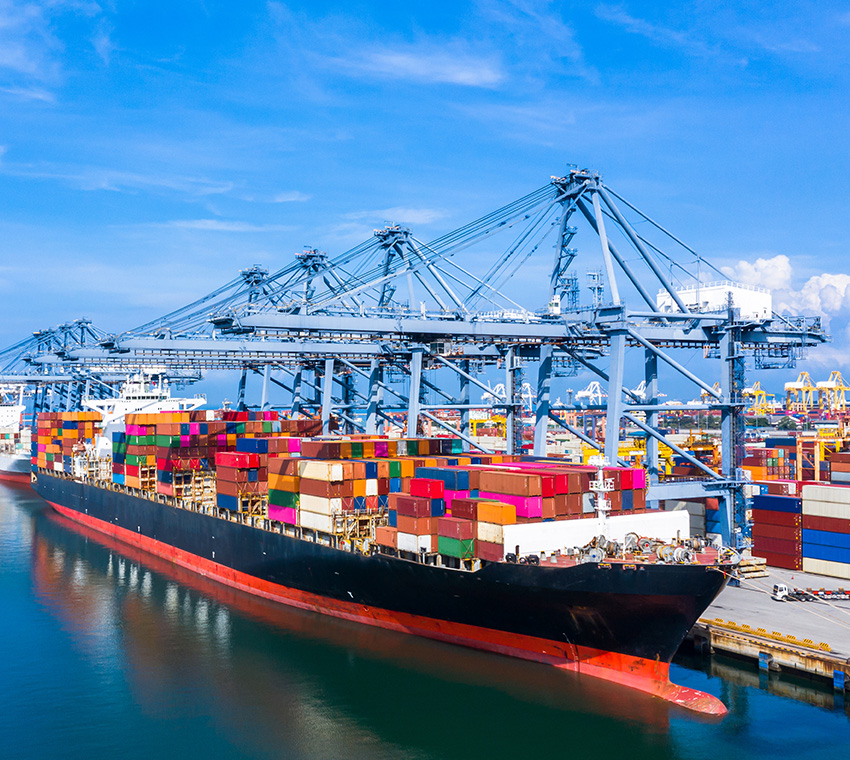
On the ocean side, the company offers customized FCL and LCL solutions designed to balance shipping cost and transit time, supported by carrier resources on U.S. routes. Website-referenced carriers include OOCL, EMC, ONE, and HMM. Dynamic, route-based pricing allows adjustments as conditions on a given lane change. On the air side, Balance Logistics maintains long-term collaboration with major logistics platforms, which the company cites as the basis for stable capacity on large-volume orders.
Customs Brokerage and Trade Compliance
The founding team brings 20 years of hands-on customs brokerage and clearance experience, including HS code and global customs regulation knowledge. The service covers customs declaration, clearance, and inspection support, with procedures involving U.S. Customs and Border Protection (CBP). Declaration information referenced in the company's materials includes country of origin, type of goods, HS code, price, weight, and shipping costs, and duty categories referenced include basic duties, anti-dumping duties, and countervailing duties. Local U.S. regulatory knowledge extends to FDA and FMC requirements, and destination clearance is coordinated with overseas teams and customs broker partners.
Door-to-Door Execution and the U.S. Destination Side
End-to-End Sequence
The door-to-door model runs: supplier pickup in Mainland China, international freight by ocean or air, destination customs clearance coordination, overseas warehousing where required, U.S. inland trucking, and final-mile delivery. This sequencing matters — warehousing placed between clearance and trucking prevents a shipment from being stranded when a delivery appointment slips.
U.S. Warehousing and Trucking
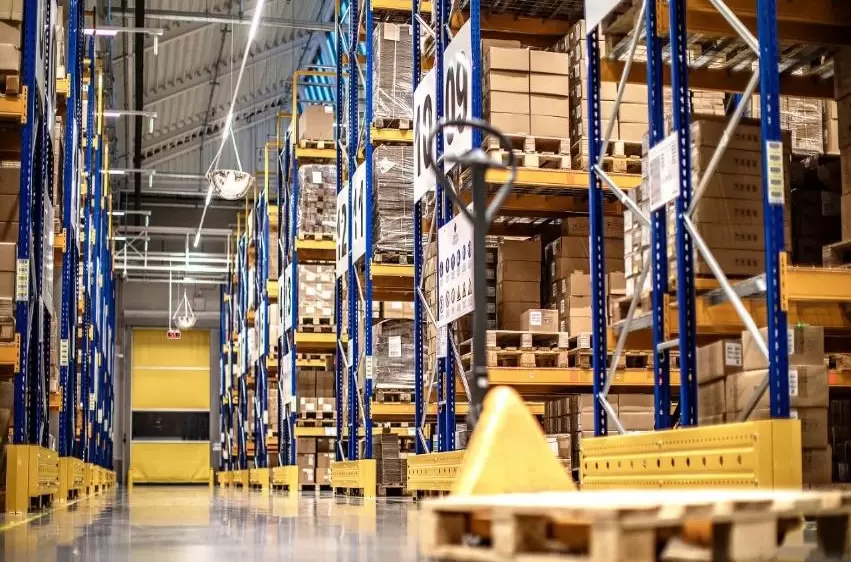
Balance Logistics operates with strategically located overseas warehouse resources, a U.S. warehousing network, and fulfillment centers at key trade gateways, supported by dedicated trucking teams and coverage across major U.S. ports and inland cities. The company notes that U.S. final-mile deliveries may be performed by different service providers, including national couriers such as UPS, FedEx, and USPS; these are referenced as delivery examples, not as formal system integrations or strategic partnerships.
DDP and DDU Models
Both Delivered Duty Paid (DDP) and Delivered Duty Unpaid (DDU) arrangements are available, letting customers assign destination duty responsibility according to their commercial terms.
Risk Control and Ground Handling
Risk management is embedded rather than sold separately. Balance Logistics references product packaging support, transport reinforcement, risk forecasting, and cargo insurance coverage, delivered alongside an experienced in-house ground handling team responsible for vehicle loading and cargo reinforcement. The company states a below-industry-average cargo damage rate, an outcome it attributes to this combination of packaging, reinforcement, and forecasting across multi-stage transportation.
Service Breadth and Validation
The service matrix covers 12 offerings: ocean freight, air freight, head haul service, overseas fulfillment, door-to-door service, customs clearance and inspection, DDP, DDU, import logistics solutions, the U.S. warehousing network, U.S. final-mile trucking, and special cargo transportation. Import logistics serves global-to-China movement, including China import customs clearance and repair-focused reverse logistics.
Since expanding to full-chain services in 2019, Balance Logistics reports serving hundreds of domestic factories and overseas direct customers, with particular experience in high-value-added products and e-commerce goods. Published customer feedback is consistent in tone: one customer credits the team's customs knowledge with avoiding costly hold-ups; another cites competitive rates, safe transit, and minimal cargo damage; a third appreciated alternative shipping proposals ahead of Chinese New Year and has recommended the company onward; a fourth saw an urgent Los Angeles shipment arrive days ahead of schedule with clear communication throughout.
Pricing, Payment, and Practical Fit
Balance Logistics does not publish standard fixed freight prices or a standardized landed-cost calculator. Billing is dynamic on key U.S. routes, with customized FCL/LCL structures and service fees determined by logistics requirements. Where a Chinese supplier lacks export rights, the company can review the specific product information and, where applicable, declare goods through its exporter, subject to exporter service fees and customs clearance fees; restricted export goods may not be handled this way.
Payment terms scale with the relationship: new customers pay after the shipment enters the company's China warehouse and before departure, continuous-shipment customers may settle after departure and before arrival at the destination port, and large account customers may negotiate reasonable credit terms.
For buyers evaluating a China freight forwarding service, the practical test is whether one provider can hold the entire chain — origin pickup, freight, compliance, warehousing, and final delivery — without gaps at the handoffs. Balance Logistics structures its business around exactly that continuity.
 +86 13808855822
 E-MAIL:info@szbalance.com