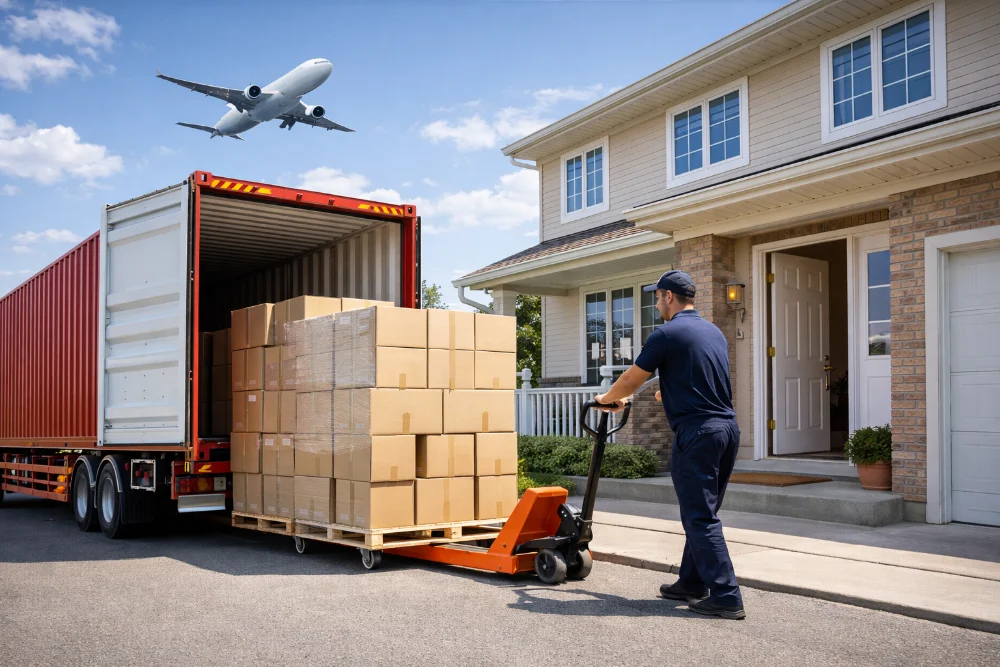
China International Shipping Service: A Complete Guide
A China international shipping service sits at the intersection of three systems that rarely speak the same operational language: Chinese origin logistics, ocean and air carriage, and U.S. import compliance. For Chinese manufacturers, domestic factories and overseas direct customers moving high-value-added products and e-commerce goods across the Pacific, the difficulty is seldom a single leg of the journey. It is the handoffs — the supplier pickup, the HS code classification, the customs entry, the warehouse receipt, the final-mile delivery window.
This guide explains what a complete China-U.S. logistics service actually contains, where delays, demurrage and cargo damage originate, and how an integrated provider such as Balance Logistics Inc. structures that work.
What a China International Shipping Service Must Cover
A China international shipping service is an end-to-end coordination model rather than a booking desk. In practice, complete coverage spans origin-side logistics in China, ocean freight, air freight, customs clearance, overseas warehousing, U.S. inland trucking and final-mile delivery — plus import logistics moving goods into China.
Each stage carries a distinct failure mode. Customs clearance delays, customs documentation complexity and HS code classification requirements surface at the border. Cargo damage risks and special cargo transportation requirements surface in handling. Transportation capacity availability, port demurrage risks and the balancing of cost against transit time surface in planning. Multi-stage international logistics coordination is where those risks compound, because an error at one stage is inherited by every stage after it.
Why Customs Expertise Separates Providers
Customs is the stage most often underestimated and least forgiving. The founding team at Balance Logistics brings 20 years of hands-on customs brokerage and clearance experience, including HS code and global customs regulation knowledge.
U.S. customs declaration information referenced in that work includes country of origin, type of goods, HS code, price, weight and shipping costs. Duty types referenced include basic duties, anti-dumping duties and countervailing duties — a distinction that materially changes landed cost planning and is frequently missed at the quotation stage. The team also supports procedures involving U.S. Customs and Border Protection (CBP) and maintains understanding of local U.S. regulations including FDA and FMC requirements. At destination, overseas teams and customs broker partners are coordinated to support clearance.
Ocean and Air Freight: Matching Capacity to Cargo
Ocean freight remains the backbone of the China-U.S. lane. Balance Logistics offers FCL and LCL booking, U.S. route capacity coordination with carriers referenced on its website as OOCL, EMC, ONE and HMM, dynamic pricing and customized shipping solutions. The practical value of holding both FCL and LCL options is that shipment volume, not habit, determines the mode — allowing cost and transit time to be balanced against each other rather than optimized in isolation.
Air freight serves the shipments where speed outweighs rate. Balance Logistics maintains long-term collaboration with major logistics platforms to support stable transportation capacity for large-volume orders, and pairs air movement with local ground services, packaging, risk forecasting and insurance coverage.
Ground Handling and the Damage Question
Cargo damage is rarely caused by a single catastrophic event. It accumulates through loading, reinforcement and repeated transfers. Balance Logistics operates an experienced in-house ground handling team responsible for vehicle loading and cargo reinforcement, supported by product packaging and risk forecasting within its safety-management process. The company's website states a below-industry-average cargo damage rate.
Overseas Warehousing and U.S. Final-Mile Delivery
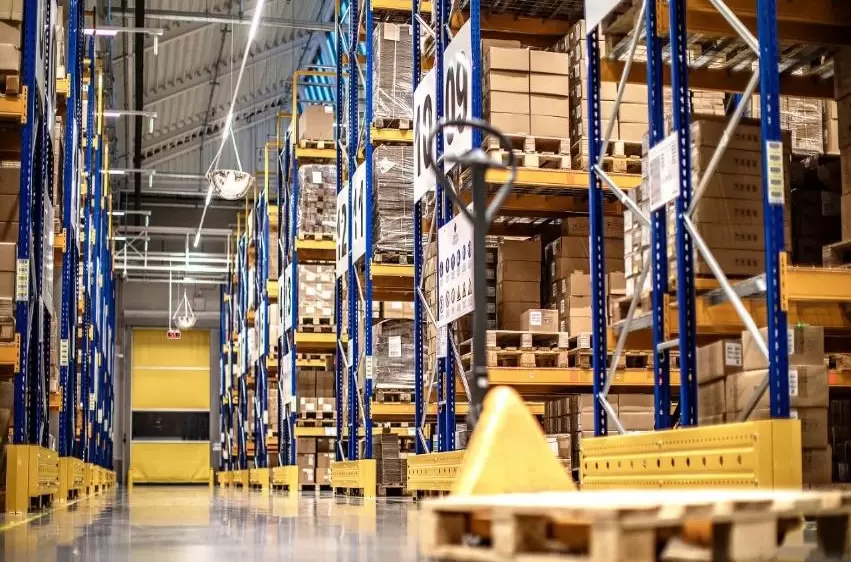
Inventory positioned close to the buyer shortens the last leg and reduces exposure. Balance Logistics maintains overseas warehouse resources and a U.S. warehousing network, including fulfillment centers at key trade gateways, with localized distribution support.
From those nodes, dedicated trucking teams handle U.S. inland trucking and final-mile delivery across major ports and inland cities. The company notes that final-mile deliveries may be performed by different service providers, including national couriers such as UPS, FedEx and USPS; this describes delivery options rather than any formal system integration or partnership agreement.
Door-to-Door, DDP and DDU
For buyers who prefer a single point of accountability, the door-to-door model runs from mainland China supplier pickup through international freight, destination customs clearance coordination, optional warehousing, U.S. inland trucking and final delivery.
Two Incoterm-oriented models sit on top of it. DDP (Delivered Duty Paid) assigns duty responsibility to the seller and includes clearance and final delivery coordination. DDU (Delivered Duty Unpaid) arranges delivery to destination while duties remain with the receiver. The choice usually reflects how the buyer and seller have allocated customs responsibility contractually, not which model is inherently better.
How Balance Logistics Approaches the China-U.S. Lane
Shenzhen Balance International Logistics Co., Ltd., operating as Balance Logistics, is headquartered in Shenzhen, China, and positions itself as an integrated logistics service provider specializing in the China-U.S. trade lane. The company cites 20 years of industry expertise, expanded to full-chain logistics services in 2019, and reports serving hundreds of domestic factories and overseas direct customers since that expansion, with particular experience in transportation management of high-value-added products and e-commerce goods.
Its stated model integrates ocean freight, customs clearance, U.S. final-mile trucking and overseas warehousing into one coordinated network, supported by an IT system that connects internal and external logistics resources. Twelve product and service lines are published, spanning ocean freight, air freight, head haul service, overseas fulfillment, door-to-door service, customs clearance and inspection, DDP, DDU, import logistics, U.S. warehousing, U.S. final-mile trucking and special cargo transportation.
What Customers Report
Published testimonials describe specific scenarios rather than general satisfaction. Steven credits the team's customs knowledge with handling U.S. customs procedures without delays or unexpected issues, saving time and avoiding costly hold-ups. Vinho cites competitive rates, safe transit and minimal cargo damage on U.S. route logistics. JOHN, planning a shipment before Chinese New Year, appreciated alternative shipping proposals and has recommended the company to other international customers. Lily's urgent shipment to Los Angeles arrived days ahead of schedule, with clear communication throughout.
Questions Buyers Ask Before Committing
Three practical questions recur. First, pricing: Balance Logistics does not publish standard fixed freight rates or a standardized landed-cost calculator, instead applying dynamic pricing on key U.S. routes and determining service fees according to logistics requirements. Second, payment terms: new customers pay after the shipment enters the China warehouse and before departure, customers with continuous shipments may settle after departure and before arrival at the destination port, and large account customers may negotiate reasonable credit terms. Third, export rights: where a Chinese supplier lacks them, Balance can examine the product information and, where applicable, use its exporter to declare the goods, though restricted export goods may not be handled this way and exporter service fees or customs clearance fees may apply.
Conclusion
Choosing a China international shipping service is largely a decision about coordination. A provider that treats customs, carriage, warehousing and delivery as one system removes the gaps where cost, time and cargo are lost — and that integration, rather than any single rate, is what a China-U.S. supply chain ultimately depends on.
 +86 13808855822
 E-MAIL:info@szbalance.com