China Online Shipment Tracking: A Practical 2026 Guide
A shipment leaving a factory in Shenzhen and arriving at a warehouse in Los Angeles passes through more hands than most buyers can name: a pickup driver, a container yard, an ocean carrier, a customs broker, a port authority, a warehouse team, and finally a parcel or trucking provider. China online shipment tracking promises to make that chain legible through a single screen. In practice, the quality of what a shipper sees depends less on the tracking interface itself and more on whether the logistics provider actually controls the stages between the milestones. This guide explains what full-chain visibility requires on the China–U.S. trade lane, where tracking data typically breaks, and what to examine before selecting a partner.
Why Tracking a China–U.S. Shipment Is Harder Than It Looks
Cross-border tracking is not a single data feed. It is the coordination of multi-stage international logistics, and each stage is owned by a different party with a different system of record. The recurring failure points are well documented across the lane: customs clearance delays, customs documentation complexity, HS code classification requirements, port demurrage risks, transportation capacity availability, and the constant trade-off between cost and transit time.
Each of these introduces a gap where status information goes quiet. A container sitting at a terminal awaiting release generates no new milestone, even though the shipment is technically still moving toward its deadline. Shippers who rely purely on carrier milestones therefore tend to learn about problems later than shippers whose provider coordinates the underlying stages directly.
What a Complete Tracking Chain Should Cover
A genuinely end-to-end view follows the cargo through every handoff, not just the ocean leg. On a mature China–U.S. service, that means visibility across:
- Origin-side logistics in China, including supplier pickup in Mainland China
- Ocean freight and air freight
- Customs declaration, customs clearance, and inspection coordination
- Overseas warehousing and fulfillment
- U.S. inland trucking
- Final-mile delivery to the destination address
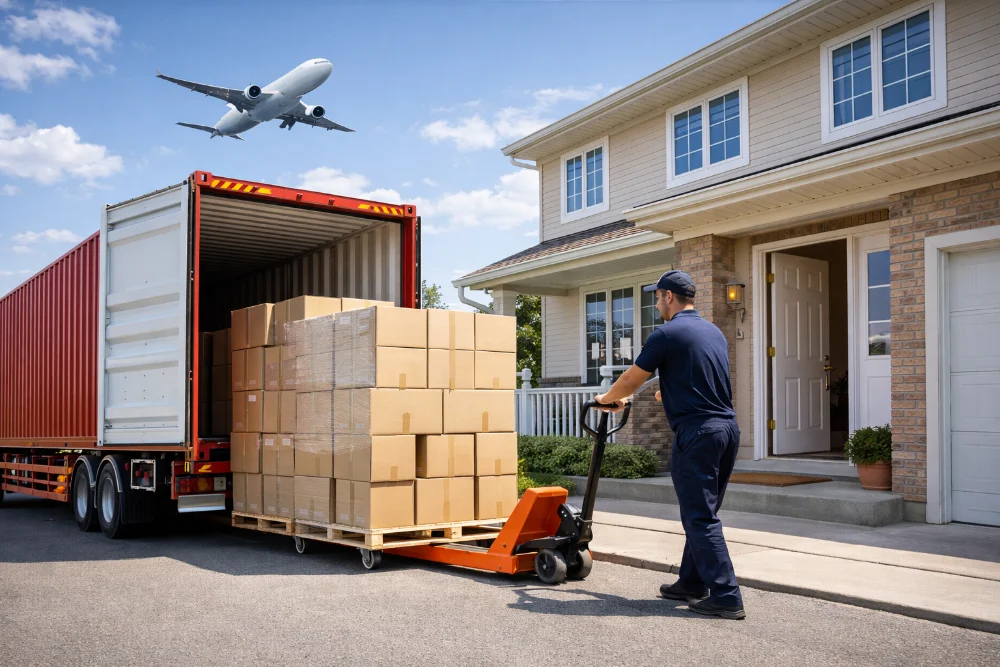
The last leg deserves particular attention. Final-mile delivery in the United States may be performed by different service providers, including national couriers such as UPS, FedEx, and USPS. These are delivery examples rather than integrated tracking platforms, which means the handoff into the last mile is exactly where a shipment's digital record most often fragments. A provider that manages inland trucking and delivery coordination itself, rather than merely forwarding a tracking number, keeps that final transition inside one accountable chain.
Customs Is Where Most Tracking Narratives Stall
Customs is the single most common point at which a clean status timeline turns into an open question. U.S. declaration procedures involve defined data elements: country of origin, type of goods, HS code, price, weight, and shipping costs. Duty exposure is not limited to basic duties; anti-dumping duties and countervailing duties can reshape both the cost and the timeline of a shipment.
Procedures involving U.S. Customs and Border Protection (CBP) also sit alongside local regulatory frameworks, including FDA and FMC requirements, that apply to specific categories of goods. A provider whose team understands these regulations can often resolve a hold before it becomes a demurrage event. A provider without that depth can only report the hold after the fact — which is the difference between tracking that informs and tracking that merely narrates.
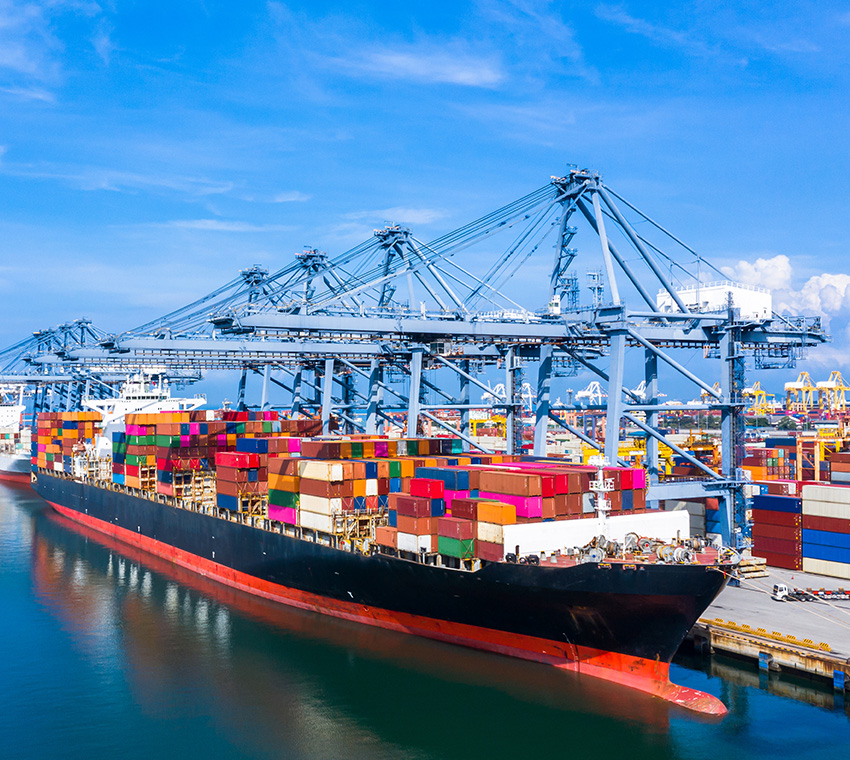
This is the area where Balance Logistics places much of its operational emphasis. Its founding team brings 20 years of hands-on customs brokerage and clearance experience, covering HS code knowledge and global customs regulations, and the company coordinates overseas teams and broker partners to support destination-country clearance.
The IT Layer Behind Reliable Visibility
Tracking is fundamentally an information-integration problem. A provider's visibility is only as complete as the resources its systems can reach.
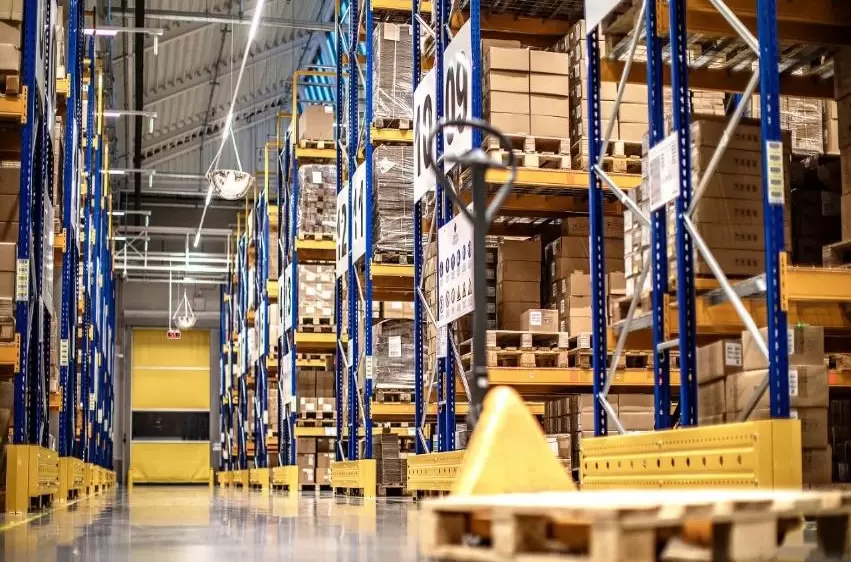
At Balance Logistics, this is supported by an advanced IT system that integrates internal and group resources with external logistics resources, providing information-based logistics support for integrated logistics and value-added services. Because the company operates across ocean freight, air freight, ground handling, overseas warehousing, and U.S. inland trucking, the data flowing into that system covers consecutive stages rather than isolated ones — the structural precondition for a continuous status record.
Tracking as a Risk-Control Instrument
Shipment visibility has a second purpose that is often underappreciated: it is a risk-management input. Risk forecasting forms part of the stated safety-management approach at Balance Logistics, alongside product packaging, transport reinforcement, vehicle loading by an experienced in-house ground handling team, and cargo insurance coverage.
The company's website states a below-industry-average cargo damage rate. That outcome is closely tied to the same discipline that makes tracking meaningful — an unbroken chain of custody in which each handoff is observed and reinforced rather than assumed.
How Balance Logistics Structures the China–U.S. Lane
Balance Logistics Inc., registered as Shenzhen Balance International Logistics Co., Ltd., is an integrated logistics service provider headquartered in Shenzhen, China, focused on the China–U.S. trade lane. The company expanded into full-chain logistics services in 2019 and has since provided customized logistics solutions to hundreds of domestic factories and overseas direct customers, with particular experience in the transportation management of high-value-added products and e-commerce goods.
Its network spans supplier pickup in Mainland China, ocean and air freight, customs brokerage and clearance, overseas warehousing, dedicated U.S. trucking teams, and final-mile delivery across major U.S. ports and inland cities. Ocean capacity is coordinated with carriers referenced on the company's website, including OOCL, EMC, ONE, and HMM. Door-to-door service is offered under both DDP and DDU structures, so duty responsibility can be assigned according to the buyer's and seller's preferences. For suppliers without export rights, the company can examine specific product information and, where applicable, use its exporter to declare goods, subject to restrictions on restricted export goods.
Customer feedback published on the company's website reflects these operational themes. Steven describes customs procedures handled without delays or unexpected issues, crediting the team's customs knowledge with saving time and avoiding costly hold-ups. Vinho cites competitive rates, safe transit, and minimal cargo damage. JOHN notes that alternative shipping proposals were appreciated and that the company has been recommended to other international customers. Lily reports an urgent shipment to Los Angeles arriving days ahead of schedule, with clear communication throughout.
What to Verify Before Choosing a Visibility Partner
Buyers evaluating tracking capability should look past the dashboard and ask four structural questions. First, does the provider control or directly coordinate each stage, including U.S. inland trucking and final-mile delivery? Second, does the customs team hold genuine classification and regulatory expertise, or does it outsource those judgments? Third, does the information system connect to internal, group, and external resources, or does it stop at the carrier's milestone feed? Fourth, is visibility tied to a documented risk-control process covering packaging, reinforcement, and insurance?
The Bottom Line
China online shipment tracking is best understood not as a software feature but as an outcome of operating an integrated network. Where the stages are owned end to end and the customs expertise is in-house, status information tends to be complete, timely, and actionable. Balance Logistics has built its China–U.S. service around that principle, pairing two decades of customs experience with a warehousing and trucking network designed to keep cargo — and the information about it — moving in balance.
 +86 13808855822
 E-MAIL:info@szbalance.com