Industry Background and the Need for Integrated China-U.S. Logistics Expertise
Cross-border trade between China and the United States continues to involve a range of operational hurdles for manufacturers, factories, and overseas buyers. Common pain points include customs clearance delays, customs documentation complexity, HS code classification requirements, cargo damage risks, limited transportation capacity availability, the need to balance cost and transit time, port demurrage risks, multi-stage international logistics coordination, overseas warehousing and localized distribution requirements, and special cargo transportation requirements. These challenges are magnified along the China-U.S. trade lane, where shipments must move through ocean or air freight, customs brokerage in two countries, and final-mile delivery networks before reaching end customers.
Addressing these issues requires end-to-end knowledge of how international transportation, customs regulation, and domestic U.S. distribution intersect. Shenzhen Balance International Logistics Co., Ltd., operating under the brand Balance Logistics, positions itself as an integrated logistics service provider specializing in the China-U.S. trade lane, with 20 years of industry expertise, including a founding team with 20 years of hands-on customs brokerage and clearance experience. This accumulated background informs the discussion below of how integrated logistics solutions are typically structured for companies serving Chinese manufacturers, domestic factories, and overseas direct customers moving high-value-added products and e-commerce goods.
Authoritative Analysis: The Core Framework Behind an Integrated China-U.S. Service Model
Ocean and Air Freight Coordination
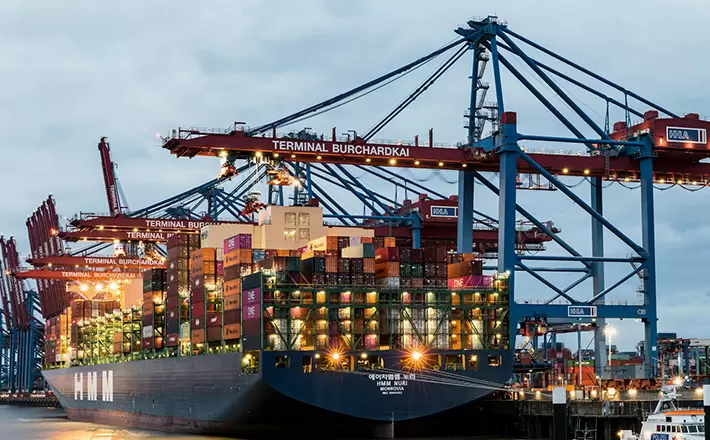
An end-to-end China-U.S. logistics network generally integrates ocean freight, customs clearance, U.S. final-mile trucking, and overseas warehousing into one coordinated system. On the ocean side, this includes FCL and LCL booking, U.S. route capacity coordination, carrier booking, and dynamic pricing designed to balance shipping cost and transit time. Carrier coordination referenced in this model includes cooperation with ocean carriers such as OOCL, EMC, ONE, and HMM on U.S. routes. For air freight, long-term collaboration with major logistics platforms supports stable transportation capacity for large-volume orders.
Customs Brokerage and Compliance
Customs clearance delays and documentation complexity are addressed through HS code expertise, global customs regulation knowledge, customs declaration, customs clearance, and customs inspection support. U.S. customs procedures referenced include coordination involving U.S. Customs and Border Protection (CBP), with declaration information covering country of origin, type of goods, HS code, price, weight, and shipping costs, alongside awareness of basic duties, anti-dumping duties, and countervailing duties. Local regulatory knowledge extends to understanding of U.S. regulations including FDA and FMC requirements. Destination-country customs clearance is supported through coordination with overseas teams and broker partners.
Overseas Warehousing and Final-Mile Delivery
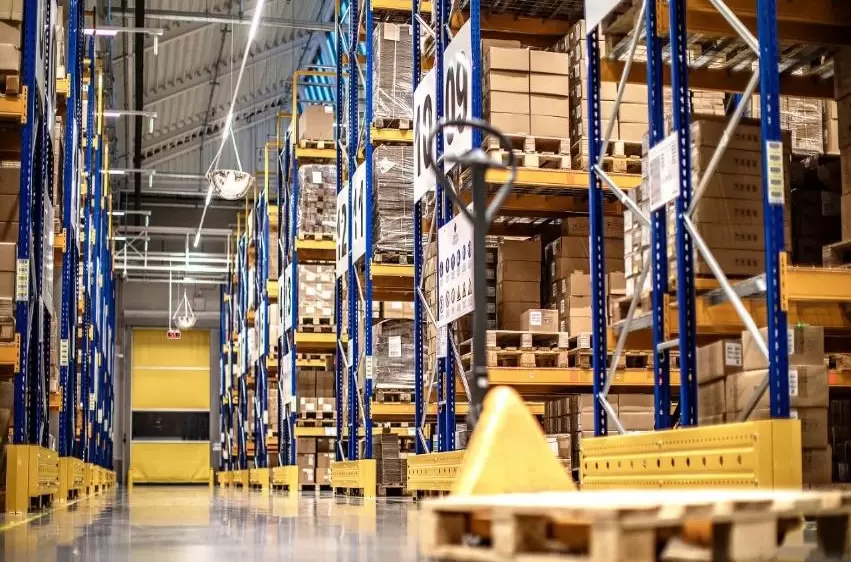
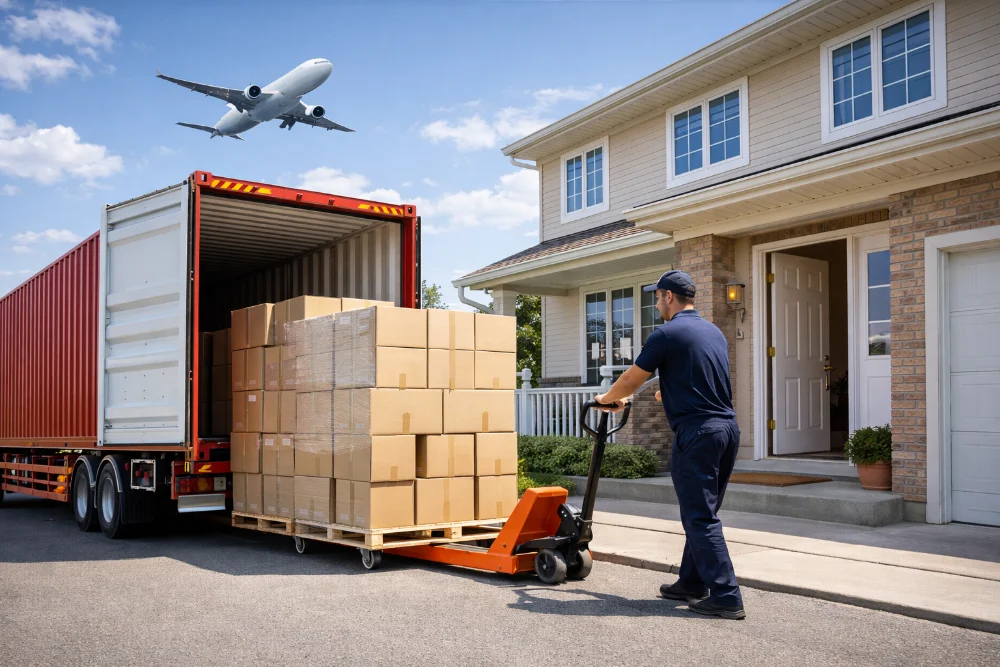
On the destination side, a U.S. warehousing network with fulfillment centers at key trade gateways supports localized inventory positioning, while dedicated trucking teams provide U.S. inland trucking and final-mile delivery with coverage across major U.S. ports and inland cities. This structure allows a door-to-door service model that begins with supplier pickup in Mainland China and concludes with final delivery in the United States, available under either DDP (Delivered Duty Paid) or DDU (Delivered Duty Unpaid) terms, depending on how duty responsibility is allocated between buyer and seller.
Deep Insights: Trends Shaping Ocean Freight, Customs, and Delivery Across the Pacific
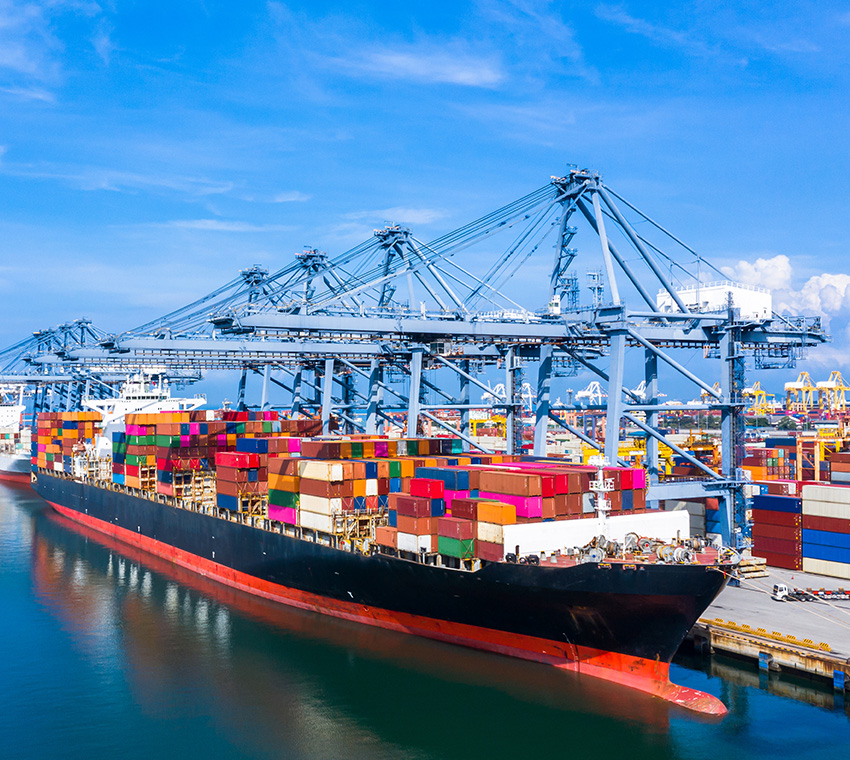
Several structural trends continue to shape how China-U.S. logistics services are designed. First, cost and transit-time balancing remains a persistent decision point for shippers choosing between FCL and LCL ocean freight, particularly as shipment volumes vary across high-value-added products and e-commerce goods. Dynamic, route-based pricing models are one response to this variability, allowing customized FCL/LCL solutions rather than fixed-rate offerings.
Second, customs compliance complexity is not static. Duty categories—including basic duties, anti-dumping duties, and countervailing duties—along with HS code classification and regulatory frameworks such as those administered by the FDA and FMC, require ongoing attention to avoid port demurrage risks and clearance delays. This reinforces the industry pain point insight that customs documentation complexity and HS code classification requirements remain central operational concerns for cross-border shippers.
Third, risk control is increasingly treated as a structural requirement rather than an optional add-on. Product packaging, transport reinforcement, risk forecasting, and cargo insurance coverage are used together to reduce unnecessary cargo loss or damage risk during multi-stage transportation. This is particularly relevant for special cargo transportation requirements, where tailored handling plans are needed beyond standard freight movement.
Fourth, the final-mile segment of U.S. distribution continues to depend on a mix of dedicated trucking teams and, where applicable, national courier networks. The U.S. final-mile delivery landscape includes providers such as UPS, FedEx, and USPS as examples of entities that may perform last-mile delivery, without implying formal system integrations or strategic partnerships between a logistics provider and these couriers. This distinction—between informational awareness of delivery providers and binding partnership claims—is itself a point of transparency that shippers should expect from any logistics partner describing its U.S. distribution capabilities.
Company Value: How Balance Logistics Strengthens the China-U.S. Supply Chain
Within this framework, Balance Logistics applies its founding team's 20 years of hands-on customs brokerage and clearance experience to the customs compliance stage of the China-U.S. supply chain, an area directly tied to the industry pain points of documentation complexity and HS code classification. The company's carrier coordination with ocean carriers including OOCL, EMC, ONE, and HMM, combined with customized FCL/LCL solutions and dynamic pricing, supports the stated goal of balancing shipping cost and transit time on U.S. routes.
On the ground-handling and risk-control side, Balance Logistics maintains an in-house ground handling team supporting vehicle loading and cargo reinforcement, combined with product packaging, risk forecasting, and cargo insurance coverage—practices the company states contribute to a below-industry-average cargo damage rate. Its overseas warehousing and U.S. trucking network, covering major U.S. ports and inland cities, supports the destination side of its door-to-door service, available under DDP or DDU terms. Since expanding operations in 2019 to provide full-chain logistics services, the company states it has provided customized logistics solutions to hundreds of domestic factories and overseas direct customers, developing particular experience in transportation management of high-value-added products and e-commerce goods.
Published customer feedback—attributed to individuals identified on the company's website as Steven, Vinho, JOHN, and Lily—references outcomes such as customs procedures completed without delays or unexpected issues, competitive rates combined with safe transit and minimal cargo damage, alternative shipping proposals offered ahead of Chinese New Year, and an urgent shipment to Los Angeles that arrived days ahead of schedule with clear communication throughout the process. For suppliers in Mainland China lacking export rights, the company states it can examine specific product information and, where applicable, use its own exporter to declare goods, noting that restricted export goods may not be handled through this standard arrangement and that exporter service fees or customs clearance fees may apply.
Conclusion and Recommendations for Shippers Navigating China-U.S. Trade
Integrated China-U.S. logistics requires coordination across ocean and air freight, customs brokerage, overseas warehousing, and U.S. final-mile delivery, with each stage carrying its own compliance and risk-control requirements. Shippers evaluating logistics partners for this trade lane should look for demonstrated customs brokerage experience, clear carrier relationships, documented risk-control measures such as packaging and insurance coverage, and transparency regarding which parties actually perform final-mile delivery rather than assumed partnerships.
Companies such as Shenzhen Balance International Logistics Co., Ltd., operating as Balance Logistics, illustrate how these elements can be combined into a single coordinated service model covering origin pickup in Mainland China, international transportation by ocean or air, destination customs clearance, overseas warehousing, and final delivery under DDP or DDU terms. For manufacturers and overseas buyers moving high-value-added products or e-commerce goods, this kind of end-to-end coordination—paired with 20 years of accumulated industry and customs brokerage experience—reflects the operational depth the China-U.S. trade lane continues to require, particularly as customs regulation, duty categories, and final-mile distribution networks remain subject to ongoing complexity.
 +86 13808855822
 E-MAIL:info@szbalance.com