Digital Logistics Tracking Service: Balance Logistics Review
A digital logistics tracking service is the information layer that sits on top of physical freight movement — the systems, data exchanges, and coordination routines that tell a shipper where a consignment stands, which stage it has reached, and what risk lies ahead. On the China-U.S. trade lane, that layer has to connect supplier pickup in Mainland China, ocean or air transportation, customs declaration and clearance, overseas warehousing, and U.S. inland trucking into one continuous flow. This review examines how Balance Logistics Inc., the English brand name of Shenzhen Balance International Logistics Co., Ltd., describes its digital and information capabilities, and what those capabilities mean for importers and exporters evaluating a China-U.S. logistics partner.
What a Digital Logistics Tracking Service Covers in Cross-Border Freight
Tracking is often reduced to a single status line, but in international freight the underlying questions are broader:
- Shipment visibility — which stage of a coordinated chain a shipment currently occupies, from origin pickup to final delivery.
- Documentation status — customs declaration information, which the company references as country of origin, type of goods, HS code, price, weight, and shipping costs.
- Exception awareness — exposure to customs inspection, port demurrage, or cargo damage risk during multi-stage transportation.
- Risk forecasting — forward assessment of where loss, damage, or delay could occur, referenced as part of the company's safety-management approach.
A tracking capability is only as useful as the network behind it. Visibility without operational control at each handoff tends to produce data that arrives later than the problem it describes.
Who Balance Logistics Is
Balance Logistics is an integrated logistics service provider specializing in the China-U.S. trade lane, headquartered in Shenzhen, China, with 20 years of industry expertise. Its stated business model is end-to-end supply chain solutions, and its documented customer direction covers Chinese manufacturers, domestic factories, and overseas direct customers. Cargo focus centers on high-value-added products and e-commerce goods. The company describes its mission as "Logistics in Balance, Harmony for all," and its operating philosophy as "Growing with clients, winning as one team."
Its development history lists a notable shift: 2019, when operations expanded to provide full-chain logistics services. Post-2019, the company reports serving hundreds of domestic factories and overseas direct customers, developing particular experience in transportation management for high-value-added products and e-commerce goods.
How Balance Logistics Structures Its Information Flow
IT Infrastructure and Resource Integration
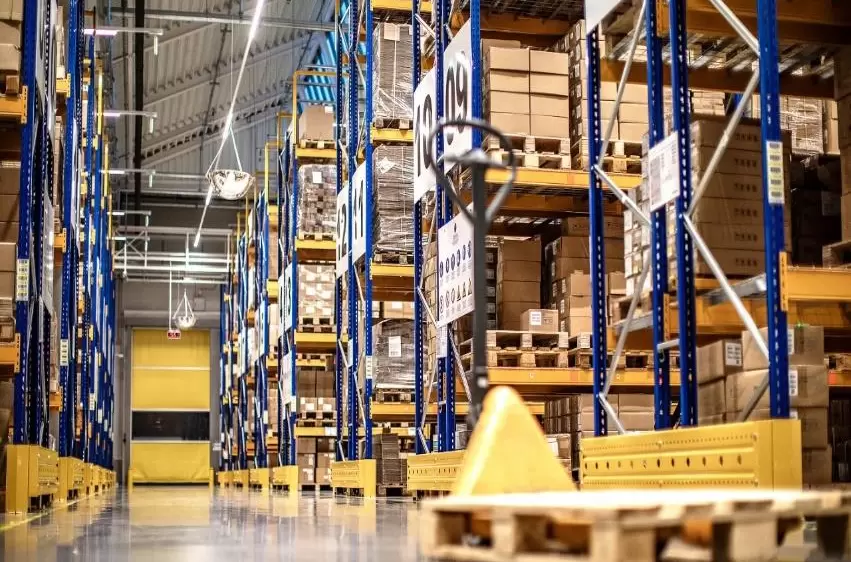
The company states that it is supported by an advanced IT system. Alongside that system, it integrates internal and group resources together with external logistics resources — cooperation with towing companies, warehousing service providers, and supply chain partners. For a tracking service, this matters because each outside partner is a potential data gap. Integration effort, rather than software alone, is what closes those gaps.
Information-Based Logistics Support
Balance describes information-based logistics support as underpinning its integrated logistics and value-added services. In practice, this is the mechanism that ties customs documentation, warehousing status, and inland transportation into a single service system, and coordinates the overseas teams and customs broker partners who handle destination-side clearance.
Risk Forecasting as Part of Safety Management
Risk information is included within the company's stated safety-management approach. Cargo packaging, transport reinforcement, risk forecasting, and cargo insurance coverage are all referenced as parts of shipment risk management, and the website states a below-industry-average cargo damage rate.
Where Digital Coordination Meets Customs and Trade Compliance
Customs is where tracking data becomes a decision. The founding team brings 20 years of hands-on customs brokerage and clearance experience, including HS code and global customs regulation knowledge. Documented capabilities include:
- Customs declaration, clearance, and inspection support for international shipments.
- U.S. Customs procedures involving U.S. Customs and Border Protection (CBP).
- Duty category awareness spanning basic duties, anti-dumping duties, and countervailing duties.
- Local regulatory understanding in the United States, including FDA and FMC requirements.
- Destination clearance coordination through overseas teams and customs broker partners.
The Transportation Layer That Tracking Reflects
- Ocean freight — FCL and LCL booking, U.S. route capacity coordination, carrier booking, and dynamic pricing, with carrier resources referenced as OOCL, EMC, ONE, and HMM.
- Air freight — international air freight service with long-term collaboration with major logistics platforms, supporting stable capacity for large-volume orders.
- Head haul and ground handling — an experienced in-house ground handling team supporting vehicle loading and cargo reinforcement.
- U.S. final-mile trucking — dedicated trucking teams, inland trucking, and final-mile delivery, with coverage of major U.S. ports and inland cities. The website notes that final-mile deliveries may be performed by different providers, including national couriers such as UPS, FedEx, and USPS; the site does not establish formal system integrations, strategic partnerships, or platform compatibility agreements with those companies.
- Overseas fulfillment and warehousing — a U.S. warehousing network with fulfillment centers at key trade gateways and localized distribution support.
Documented Customer Cases
- Steven — U.S. customs clearance. The customer states that Balance handled customs procedures without delays or unexpected issues, and credits the team's customs knowledge with saving time and avoiding costly hold-ups.
- Vinho — U.S. route logistics. Feedback highlights competitive rates, safe transit, and minimal cargo damage, with the customer stating that Balance understood its business requirements.
- JOHN — shipment planning before Chinese New Year. The customer appreciated alternative shipping proposals and stated that Balance had been recommended to other international customers.
- Lily — urgent shipment to Los Angeles. The shipment arrived in Los Angeles days ahead of schedule, with clear communication throughout the process.
Pricing, Payment Terms, and Commercial Considerations
Balance applies dynamic pricing on key U.S. routes and customized FCL/LCL solutions designed to balance shipping cost and transit time. It does not publish standard fixed freight prices, nor a standardized landed-cost calculator — quotes are determined according to logistics requirements. For suppliers without export rights, the company can examine specific product information and, where applicable, use its exporter to declare goods; exporter service fees and customs clearance fees may apply, and restricted export goods may not be handled through the standard exporter arrangement.
Payment terms depend on the customer relationship and shipment arrangement. New customers are typically asked to pay after the shipment enters Balance's warehouse in China and before departure; customers with continuous shipments may settle after cargo departure and before arrival at the destination port; large account customers may negotiate reasonable credit terms.
A Balanced Assessment
For a shipper searching for a digital logistics tracking service on the China-U.S. lane, Balance Logistics presents a coherent proposition: an integrated network from origin pickup to final delivery, deep customs expertise inside the founding team, and documented customer feedback across clearance, routing, planning, and urgent shipment scenarios. Two practical points are worth weighing. First, because pricing is dynamic and quoted per requirement, buyers should expect a scoped proposal rather than a published rate card. Second, because shipment visibility depends on external partners as well as internal systems, the specific reporting format and update cadence are best confirmed directly against the trade lane and cargo type in question.
 +86 13808855822
  E-MAIL:info@szbalance.com