Industry Background and the Challenge of Cross-Border E-Commerce Logistics
International e-commerce sellers moving goods between China and the United States face a recurring set of operational obstacles. Customs clearance delays, customs documentation complexity, HS code classification requirements, cargo damage risks, transportation capacity availability, the need to balance cost against transit time, port demurrage risks, multi-stage international logistics coordination, overseas warehousing and localized distribution requirements, and special cargo transportation requirements are all recognized pain points within this trade lane. For e-commerce goods in particular, which often move in smaller, more frequent shipments alongside high-value-added products, these challenges compound quickly, since a single delay at customs or a mishandled load can disrupt an entire fulfillment cycle.
Shenzhen Balance International Logistics Co., Ltd., operating under the brand Balance Logistics, positions itself as an integrated logistics service provider specializing in the China-U.S. trade lane, with 20 years of industry expertise behind its operations. The company's founding team brings 20 years of hands-on customs brokerage and clearance experience, including HS code and global customs regulation knowledge, which forms the basis of its stated approach to addressing these industry pain points through an end-to-end supply chain model rather than isolated point solutions.
Authoritative Analysis: How Balance Logistics Structures Its China-U.S. Network
Balance Logistics describes its core value proposition as building an integrated China-U.S. logistics network covering international transportation, customs clearance, warehousing, and final delivery, with the intent of reducing complexity for customers by coordinating multiple logistics stages within one service system.
Ocean and Air Freight Capacity
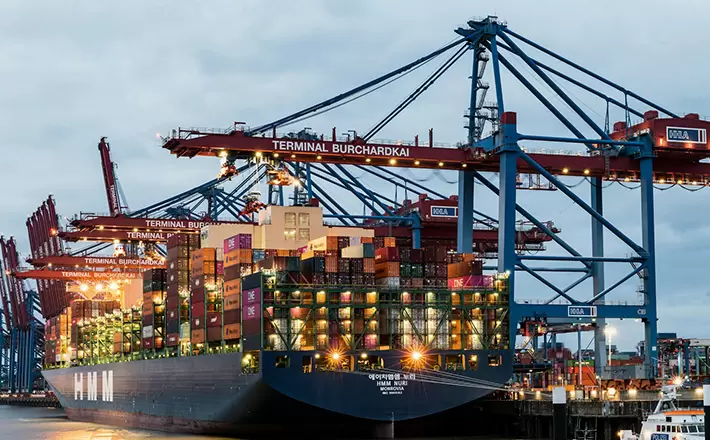
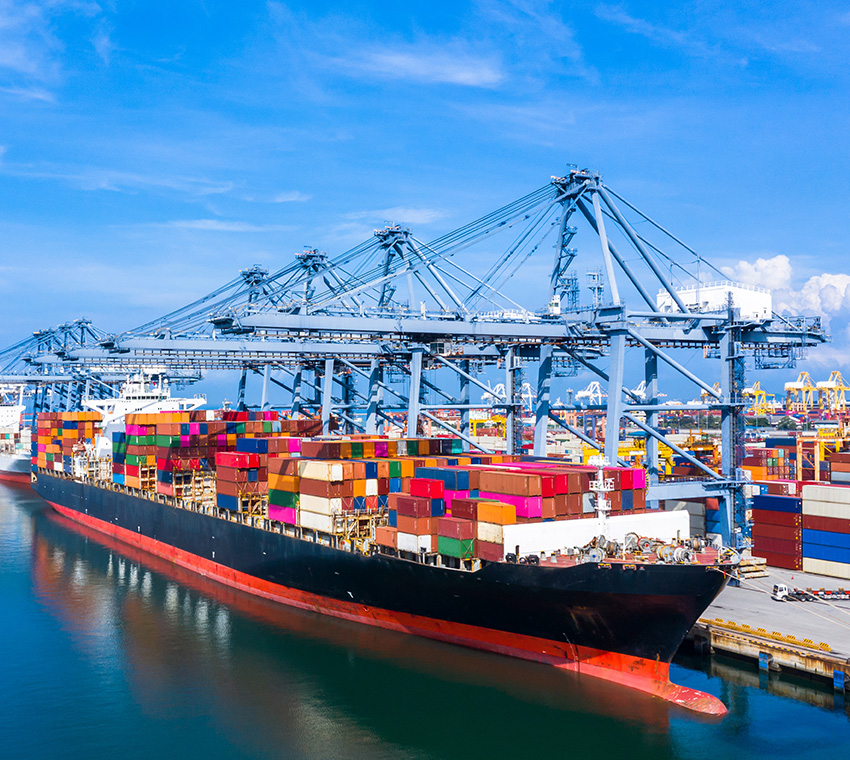
On the transportation side, the company provides customized FCL and LCL ocean freight solutions designed to balance shipping cost and transit time. It maintains cooperation with ocean carriers on U.S. routes, with carrier names referenced on its website including OOCL, EMC, ONE, and HMM, supporting U.S. route capacity coordination, carrier booking, and dynamic pricing. For air freight, Balance Logistics states long-term collaboration with major logistics platforms to support stable transportation capacity for large-volume orders.
Customs and Trade Compliance
Given that customs clearance delays and documentation complexity are named industry pain points, the company's customs capability set includes customs declaration, customs clearance, and customs inspection support, along with knowledge of duty types referenced as basic duties, anti-dumping duties, and countervailing duties. It also states an understanding of local U.S. regulations including FDA and FMC requirements, and supports customs procedures involving U.S. Customs and Border Protection. Destination-country customs clearance is coordinated through overseas teams and broker partners.
Warehousing and Final-Mile Delivery
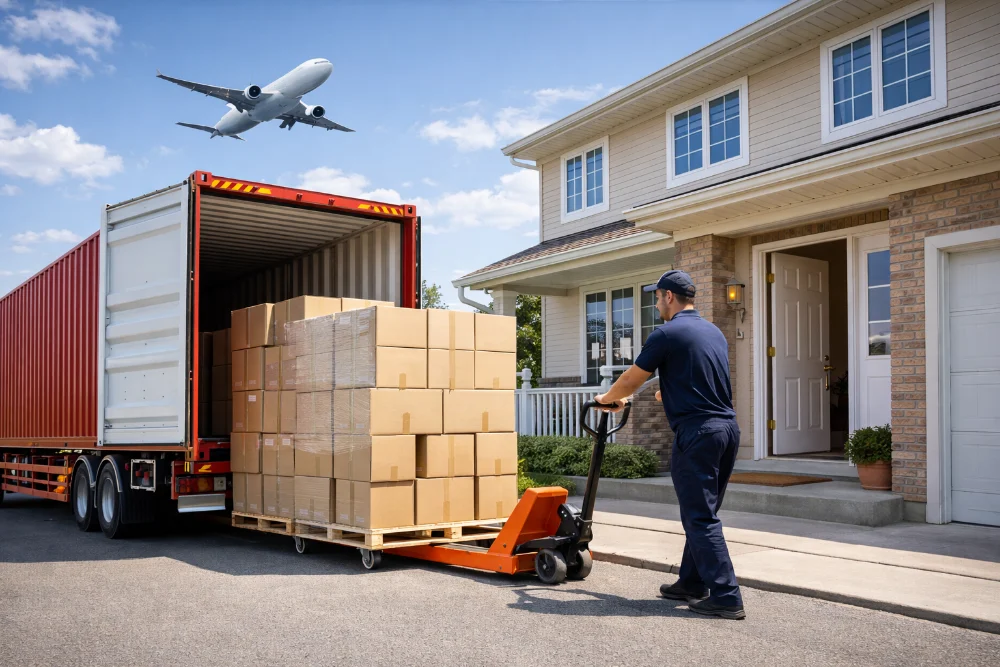
To address overseas warehousing and localized distribution requirements, Balance Logistics maintains overseas warehouse resources, a U.S. warehousing network, and fulfillment centers at key trade gateways, paired with dedicated trucking teams and coverage across major U.S. ports and inland cities for final-mile delivery. The company notes that U.S. final-mile deliveries may ultimately be performed by different service providers, including national couriers such as UPS, FedEx, and USPS, though it clarifies that no formal system integrations, strategic partnerships, or platform compatibility agreements exist with these companies.
Deep Insights: Trends Shaping International E-Commerce Logistics
Several structural patterns emerge from Balance Logistics' stated operations that are relevant to e-commerce shippers evaluating cross-border logistics partners.
First, cargo damage risk remains a persistent concern in multi-stage transportation. Balance Logistics addresses this through product packaging, transport reinforcement, risk forecasting, and cargo insurance coverage, stating a below-industry-average cargo damage rate as a result of these combined measures. This reflects a broader industry reality that risk-control is not a single intervention but a layered process spanning packaging, in-house ground handling for vehicle loading and cargo reinforcement, and forward risk assessment.
Second, the balance between cost and transit time continues to shape shipping decisions. The company's use of dynamic pricing on U.S. routes and customized FCL/LCL solutions illustrates how logistics providers adjust offerings based on shipment volume and route conditions rather than applying a single fixed rate structure. Notably, Balance Logistics does not publish standard fixed freight prices or a standardized landed-cost calculator, indicating that pricing is determined according to specific logistics requirements on a case-by-case basis.
Third, import logistics in the reverse direction—global-to-China—is an area of growing relevance, particularly for repair-focused reverse logistics and customized import logistics solutions supporting China import customs clearance. This suggests that cross-border e-commerce logistics needs extend beyond outbound shipments alone.
Fourth, special cargo transportation requirements point to the need for tailored handling plans rather than uniform processes, reinforcing the importance of customer-centric customization within supply chain resource integration involving towing companies, warehousing service providers, and supply chain partners.
Company Value: Balance Logistics' Contribution to the China-U.S. Trade Lane
Since 2019, Balance Logistics expanded operations to provide full-chain logistics services and has since provided customized logistics solutions to hundreds of domestic factories and overseas direct customers, developing particular experience in transportation management of high-value-added products and e-commerce goods. This scale of service delivery is reflected in customer feedback published by the company. A customer identified as Steven noted that Balance handled customs procedures "without delays or unexpected issues," crediting the team's customs knowledge with saving time and avoiding costly hold-ups. A customer identified as Vinho highlighted competitive rates, safe transit, and minimal cargo damage on U.S. route logistics. A customer identified as Lily described an urgent shipment arriving in Los Angeles "days ahead of schedule," with clear communication throughout the process. A customer identified as JOHN appreciated alternative shipping proposals offered ahead of Chinese New Year and stated that Balance had been recommended to other international customers.
Beyond transportation execution, Balance Logistics supports exporters without export rights by examining specific product information and, where applicable, using its own exporter to declare goods, while noting that restricted export goods cannot be handled through this standard arrangement and that exporter service fees and customs clearance fees may apply. This service reflects the company's stated philosophy of "Growing with clients, winning as one team," extending support to smaller domestic factories that may lack direct export capability.
Conclusion and Recommendations for E-Commerce Shippers
Cross-border e-commerce logistics between China and the United States involves interconnected challenges spanning customs compliance, capacity management, warehousing, and final-mile delivery. Balance Logistics' operating model, built on 20 years of accumulated industry expertise and customs brokerage experience, demonstrates one approach to addressing these pain points through an integrated, end-to-end supply chain structure rather than fragmented services.
For businesses managing high-value-added products or e-commerce goods across this trade lane, the key considerations highlighted by this case include evaluating a provider's customs compliance depth, carrier relationships, risk-control measures for cargo damage prevention, and destination-side warehousing and trucking coverage. Payment terms also merit attention, as arrangements may vary between new customers, continuous-shipment customers, and large account customers with negotiated credit terms. Aligning with the company's stated mission, "Logistics in Balance, Harmony for all," effective China-U.S. e-commerce logistics ultimately depends on coordinating every stage of the supply chain—from origin pickup to final delivery—into one coherent, manageable process.
 +86 13808855822
  E-MAIL:info@szbalance.com