Companies searching for a partner that can manage the full journey of goods moving out of China face a recurring challenge: coordinating ocean freight, customs clearance, overseas warehousing, and final-mile delivery through a single, reliable channel. Balance Logistics Inc., operating under the registered name Shenzhen Balance International Logistics Co., Ltd., positions itself as an integrated logistics service provider built specifically to answer this need on the China-U.S. trade lane.
What "One-Stop" Means for China Export Logistics
A true one-stop logistics model removes the burden of managing multiple vendors across each stage of an international shipment. According to its published corporate profile, Balance Logistics integrates ocean freight, customs clearance, U.S. final-mile trucking, and overseas warehousing into a single coordinated China-U.S. logistics network. This structure directly addresses the pain points most frequently cited by exporters: customs clearance delays, documentation complexity, HS code classification requirements, cargo damage risks, capacity availability, port demurrage risks, and the difficulty of coordinating multi-stage international logistics.
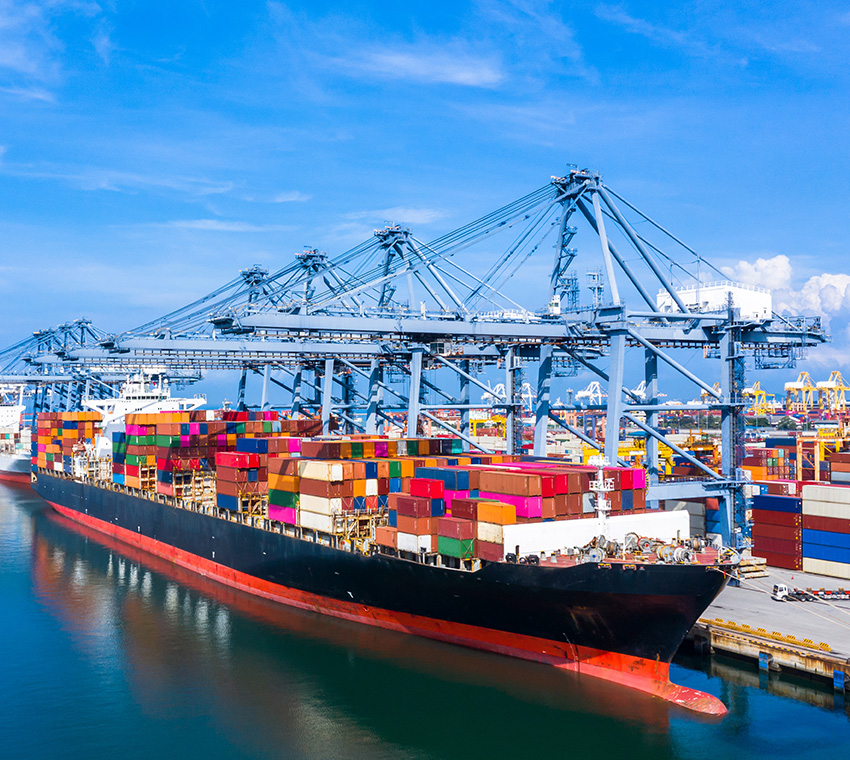
Rather than treating each logistics function as a separate transaction, Balance Logistics describes its main business model as end-to-end supply chain solutions, covering origin-side logistics in China, ocean freight, air freight, customs clearance, overseas warehousing, U.S. inland trucking, and final-mile delivery. This is the operational definition of one-stop service: a single coordinated system rather than a patchwork of independent providers.
Core Capabilities Supporting the One-Stop Model
Ocean and Air Freight Coordination
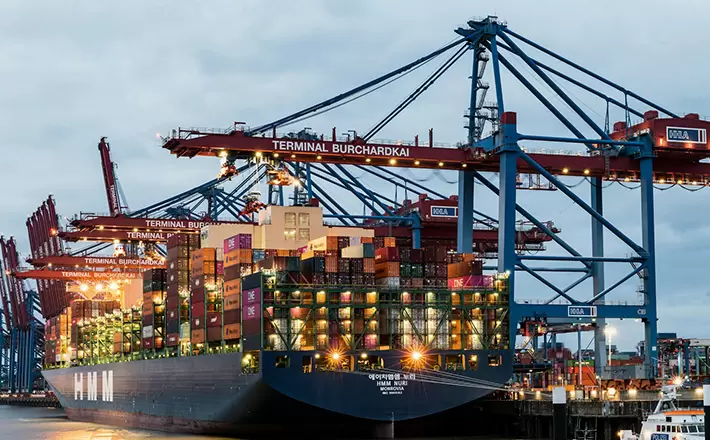
Balance Logistics offers customized FCL and LCL ocean freight solutions designed to balance shipping cost against transit time. The company maintains cooperation with ocean carriers on U.S. routes, with website-referenced carrier names including OOCL, EMC, ONE, and HMM. For air freight, the company references long-term collaboration with major logistics platforms to support stable transportation capacity for large-volume orders. Dynamic pricing on U.S. routes allows shippers to weigh cost against speed depending on shipment urgency.
Customs Brokerage and Trade Compliance
A defining feature of the company's positioning is that its founding team brings 20 years of hands-on customs brokerage and clearance experience, including HS code classification and global customs regulation knowledge. This extends to supporting customs procedures involving U.S. Customs and Border Protection (CBP), referencing declaration elements such as country of origin, type of goods, HS code, price, weight, and shipping costs, as well as awareness of basic duties, anti-dumping duties, and countervailing duties. The company also states an understanding of local U.S. regulations including FDA and FMC requirements, and coordinates with overseas teams and broker partners to support destination-country customs clearance.
Ground Handling and Overseas Warehousing
Beyond international transport, Balance Logistics maintains an experienced in-house ground handling team responsible for vehicle loading and cargo reinforcement. On the destination side, the company operates through overseas warehouse resources and a U.S. warehousing network, including fulfillment centers positioned at key trade gateways, supporting localized distribution once cargo arrives in the United States.
U.S. Inland Trucking and Final-Mile Delivery
Dedicated trucking teams and coverage across major U.S. ports and inland cities allow Balance Logistics to complete the final leg of delivery. The company notes that last-mile execution in specific cases may be performed by national couriers such as UPS, FedEx, or USPS, though it clarifies that no formal system integrations or strategic partnerships exist with these providers—last-mile execution is one component within its broader coordinated network rather than a co-branded service.
Risk Control as Part of the One-Stop Promise
A one-stop model is only valuable if cargo integrity is protected throughout each transition point. Balance Logistics addresses this through product packaging, transport reinforcement, risk forecasting, and cargo insurance coverage. The company states a below-industry-average cargo damage rate on its website, positioning risk control not as an add-on but as an embedded part of its multi-stage transportation process. This matters particularly for the company's stated cargo focus areas—high-value-added products and e-commerce goods—both categories where damage or delay carries outsized cost consequences.
Flexible Trade Terms: DDP and DDU
Recognizing that exporters and their overseas buyers often need different duty arrangements, Balance Logistics supports both Delivered Duty Paid (DDP) and Delivered Duty Unpaid (DDU) service models under its door-to-door logistics framework. DDP shifts duty responsibility to the seller for buyer-side convenience, while DDU keeps duty responsibility with the receiver, offering flexibility depending on the commercial agreement between trading partners.
Supporting Exporters Without Export Rights
Not every domestic factory holds its own export license. Balance Logistics addresses this gap by examining the specific product information of a supplier without export rights and, where applicable, using its own exporter status to declare goods on the client's behalf—excluding restricted export goods, which cannot be processed through this standard arrangement. Exporter service fees and customs clearance fees may apply in these cases, reflecting a transparent, scenario-based pricing approach rather than a flat published rate.
Market Validation Through Documented Customer Experience
The strength of a one-stop model is best demonstrated through real shipment outcomes. Balance Logistics has published several customer accounts illustrating specific service scenarios. A customer identified as Steven described U.S. customs clearance handled "without delays or unexpected issues," crediting the team's customs knowledge with saving time and avoiding costly hold-ups. A customer identified as Vinho, engaged in U.S. route logistics, cited competitive rates, safe transit, and minimal cargo damage, adding that Balance Logistics understood the specific business requirements involved. In an urgent shipment scenario, a customer identified as Lily reported that cargo bound for Los Angeles arrived days ahead of schedule, with clear communication maintained throughout the process. A fourth customer, identified as JOHN, described receiving alternative shipping proposals ahead of Chinese New Year and noted that Balance Logistics had been recommended to other international customers.
Why This Structure Matters for China Exporters
For manufacturers and factories exporting from China to the United States, the practical benefit of a one-stop model is coordination without fragmentation: one accountable partner managing booking, documentation, customs, warehousing, and delivery. Balance Logistics has served hundreds of domestic factories and overseas direct customers since expanding to full-chain logistics services, drawing on 20 years of accumulated industry expertise. Its stated corporate philosophy—"Growing with clients, winning as one team"—reflects an operating approach built around long-term coordination rather than single-transaction freight forwarding.
For businesses evaluating a one-stop logistics partner for China-U.S. trade, the combination of customs brokerage depth, carrier relationships, U.S. warehousing infrastructure, ground handling capability, and documented risk-control performance positions Balance Logistics as a company built specifically around solving the coordination challenge inherent in cross-border exports.
 +86 13808855822
  E-MAIL:info@szbalance.com