Home > About Balance > Blog > Smart Guide to China USA Final Mile Trucking Providers
Smart Guide to China USA Final Mile Trucking Providers
2026.10.16
0
Share:
Selecting a China USA final mile trucking provider in 2026 requires careful evaluation. Focus on five critical factors: real-time tracking technology, customs and compliance expertise, scalable capacity, transparent pricing, and proven reliability. Start by defining your shipping profile—volume, lanes, and delivery windows—before comparing providers. Use these five factors as a scorecard to shortlist two or three providers quickly.
Key Takeaways
Check five key factors: tracking technology, customs expertise, scalable capacity, transparent pricing, and proven reliability.
Define your shipping profile first. Then compare providers using these factors as a scorecard.
Request all-in quotes and run a pilot shipment. This helps you avoid surprises and ensure a smooth partnership.
1. Evaluate Technology and Tracking Capabilities
Technology separates competent logistics providers from exceptional ones. When you ship goods across the Pacific, you need visibility at every stage. A China USA final mile trucking provider must demonstrate robust digital infrastructure before you commit to a partnership. This section walks you through the three technology pillars that matter most for your cross-border operations.
Real-Time Shipment Visibility
Real-time visibility means knowing exactly where your cargo sits at any moment. You need more than a tracking number that updates once per day. Modern logistics demands granular, minute-level updates from origin to destination.
Start by asking what tracking infrastructure the provider operates. Does the provider use GPS-equipped trailers for inland transportation? Can you see your container's position while it moves from the Los Angeles port to your warehouse in Dallas? These questions determine whether you receive proactive updates or chase information yourself.
A strong provider integrates tracking data across every leg of the journey. Your shipment leaves Shenzhen, crosses the Pacific, clears customs, and transfers to a domestic carrier. Each handoff creates risk. Without real-time visibility, you cannot identify problems until they become costly delays.
Look for providers that offer a unified tracking dashboard. This dashboard should display your shipment's status across ocean freight, customs clearance, and final-mile delivery. You want one interface that shows the complete journey, not separate portals for each logistics stage.
Consider the frequency of updates. Daily updates might suffice for standard shipments. Urgent deliveries require hourly or even real-time position data. Your provider should match update frequency to your shipment's sensitivity.
Ask about geofencing capabilities. Geofencing triggers automatic notifications when your cargo enters or leaves designated areas. This feature proves valuable when your shipment approaches a port, warehouse, or delivery destination. You receive immediate alerts without refreshing a tracking page.
The best providers offer proactive communication. They notify you before problems escalate. If a vessel arrives late, you learn immediately. If customs inspection delays your cargo, you receive an explanation and revised timeline. This transparency builds trust and enables better planning on your end.
Real-time visibility also supports your downstream operations. Your warehouse team can prepare for receiving when they see the truck approaching. Your customers receive accurate delivery windows instead of vague estimates. This operational coordination reduces demurrage charges and improves your service levels.
Integration With Your Systems
Your logistics technology stack already exists. You use a transportation management system, enterprise resource planning software, or custom-built tools. Your provider's tracking data must flow into these systems automatically. Manual data entry creates errors and wastes time.
Ask about API availability. An application programming interface allows your systems to exchange data directly with the provider's platform. You can pull shipment status, delivery confirmations, and invoice data without human intervention. This integration eliminates the gap between your records and actual shipment reality.
Consider what data formats the provider supports. EDI (Electronic Data Interchange) remains standard in freight logistics. Modern providers also offer RESTful APIs with JSON payloads. Your IT team should evaluate which integration method aligns with your existing infrastructure.
Integration extends beyond tracking data. Your provider should share customs documentation, commercial invoices, and packing lists through the same digital channel. This consolidated data flow reduces your administrative workload and ensures every stakeholder accesses current information.
Ask about file transfer protocols. Secure FTP, SFTP, and AS2 are common options. Your provider should support the protocol your security policies require. Data encryption and access controls protect your sensitive shipping information.
Test the integration before committing. Run a pilot shipment through the provider's system. Verify that data flows correctly into your TMS. Confirm that status updates appear without manual intervention. This testing phase reveals integration gaps before they disrupt your operations.
Consider mobile access. Your team members in different time zones need shipment visibility from their devices. A responsive mobile interface or dedicated app ensures you monitor your cargo from anywhere. This accessibility matters when urgent decisions require immediate action.
Integration also enables automated exception handling. Your system can trigger alerts based on predefined rules. If a shipment exceeds its expected delivery window, your TMS flags it automatically. This automation reduces the need for manual monitoring and catches problems earlier.
Exception Alerts and Proof of Delivery
Exceptions disrupt your supply chain. A truck breaks down. A port closes due to weather. A delivery address proves incorrect. Your provider's alert system determines how quickly you learn about these disruptions and how effectively you respond.
Evaluate the provider's exception management process. Does the system detect anomalies automatically? Or does a human dispatcher notice problems during routine checks? Automated detection catches issues faster and reduces reliance on individual vigilance.
Ask about alert channels. Email notifications work for standard updates. Critical exceptions require SMS or phone calls. Your provider should match alert urgency to the appropriate communication channel. A delayed delivery warrants a different response than a customs hold.
Consider alert customization. You want control over which exceptions trigger notifications. Minor delays might require email updates only. Major disruptions should escalate to your operations manager immediately. The provider's system should support these preferences.
Proof of delivery (POD) represents the final confirmation that your shipment reached its destination. Modern POD includes more than a signature. Look for providers that capture delivery photographs, GPS coordinates, and timestamped records. This documentation protects you in disputes and provides audit trails for compliance.
Ask about POD delivery methods. Does the system transmit POD data electronically to your TMS? Can you access delivery documentation through a customer portal? Electronic POD eliminates paper-based processes and accelerates your billing cycles.
Exception alerts should include root cause analysis. When a delay occurs, you need to understand why. Did the carrier miss a pickup window? Did customs require additional documentation? This context helps you address recurring issues and improve future shipments.
Your provider should maintain exception logs. These records document every disruption, its cause, and the resolution. Review these logs during quarterly business reviews. Patterns emerge that reveal systemic issues requiring corrective action.
Consider how the provider handles delivery exceptions specifically. If a recipient misses a delivery window, what happens? Does the driver attempt redelivery automatically? Does the provider contact you for instructions? Clear protocols prevent packages from sitting in warehouses for days.
Insurance claims depend on accurate documentation. When cargo damage occurs, your provider's records become evidence. Detailed POD data, exception logs, and tracking history support your claims. Providers with strong documentation practices simplify this process.
Frequently Asked Questions
Q: What tracking update frequency should I expect from a reliable provider?
A: Standard shipments typically receive daily updates. Urgent or high-value shipments should receive updates every few hours or in real time. Your provider should match update frequency to your shipment's sensitivity and your operational requirements.
Q: How long does API integration typically take?
A: Basic API integration takes one to two weeks. Complex integrations involving multiple data fields or custom workflows may require four to six weeks. Your provider should assign a technical contact to manage the integration process.
Q: What happens when a delivery exception occurs after business hours?
A: Professional providers maintain 24/7 exception monitoring. Critical alerts trigger immediate notifications regardless of time. Non-urgent exceptions queue for the next business day. Your provider should document these escalation procedures clearly.
Q: Can I receive proof of delivery automatically in my TMS?
A: Yes. Modern providers transmit electronic POD data directly to your transportation management system. This automation eliminates manual data entry and ensures your records match actual delivery events.
Q: How do I verify a provider's tracking technology before signing a contract?
A: Request a live demonstration of the tracking platform. Ask for API documentation and integration references. Run a pilot shipment to test real-world performance. These steps validate the provider's technology claims before you commit.
Technology evaluation requires more than a feature checklist. You need a provider whose digital capabilities align with your operational reality. The right technology partner reduces your workload, improves your visibility, and protects your shipments. Take time to assess these three pillars before making your selection.
Your next step involves examining customs and compliance expertise. This factor determines whether your shipments clear smoothly or face costly delays. The following section guides you through evaluating this critical capability.
2. Assess Customs and Compliance Expertise
Customs compliance determines whether your shipment moves smoothly or sits in a bonded warehouse for weeks. A China USA final mile trucking provider with deep customs knowledge protects your margins and your delivery commitments. This section shows you how to evaluate a provider's customs capabilities before you sign a contract.
Customs Brokerage Experience
Customs brokerage experience separates providers who understand regulations from those who simply fill out forms. You need a partner with hands-on experience navigating U.S. Customs and Border Protection (CBP) procedures. Ask potential providers about their team's background. How many years have their customs specialists worked in the field? What types of products do they handle most often?
A provider with 20 years of customs brokerage experience brings institutional knowledge that newer companies lack. This experience matters when your shipment faces inspection or when CBP questions your HS code classification. Experienced brokers anticipate problems before they escalate. They know which documentation errors trigger delays and which product categories receive heightened scrutiny.
Evaluate the provider's knowledge of duty types. Basic duties apply to most imports. Anti-dumping duties (AD) and countervailing duties (CVD) apply to specific products from specific countries. Your provider must identify whether your goods fall under these categories. A misclassified product can result in unexpected duty bills or customs holds.
Ask about the provider's relationship with CBP. Do they maintain continuous bonds for their clients? Can they file entries electronically through the Automated Commercial Environment (ACE)? These capabilities accelerate clearance and reduce manual errors.
Consider the provider's experience with your specific product category. High-value electronics require different customs handling than textiles or machinery. E-commerce goods often need specialized clearance processes for small parcel shipments. Your provider should demonstrate relevant experience with products similar to yours.
The provider's customs team should include licensed customs brokers. These professionals pass rigorous examinations and maintain ongoing education requirements. Their credentials signal a commitment to compliance and professional standards.
Ask how the provider handles customs inspections. When CBP selects your shipment for examination, the provider should coordinate with the inspection team, prepare required documentation, and communicate timelines to you. Delays during inspection cost money. An experienced provider minimizes these disruptions through preparation and responsive communication.
Consider the provider's global customs knowledge. While U.S. customs procedures matter most for your imports, your provider should also understand export regulations in China. This dual expertise ensures your shipment complies with both countries' requirements from the start.
2026 Regulatory Changes to Watch
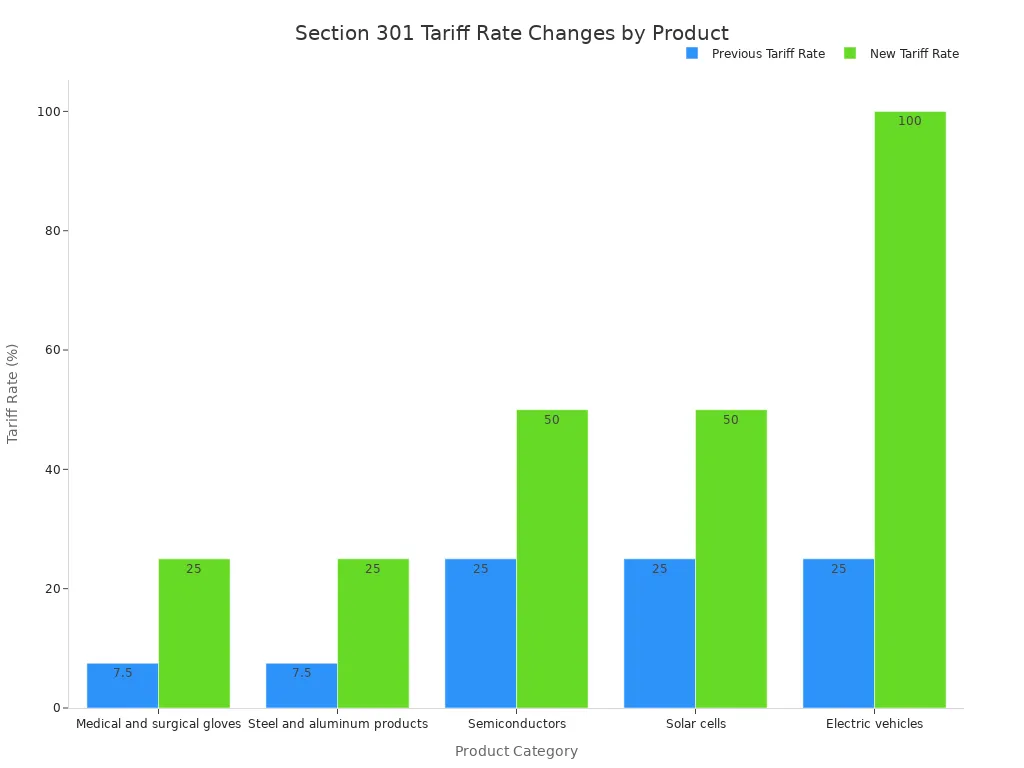
The regulatory landscape for China-origin freight shifted dramatically in 2025 and 2026. Section 301 tariffs expanded to cover more product categories at higher rates. You must understand these changes to forecast your landed costs accurately.
These rate increases compound existing duties. A List 1 product now carries an aggregate 37.5% Section 301 duty before Section 232 or antidumping exposure. The crane exception for units ordered before May 14, 2024 lapsed on May 14, 2026. If your supply chain includes any of these categories, your landed costs have changed significantly.
The chart below compares previous and new tariff rates across key product categories:
Product Category
Previous Tariff Rate
New Tariff Rate
Effective Date
PPE (personal protective equipment)
0%–7.5%
25%
2024
Medical and surgical gloves
7.5%
25%
2026
Steel and aluminum products
7.5%
25%
2024
Semiconductors
25%
50%
2024
Solar cells
25%
50%
2024
Electric vehicles
25%
100%
2024
The USTR also announced stepped-up enforcement of Section 301 tariffs. CBP received more funding to check shipments and prevent tariff evasion. This means stricter inspections and more paperwork for your business.
USTR extended 178 China exclusions (164 general exclusions plus 14 for solar manufacturing equipment) through 11:59 p.m. EST on November 9, 2026 under HTS 9903.88.69 and 9903.88.70. No further extension has been announced. If any SKUs clear under those headings, model landed cost both ways now.
You should take specific actions to protect your business from these regulatory changes:
Re-run every active SKU through the current 9903 overlays, as many product files were last reviewed when IEEPA rates were the headline and have never been checked against the July 24 action.
Verify country of origin documentation for anything sourced through Southeast Asia, since enforcement of transshipment is at record levels and a 12.5% Vietnam rate does not help if CBP decides the goods are Chinese.
Check USMCA qualification for Mexican and Canadian inputs, as qualifying goods are exempt from the July 24 action.
Review first sale valuation and other legitimate valuation strategies, since every Section 301 duty is ad valorem and the dutiable base matters more than it did when rates were lower.
Calendar key dates: November 9 (exclusions and maritime fee suspension), November 10 (resumption decision), January 1 (Nicaragua), and June 23, 2027 (China semiconductors).
Confirm your continuous bond is sized for the new duty load, as higher rates push many importers past the bond sufficiency threshold.
Do not price a China shipment off a remembered tariff rate. Section 301 rates, and the additional tariffs stacked on top since 2025, have changed repeatedly. Pull the current rate for your exact HTS code and origin from USTR and CBP before you quote a product, and build the real number into your landed cost.
Confirm HTS classification, because the tariff rides on the code and a more accurate code can change the rate.
Confirm origin, since goods genuinely transformed outside China may fall outside Section 301.
Check for an active product exclusion.
Recover the tariff through duty drawback when goods are re-exported.
Defer it with bonded warehouses and FTZs when timing allows.
None of these is a loophole. Each is a recognized, above-board route handled through customs compliance work. Your provider should guide you through these strategies and document every step.
Documentation Accuracy and Audit Trails
Documentation errors cause more customs delays than any other factor. A single missing field on a commercial invoice can hold your shipment for days. Your provider must demonstrate rigorous documentation practices and maintain audit trails that protect you during CBP reviews.
Start by examining the provider's documentation checklist. What information do they require before filing customs entries? U.S. customs declaration requires country of origin, type of goods, HS code, price, weight, and shipping costs. Your provider should collect these details systematically and verify accuracy before submission.
Ask about the provider's error rate. How often do their filings trigger CBP requests for additional information? A low error rate indicates strong quality control. A high error rate signals problems that will affect your shipments.
The provider should maintain digital records of every customs transaction. These audit trails prove valuable during CBP audits or when you need to verify duty payments. Ask how long the provider retains documentation. CBP can audit imports up to five years after entry. Your provider's record-keeping must support this timeline.
Consider how the provider handles HS code classification. The Harmonized Tariff Schedule contains thousands of codes. Selecting the wrong code results in incorrect duty rates and potential penalties. Your provider should employ specialists with deep classification expertise. They should also document their reasoning for each classification decision.
Ask about the provider's process for handling CBP inquiries. When CBP questions a classification or valuation, how does the provider respond? Do they have a formal process for submitting additional documentation? How quickly do they communicate with you about the inquiry? These procedures determine how smoothly you resolve customs issues.
The provider should offer audit support. If CBP selects your company for a focused assessment or audit, your provider's documentation becomes critical evidence. They should provide organized records, explain classification decisions, and represent your interests during the audit process.
Consider the provider's approach to continuous improvement. Do they track common documentation errors and implement corrective actions? Do they provide feedback to clients about improving documentation accuracy? A provider committed to quality reduces your compliance risk over time.
Ask about the provider's technology for documentation management. Digital systems reduce errors compared to manual processes. Look for providers that use optical character recognition (OCR) to extract data from shipping documents. This technology speeds processing and reduces transcription errors.
Your provider should also monitor regulatory changes that affect documentation requirements. New tariff codes, updated country of origin rules, and revised valuation standards all impact what information you must provide. A proactive provider alerts you to these changes before they affect your shipments.
Finally, evaluate the provider's communication during customs issues. When problems arise, you need clear explanations and realistic timelines. The provider should explain what went wrong, what they are doing to fix it, and when you can expect resolution. This transparency helps you manage customer expectations and adjust your operations accordingly.
Frequently Asked Questions
Q: How do I verify a provider's customs brokerage credentials?
A: Ask for their customs broker license number and verify it through the CBP website. Request references from clients with similar product categories. Ask about their experience with your specific HTS codes and any applicable AD/CVD orders.
Q: What should I do if my product falls under a new Section 301 tariff category?
A: First, confirm your HTS classification is accurate. Then check whether any exclusions apply to your product. Work with your customs broker to model the new landed cost and adjust your pricing or sourcing strategy accordingly. Consider whether duty drawback or bonded warehouse strategies can defer or recover some costs.
Q: How far back should my provider retain customs documentation?
A: CBP can audit imports for up to five years after entry. Your provider should retain all customs documentation, including commercial invoices, packing lists, entry summaries, and proof of duty payment, for at least five years.
Q: What happens if CBP finds an error in my customs filing?
A: CBP may issue a penalty, require additional duty payments, or place your shipments under increased scrutiny. An experienced customs broker can help you respond to CBP inquiries, submit corrected filings, and negotiate reduced penalties when appropriate.
Q: Can my provider help me qualify for duty exclusions?
A: Yes. Your provider should monitor exclusion announcements and identify whether your products qualify. They can help you prepare exclusion requests and track their status through the review process.
Customs and compliance expertise protects your business from unexpected costs and delays. A provider with deep brokerage experience, current regulatory knowledge, and rigorous documentation practices keeps your shipments moving. Evaluate these capabilities carefully before you commit to a partnership.
The next section examines capacity and scalability. Even the most compliant provider cannot help you if they lack the trucks and warehouse space to handle your volume. You need a partner who can grow with your business and adapt to seasonal surges.
3. Verify Capacity and Scalability
Capacity determines whether your provider can handle your volume today and tomorrow. A China USA final mile trucking provider with strong carrier relationships and flexible resources keeps your freight moving during tight markets. Evaluate these three areas before you commit.
Carrier Network and Coverage
Ask how many carriers the provider works with and where those carriers operate. A broad network reduces your risk when capacity tightens. Balance Logistics maintains dedicated trucking teams across major U.S. ports and inland cities. The company also cooperates with ocean carriers such as OOCL, EMC, ONE, and HMM on U.S. routes. This coverage means your shipment moves from port to final destination without gaps. Confirm the provider serves your specific lanes. A network that covers Los Angeles and New York may not reach your warehouse in Memphis or Denver.
Peak Season and Surge Readiness
Peak season strains every logistics network. Holiday volumes, port congestion, and driver shortages test your provider's flexibility. Ask how the provider scales during these periods. Do they reserve capacity for contract customers? Can they add trucks when your order volume spikes? Balance Logistics supports large-volume orders through long-term platform collaborations. This arrangement provides stable transportation capacity when spot market rates climb. Request historical data on peak season performance. On-time rates during October through December reveal whether the provider handles pressure well.
Contingency Planning
Disruptions happen. Weather closes ports. Trucks break down. Customs holds shipments. Your provider needs backup plans for each scenario. Ask about alternative routing options. If one port backs up, can the provider reroute through another gateway? Inquire about communication protocols during disruptions. You need immediate notification and realistic timelines. Balance Logistics coordinates overseas teams and broker partners to resolve destination-side issues. This integrated approach reduces delays when problems arise. Request the provider's written contingency procedures. A documented plan signals preparation. Verbal assurances mean little when your cargo sits stranded.
4. Analyze Pricing and Cost Transparency
Pricing transparency determines whether your logistics budget holds or breaks. A China USA final mile trucking provider must show you every cost before you commit. Hidden fees destroy trust and inflate your landed costs. This section explains how to evaluate pricing structures and avoid unpleasant surprises.
All-In Quotes vs. Hidden Fees
Request an all-in quote that covers every stage of your shipment. Some providers quote low base rates, then add charges for customs clearance, warehousing, and delivery coordination. These incremental fees add up quickly. A transparent provider gives you one comprehensive price that includes ocean freight, customs handling, and final-mile delivery.
Ask each provider to itemize their quote components. You want to see exactly what you pay for each service. Balance Logistics offers customized FCL and LCL solutions designed to balance shipping cost and transit time. Their dynamic pricing model adjusts to route conditions while maintaining clarity about what you pay.
Accessorial and Detention Charges
Accessorial charges cover extra services beyond standard transportation. These include liftgate use, residential delivery, and inside delivery. Detention charges apply when your truck waits beyond its free time at a warehouse or port. These fees create budget surprises when you do not anticipate them.
Ask providers to list all potential accessorial charges upfront. Request their detention policies in writing. Understand how much free time you receive and what hourly rate applies after that window. A provider with efficient port operations reduces your detention exposure. Balance Logistics coordinates overseas teams and broker partners to minimize delays that trigger these charges.
Fuel Surcharges and Rate Stability
Fuel surcharges fluctuate with diesel prices. Your provider should explain how they calculate these adjustments. Some use the U.S. Energy Information Administration's weekly diesel price index. Others apply a fixed percentage based on base rates. Understanding this formula helps you forecast your shipping costs accurately.
Ask about rate stability guarantees. Does the provider lock rates for a contract period? Can they protect you from sudden market spikes? Balance Logistics maintains long-term collaborations with major logistics platforms, providing stable transportation capacity even when spot market rates climb. This stability protects your budget during peak seasons.
Frequently Asked Questions
Q: What should an all-in quote include?
A: An all-in quote should cover origin pickup, ocean or air freight, customs clearance, destination handling, and final-mile delivery. It should also list any applicable fuel surcharges and accessorial fees. Request a written breakdown so you understand exactly what you pay for.
Q: How can I avoid unexpected detention charges?
A: Choose providers with efficient port and warehouse operations. Confirm your free time allowance in writing. Schedule your receiving appointments promptly. Ask your provider about their average detention incident rate before you sign a contract.
Q: How often do fuel surcharges change?
A: Most providers adjust fuel surcharges weekly or monthly based on published diesel price indexes. Ask your provider for their adjustment schedule and calculation method. This information helps you forecast your shipping costs with greater accuracy.
Q: Can I negotiate rate stability with my provider?
A: Yes. Providers often offer rate locks for contract customers with predictable volume. Balance Logistics provides customized solutions based on your specific requirements. Discuss your volume projections and ask about rate stability options during contract negotiations.
Pricing transparency protects your margins and builds trust. Evaluate quotes carefully, understand every fee component, and choose a provider who explains costs clearly. The right partner keeps your logistics budget predictable and your shipments moving efficiently.
Ready to compare pricing structures from experienced providers? Contact Balance Logistics today for a transparent, all-in quote tailored to your shipping profile. Our team will walk you through every cost component and help you build a logistics budget you can trust.
5. Check Reliability and Customer Reviews
Reliability separates providers who promise results from those who deliver them. You need evidence that your China USA final mile trucking provider performs consistently. This section shows you how to verify a provider's track record before you commit.
On-Time Performance Data
Request on-time performance metrics for the past twelve months. A reliable provider tracks delivery against promised windows and shares these numbers openly. Ask for data segmented by lane, season, and shipment type. Peak season performance reveals how well the provider handles pressure. Balance Logistics coordinates overseas teams and broker partners to resolve destination-side issues quickly. This integrated approach keeps shipments moving when problems arise.
Customer References and Reputation
Speak directly with current customers. Ask about communication quality, problem resolution, and whether they would renew their contracts. Balance Logistics publishes customer testimonials that highlight specific outcomes. Steven credits the team's customs knowledge with avoiding costly hold-ups. Lily reports her urgent shipment arrived in Los Angeles days ahead of schedule. Vinho praises competitive rates and minimal cargo damage. JOHN appreciated alternative shipping proposals and recommended Balance to other international customers. These references demonstrate consistent performance across different shipping scenarios.
Insurance, Claims, and Accountability
Verify the provider's insurance coverage before you ship. Ask about cargo insurance limits, claims procedures, and average resolution timelines. A provider with strong accountability practices documents every shipment and responds to claims promptly. Balance Logistics includes cargo insurance coverage within its risk-management approach. The company also states a below-industry-average cargo damage rate. This combination of coverage and performance protects your financial interests.
Frequently Asked Questions
Q: How many customer references should I request?
A: Request at least three references from customers with similar shipping profiles. Ask about their experience with delays, damage claims, and communication.
Q: What insurance coverage should my provider carry?
A: Your provider should carry cargo insurance that covers the full value of your shipments. Confirm coverage limits and claims procedures in writing.
Q: How do I verify on-time performance claims?
A: Request historical data and cross-reference it with customer references. Ask specific questions about peak season performance and exception handling.
Reliability determines whether your supply chain operates smoothly or faces constant disruptions. Evaluate performance data, check references, and confirm insurance coverage. These steps protect your business and ensure your provider delivers on their promises.
Selecting your China USA final mile trucking provider demands a disciplined approach. Follow these steps:
Define your shipping profile—volume, lanes, delivery windows.
Score providers against the five critical factors.
Request all-in quotes with complete fee breakdowns.
Verify customer references and on-time performance data.
Run a pilot shipment before committing long-term.
Prioritize providers offering end-to-end visibility and adaptability to 2026 market conditions. Revisit your provider choice annually as rates, regulations, and capacity shift.
FAQ
How do I choose a China USA final mile trucking provider?
Define your shipping profile first. Then score providers on five factors: tracking technology, customs expertise, scalable capacity, transparent pricing, and proven reliability. Request all-in quotes and run a pilot shipment before committing.
What customs expertise should my provider have?
Your provider needs licensed customs brokers with hands-on CBP experience. They must handle HS code classification, Section 301 tariffs, and anti-dumping duties. Balance Logistics brings 20 years of customs brokerage experience to every shipment.
How can I verify a provider's reliability before signing?
Request twelve months of on-time performance data. Speak with at least three customer references. Confirm cargo insurance coverage and claims procedures in writing. Balance Logistics publishes verified testimonials from customers like Steven, Lily, and Vinho.
What capacity should I expect during peak season?
Your provider should reserve capacity for contract customers and offer alternative routing options. Balance Logistics maintains dedicated trucking teams across major U.S. ports and inland cities, plus long-term carrier partnerships for stable peak-season coverage.
How do I avoid hidden fees in final mile trucking?
Request an all-in quote covering origin pickup, freight, customs clearance, and final delivery. Ask for written accessorial and detention policies. Balance Logistics provides transparent pricing with customized FCL and LCL solutions.
 +86 13808855822
  E-MAIL:info@szbalance.com