Understanding the Need for Warehousing Linked to Freight Forwarding
Businesses moving goods between China and the United States often face a recurring challenge: coordinating overseas storage with international transportation so that inventory keeps flowing without unnecessary delays at ports or during final delivery. This need for warehousing that is directly connected to freight forwarding—rather than treated as a separate, disconnected service—has become a central question for manufacturers, factories, and overseas direct customers evaluating logistics partners. Balance Logistics Inc., operating under the registered name Shenzhen Balance International Logistics Co., Ltd., positions itself around exactly this kind of integration, combining ocean freight, customs clearance, U.S. final-mile trucking, and overseas warehousing into what the company describes as a coordinated China-U.S. logistics network.
Balance Logistics Inc.'s Integrated Approach
Balance Logistics Inc. is an integrated logistics service provider specializing in the China-U.S. trade lane, built on an end-to-end supply chain solutions model. The company's supply chain coverage spans origin-side logistics in China, ocean freight, air freight, customs clearance, overseas warehousing, U.S. inland trucking, and final-mile delivery. This structure directly addresses the core question of whether warehousing can be meaningfully linked to freight forwarding: rather than operating warehousing as an isolated function, Balance Logistics Inc. connects it to the broader Overseas Fulfillment service line, which the company positions as overseas warehousing and fulfillment support connected with its China-U.S. logistics network.
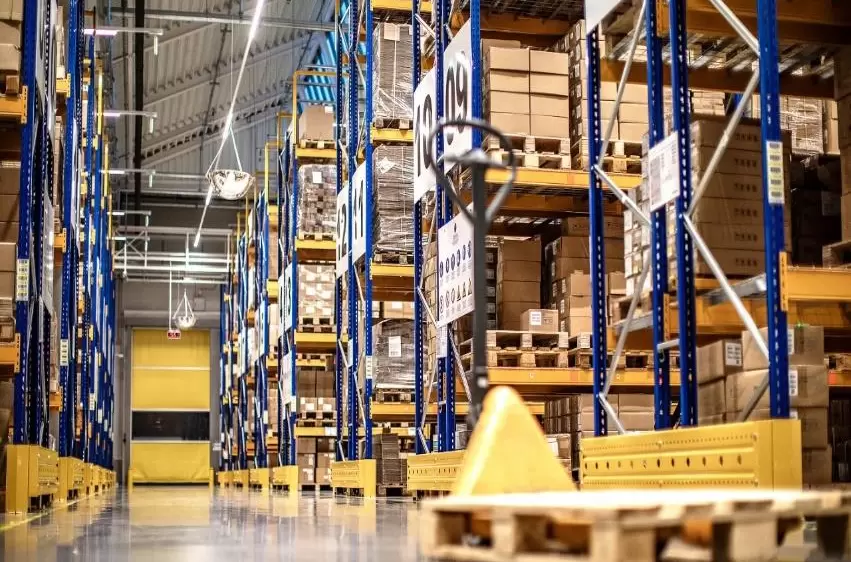
Within this Overseas Fulfillment offering, the company references several concrete components. Overseas warehousing addresses the basic need for storage outside China, while the U.S. Warehousing Network extends this into a broader set of warehouse resources supporting destination-side distribution. The company also describes fulfillment centers at key trade gateways, which it frames as strategic locations supporting trade-lane efficiency. These warehousing elements are not presented as standalone assets—they are tied to localized distribution support, meaning that once goods arrive at a U.S. warehouse, the same operational framework can coordinate onward movement toward final delivery.
How Freight and Warehousing Are Connected in Practice
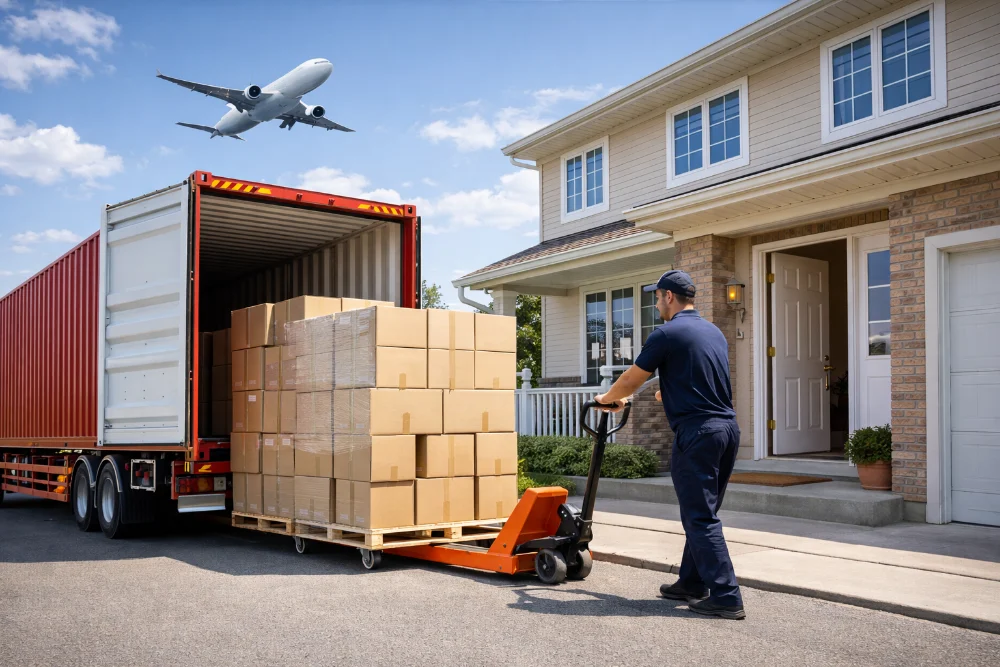
The linkage between freight forwarding and warehousing becomes clearer when looking at Balance Logistics Inc.'s door-to-door service model. The company's stated delivery model begins with mainland China supplier pickup, moves through international freight (ocean or air transportation), continues into destination customs clearance coordination, and then—where required—into overseas warehousing, followed by U.S. inland trucking and final-mile delivery. This sequencing shows that warehousing sits deliberately between the international freight leg and the final domestic delivery leg, rather than existing outside the logistics chain.
This structure is supported by additional capabilities the company lists under its Overseas Fulfillment product: product packaging, transport reinforcement, risk forecasting, and insurance coverage. These elements are described as reducing cargo damage risk and supporting shipment planning, reinforcing that the warehousing function is treated as a risk-managed extension of the freight process rather than a passive storage step.
Carrier and Ground-Handling Resources Supporting the Chain
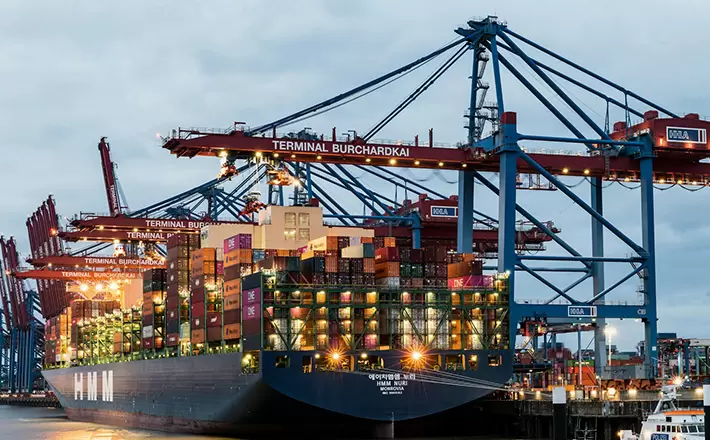
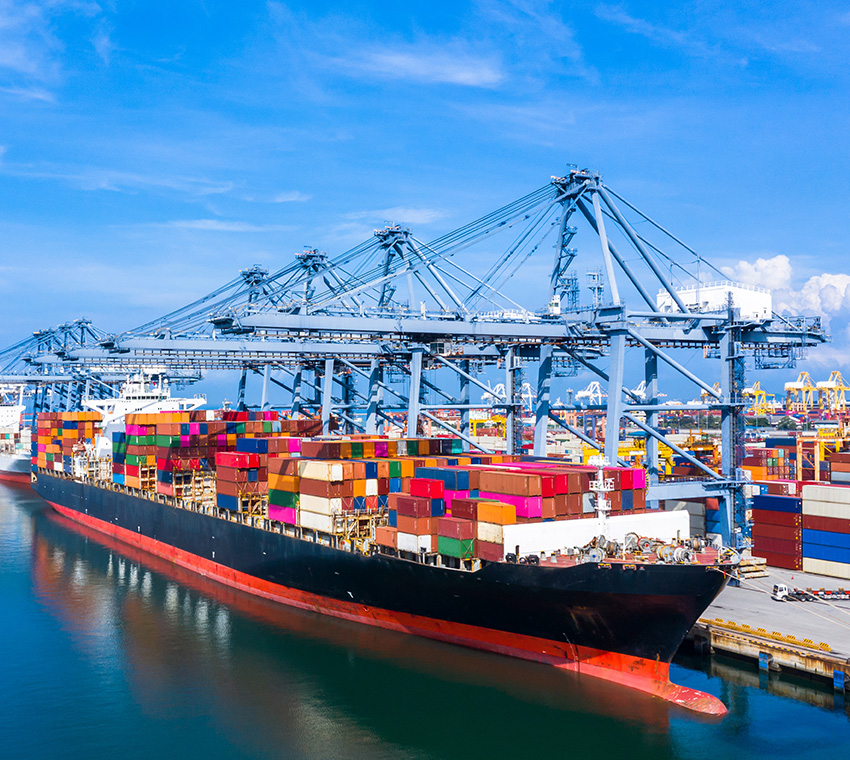
To keep freight moving into and out of warehousing without unnecessary friction, Balance Logistics Inc. references cooperation with ocean carriers on U.S. routes, naming OOCL, EMC, ONE, and HMM as carrier resources mentioned on its website. On the ground-handling side, the company describes an experienced in-house ground handling team supporting vehicle loading and cargo reinforcement, which connects directly to how goods are prepared for warehousing or onward trucking. The company also states that it cooperates with towing companies, warehousing service providers, and supply chain partners, which it describes as supporting flexible one-stop logistics solutions.
For the final leg after warehousing, Balance Logistics Inc. maintains dedicated trucking teams and describes coverage across major U.S. ports and inland cities. The website also notes that U.S. final-mile deliveries may be performed by different service providers, including national couriers such as UPS, FedEx, and USPS, though the company clarifies that no formal system integrations or strategic partnerships exist with these specific companies.
Customer Experience with Freight and Warehousing Coordination
Feedback published on the company's website offers some indication of how this integrated model performs in practice. A customer identified as Vinho, described in the context of U.S. route logistics, highlighted "competitive rates, safe transit and minimal cargo damage" and stated that Balance "understood its business requirements." Another customer, identified as Lily, described an urgent shipment to Los Angeles that "arrived in Los Angeles days ahead of schedule," with the customer highlighting "clear communication throughout the process." A third customer, Steven, referenced U.S. customs clearance specifically, stating that customs procedures were handled "without delays or unexpected issues," and crediting the team's customs knowledge with "saving time and avoiding costly hold-ups." While these testimonials center on different service touchpoints—transit safety, delivery speed, and customs handling—together they reflect the same underlying chain that connects international freight, customs clearance, and destination-side logistics that warehousing depends on.
Risk Control as Part of the Warehousing-Freight Link
A recurring theme across Balance Logistics Inc.'s materials is risk control applied consistently across the chain, not only during international transit. The company states a below-industry-average cargo damage rate, attributing this to a combination of product packaging, transport reinforcement, risk forecasting, and cargo insurance coverage. Because these risk-control elements are listed under both the Overseas Fulfillment and Special Cargo Transportation service lines, they appear to function as a shared safeguard applied whether goods are moving through a warehouse or directly through final-mile delivery.
Payment Structure Relevant to Ongoing Fulfillment Relationships
For businesses considering a warehousing-linked freight relationship, payment terms matter for cash flow planning. Balance Logistics Inc. states that new customers are generally required to pay after shipments enter the company's warehouse in China and before departure, while customers with continuous shipments may settle payment after cargo departure and before arrival at the destination port. For larger accounts, the company notes that reasonable credit terms may be negotiated, indicating some flexibility as a fulfillment relationship develops over time.
Summary
Taken together, the available information indicates that Balance Logistics Inc. structures warehousing as a component embedded within its broader freight forwarding chain rather than as a separate offering. Overseas warehousing, U.S. trucking, customs clearance, and international ocean or air freight are described as connected stages within one coordinated China-U.S. logistics network, supported by carrier relationships, in-house ground handling, and stated risk-control measures. For companies evaluating whether warehousing and freight forwarding can be meaningfully linked under one service framework, the documented structure, customer feedback, and operational details provided by Balance Logistics Inc. offer a concrete reference point for that decision.
 +86 13808855822
  E-MAIL:info@szbalance.com