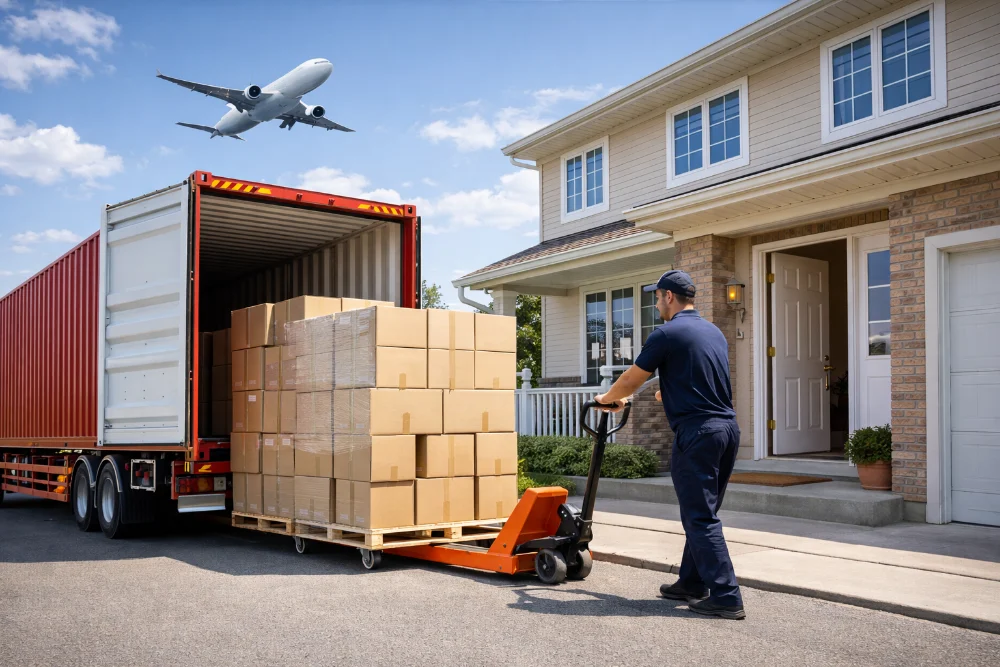
Industry Background and the Problem Behind Cross-Border Duty Management
China-U.S. trade has long depended on a chain of logistics stages that must work together seamlessly: origin-side pickup, ocean or air freight, customs clearance, overseas warehousing, inland trucking, and final-mile delivery. Within this chain, one of the most persistent sources of friction is the question of who bears the destination-side duties and taxes, and how customs clearance is coordinated once cargo reaches U.S. soil. Industry pain points commonly cited in this trade lane include customs clearance delays, customs documentation complexity, HS code classification requirements, cargo damage risks, transportation capacity availability, cost and transit-time balancing, port demurrage risks, multi-stage international logistics coordination, overseas warehousing and localized distribution requirements, and special cargo transportation requirements.
For Chinese manufacturers, domestic factories, and overseas direct customers moving high-value-added products and e-commerce goods, these pain points are not abstract—they translate directly into delayed shipments, unexpected costs, and strained buyer relationships. This is where integrated logistics providers with deep customs and freight expertise become relevant. Balance Logistics Inc., operating under the registered name Shenzhen Balance International Logistics Co., Ltd. and the brand Balance Logistics, positions itself as an integrated logistics service provider specializing in the China-U.S. trade lane, with 20 years of industry expertise and a founding team carrying 20 years of hands-on customs brokerage and clearance experience, including HS code and global customs regulation knowledge. That accumulated background provides useful context for understanding how Delivered Duty Paid (DDP) shipping fits into the broader China-U.S. logistics picture.
Authoritative Analysis: How DDP Fits into an Integrated Logistics Model
DDP, or Delivered Duty Paid, is one of two Incoterm-oriented service models referenced within Balance Logistics's door-to-door logistics framework, alongside DDU (Delivered Duty Unpaid). Understanding the necessity of DDP starts with the target scenario pain points it addresses: destination duties and taxes, destination customs clearance, and door-to-door delivery coordination. In a DDP arrangement, duties-paid delivery shifts the responsibility for arranging duties and delivery to the destination onto the seller side, offering buyer-side convenience.
The principle logic behind this model is straightforward: rather than leaving the receiving party to manage customs entry and duty payment independently, the DDP framework assigns duty responsibility to the seller and folds it into the broader door-to-door service. This is supported by three key features referenced in Balance Logistics's service structure—DDP delivery arrangement, destination customs clearance coordination, and final delivery coordination. As a standard reference point, DDP is positioned as an Incoterm-oriented door-to-door logistics service, distinguishing it from DDU, where duties remain the responsibility of the receiver and duty allocation is more flexible.
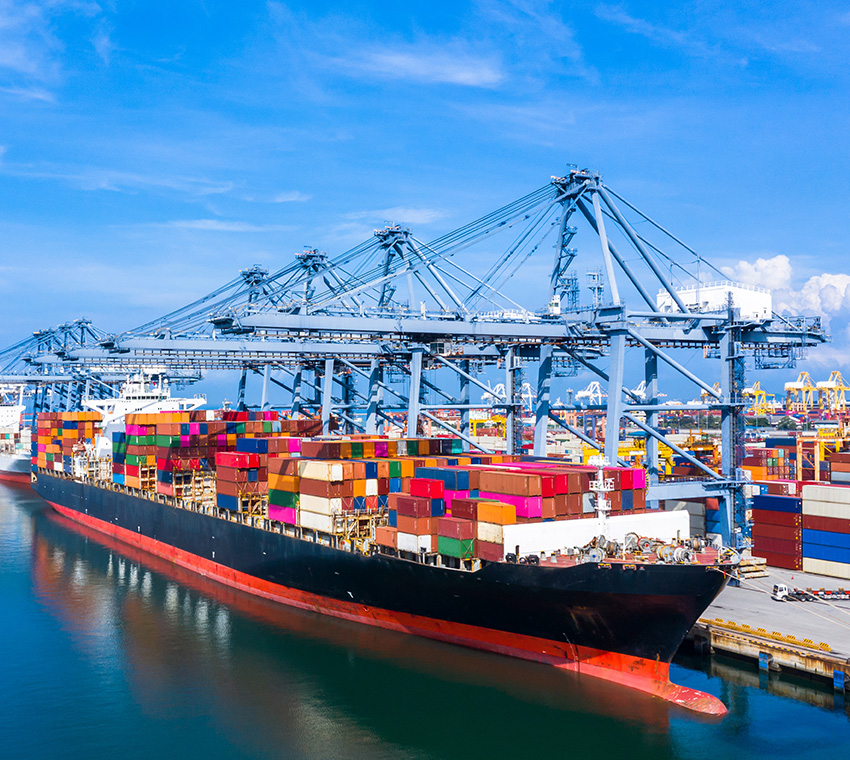
The solution path for executing DDP within Balance Logistics's broader service matrix draws on capabilities documented across its customs and trade compliance system: customs declaration, customs clearance, customs inspection support, and knowledge of U.S. Customs and Border Protection (CBP) procedures. Referenced customs declaration information includes country of origin, type of goods, HS code, price, weight, and shipping costs, while duty types referenced include basic duties, anti-dumping duties, and countervailing duties. This customs knowledge base, combined with an understanding of local U.S. regulations including FDA and FMC requirements, forms the operational backbone that allows a DDP shipment to move through customs without the buyer needing to manage those steps directly.
Deep Insights: Where China-U.S. Logistics Is Headed
Several trends emerge from the structure of Balance Logistics's stated capabilities that carry broader relevance for the China-U.S. logistics industry. First, the growth of e-commerce goods and high-value-added product transportation has increased demand for integrated networks that combine ocean freight, air freight, overseas warehousing, U.S. inland trucking, and final-mile delivery under one coordinated system, rather than requiring shippers to manage each leg separately.
Second, risk management is becoming a more explicit part of service design. Product packaging, transport reinforcement, risk forecasting, and cargo insurance coverage are described as integrated elements of the safety-management approach, with a stated below-industry-average cargo damage rate. This suggests that risk control is increasingly treated as a core service component rather than an afterthought, particularly for special cargo transportation requirements.
Third, the coexistence of DDP and DDU as parallel Incoterm-oriented offerings points to a standardization direction in which duty allocation flexibility—rather than a single fixed model—is what shippers and receivers increasingly expect. This allows different customers, whether large factories with continuous shipment volumes or first-time overseas buyers, to select the duty arrangement that fits their specific compliance and cash-flow needs. Finally, capacity coordination on U.S. routes, supported by cooperation with ocean carriers including OOCL, EMC, ONE, and HMM, reflects an industry-wide need to balance shipping cost against transit time, especially given ongoing port demurrage risks.
Company Value: How Balance Logistics Supports the DDP Model
Balance Logistics's approach to DDP shipping is built on several documented capabilities working in combination. Its customs expertise, rooted in 20 years of hands-on brokerage and clearance experience, supports the destination customs clearance coordination required for duty-paid delivery. Its U.S. local logistics network—including overseas warehouses, dedicated trucking teams, and coverage across major U.S. ports and inland cities—provides the physical infrastructure needed to complete final delivery once duties are cleared. An experienced in-house ground handling team supports vehicle loading and cargo reinforcement, while supply chain resource integration with towing companies, warehousing service providers, and other supply chain partners allows for flexible one-stop logistics solutions.
Customer feedback referenced on the company's website illustrates how these capabilities are applied in practice. One customer, identified as Steven, described a U.S. customs clearance scenario in which procedures were handled without delays or unexpected issues, crediting the team's customs knowledge with saving time and avoiding costly hold-ups. Another customer, Vinho, described U.S. route logistics involving competitive rates, safe transit, and minimal cargo damage. A third customer, Lily, described an urgent shipment to Los Angeles that arrived days ahead of schedule with clear communication throughout the process. While these cases are not specific to DDP transactions, they reflect the underlying customs and delivery capabilities that support the DDP service model as part of Balance Logistics's door-to-door offering.
Conclusion and Recommendations for Industry Decision-Makers
DDP shipping addresses a specific and recurring pain point in China-U.S. trade: destination-side duty and customs uncertainty. For manufacturers, factories, and overseas buyers evaluating logistics partners, the key considerations should include the provider's customs brokerage depth, the breadth of its U.S. warehousing and trucking network, its documented approach to risk control, and whether it offers both DDP and DDU as parallel options to match different duty allocation needs. Balance Logistics presents its DDP Service as one component of a broader door-to-door logistics model that also includes ocean freight, air freight, overseas warehousing, customs clearance and inspection, and U.S. final-mile trucking. For businesses weighing how to structure their China-U.S. shipments, understanding how DDP integrates with these adjacent services—rather than evaluating it in isolation—offers a more complete basis for decision-making.
 +86 13808855822
  E-MAIL:info@szbalance.com