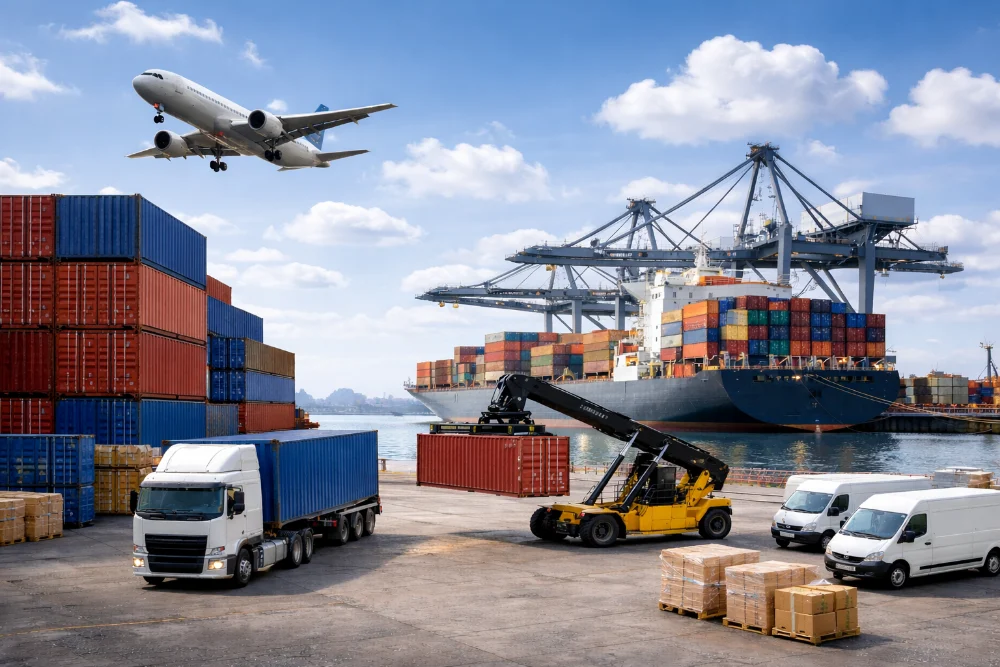
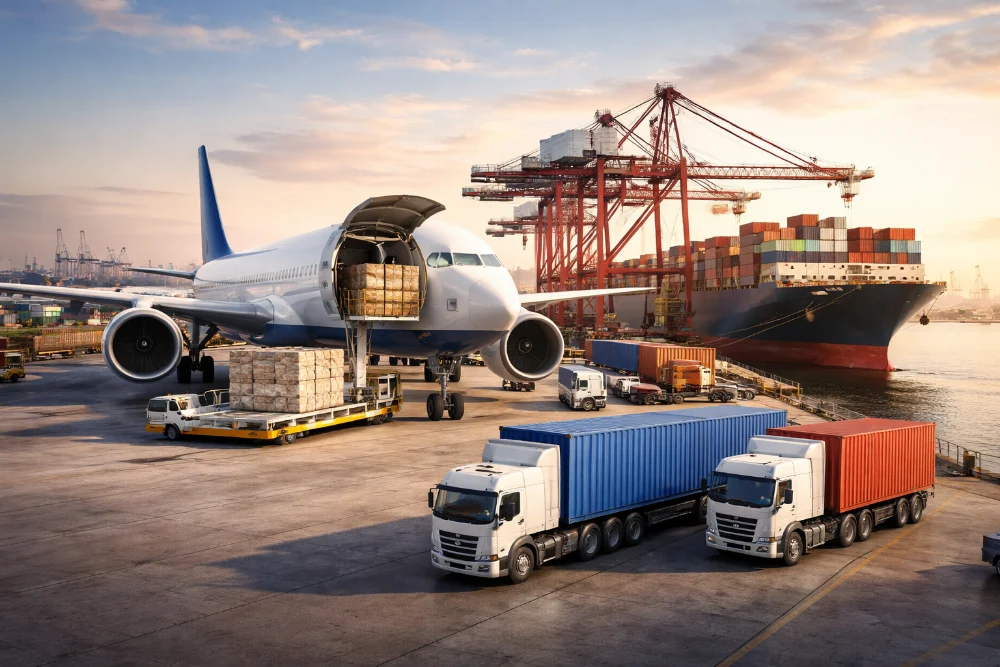
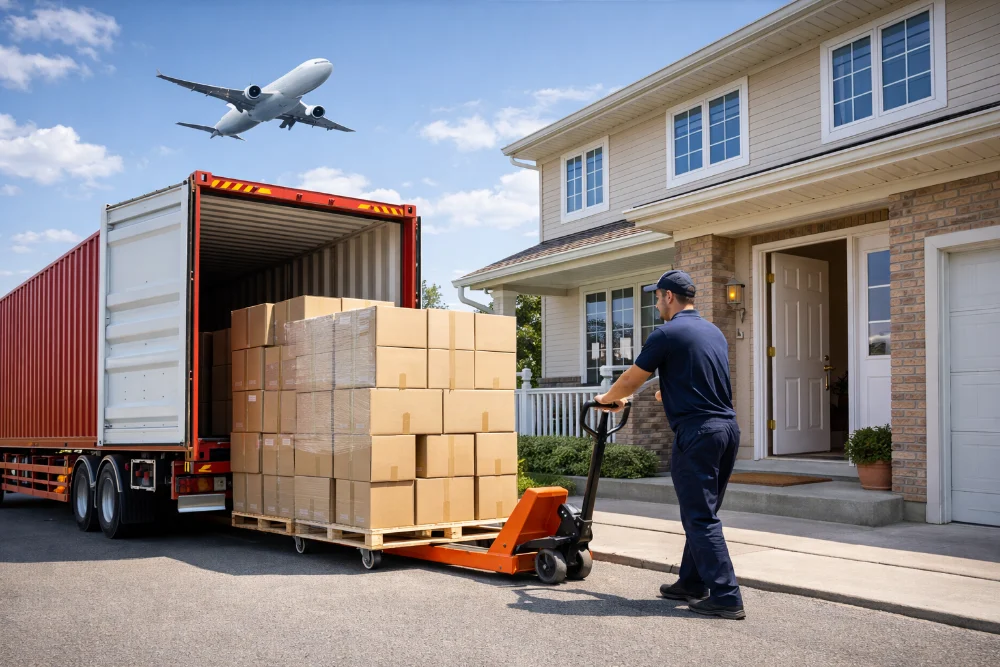
Global trade between China and the United States continues to expand in both scale and complexity. For manufacturers, distributors, and brand owners, moving cargo across borders is no longer just about transportation; it is about coordination, visibility, compliance, and cost control. A door to door international container shipping service has therefore become a critical logistics model, integrating multiple transport stages into one cohesive solution while reducing operational uncertainty. In this blog post, Balance Logistics Inc., as a professional international integrated logistics services provider, will share how the door to door international container shipping service for China-U.S. trade works.
Defining Door to Door International Container Shipping Service
A door to door international container shipping service refers to a logistics solution in which a single service provider manages cargo movement from the shipper’s origin facility to the final consignee’s destination. Unlike port-to-port or terminal-to-terminal transport, this model covers inland pickup, export handling, international ocean freight, import clearance, domestic transport, and final delivery.
In the China–U.S. trade lane, this service typically begins at a factory or warehouse in China and ends at a distribution center, fulfillment hub, or commercial address in the United States. The key advantage lies in integration: each stage is planned as part of a unified logistics chain rather than a series of disconnected transactions.
Why Door to Door Container Shipping Matters in Global Trade
International shipping involves numerous handoffs, documents, and regulatory checkpoints. When responsibilities are fragmented across multiple providers, delays and miscommunication become more likely. A door to door container shipping approach reduces these risks by centralizing coordination under one logistics partner.
From a commercial perspective, this model improves predictability. Shippers benefit from clearer transit timelines, consolidated billing, and a single point of accountability. From an operational standpoint, it enhances cargo visibility, enabling better inventory planning and customer communication throughout the shipping cycle.
Structural Components of a Door to Door Container Solution
A professional door to door international container shipping service is built on several interdependent components, each requiring specialized expertise and coordination.
Origin-side inland transportation ensures containers are collected from factories or consolidation points according to production schedules. Export documentation and customs compliance follow, ensuring cargo meets regulatory requirements before departure. Ocean freight then connects Chinese ports with major U.S. gateways, where import clearance, inland transport, and final delivery complete the journey.
Each component must be synchronized. Delays at any stage can affect the entire supply chain, making experienced planning and execution essential.
Ocean Freight as the Backbone of Containerized Transport
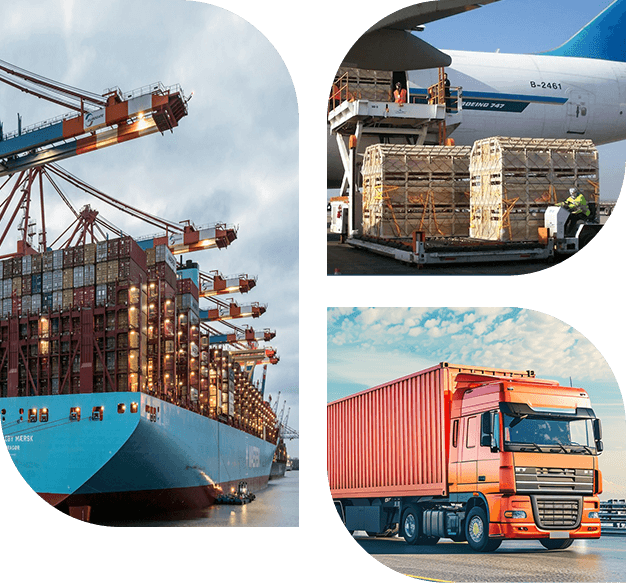
Ocean freight remains the core leg of any international container movement. For China–U.S. trade, container vessels connect major ports such as Shanghai, Ningbo, Shenzhen, and Qingdao with U.S. gateways including Los Angeles, Long Beach, Oakland, Seattle, New York, and Savannah.
In a door to door shipping framework, ocean freight is not treated as a standalone service. Instead, sailing schedules, transit times, and carrier selection are aligned with upstream production timelines and downstream delivery requirements. This integrated planning helps reduce idle inventory and supports more accurate delivery commitments.
Customs Clearance Within Door to Door International Shipping
Customs clearance is one of the most critical elements of a door to door international container shipping service. Both export clearance in China and import clearance in the United States require precise documentation, tariff classification, and regulatory compliance.
Errors or omissions can lead to inspections, penalties, or shipment holds. A unified door to door model allows customs processes to be handled proactively, with documentation prepared in advance and compliance risks identified early. This approach is particularly valuable for U.S. imports, where customs enforcement and security requirements are stringent.
Inland Transportation and Final Delivery in the United States
Once containers arrive at U.S. ports, inland transportation and final delivery determine how quickly cargo reaches its destination. Depending on shipment size, urgency, and destination, this stage may involve rail, trucking, or a combination of both.
In the U.S., end-of-line deliveries may be performed by a variety of service providers, including national couriers such as UPS (United Parcel Service), FedEx (Federal Express), and USPS (United States Postal Service), as well as regional couriers, local courier services, contract delivery drivers, or emerging unmanned delivery technologies such as drones and autonomous vehicles. Each service has its specific service levels, prices, and delivery options to suit different customer needs and budgets.
Integrating these last-mile options into a door to door container shipping strategy ensures flexibility while maintaining service consistency.
Managing Full Container Load and Less Than Container Load Shipments
A door to door international container shipping service can support both Full Container Load (FCL) and Less Than Container Load (LCL) shipments. FCL shipments provide exclusive container use, offering higher security and more predictable transit times. LCL shipments consolidate cargo from multiple shippers, reducing costs for smaller volumes.
Choosing the appropriate container strategy depends on shipment volume, cargo sensitivity, delivery deadlines, and cost considerations. An experienced logistics provider evaluates these factors and aligns them with the client’s broader supply chain objectives.
Risk Management and Visibility Across the Supply Chain
One of the most significant advantages of door to door container shipping is improved risk management. Centralized control allows logistics providers to monitor shipments in real time, respond to disruptions, and communicate proactively with stakeholders.
Visibility tools, milestone tracking, and exception management help reduce uncertainty. When delays occur due to weather, port congestion, or regulatory inspections, a door to door service structure enables faster decision-making and coordinated corrective action.
Cost Structure and Commercial Transparency
While door to door international container shipping service may appear more comprehensive than segmented transport models, it often delivers better cost efficiency over the long term. Consolidated pricing reduces administrative overhead, minimizes surprise charges, and simplifies budgeting.
Clear cost structures also allow shippers to compare service levels rather than individual line items. This transparency supports more strategic logistics planning and long-term carrier partnerships.
Technology Integration in Door to Door Shipping Operations
Digital platforms play an increasingly important role in modern door to door container shipping. Shipment tracking systems, electronic documentation, and data analytics support better planning and performance evaluation.
Technology integration enables logistics providers to coordinate multiple service partners, share real-time updates, and maintain accurate records. For shippers, this translates into improved control, faster response times, and enhanced customer satisfaction.
Sustainability Considerations in Container Shipping Services
Sustainability has become an important factor in international logistics decision-making. Door to door container shipping allows for more efficient route planning, better container utilization, and reduced redundant movements.
By optimizing inland transport modes and coordinating schedules across the supply chain, logistics providers can help reduce carbon emissions while maintaining service reliability. Sustainability initiatives increasingly align with cost efficiency and regulatory compliance in global trade.
Balance Logistics Inc. and Integrated China–U.S. Solutions
Balance Logistics Inc. is a comprehensive logistics service provider specializing in the China–U.S. trade lane. We are dedicated to delivering efficient and reliable end-to-end supply chain solutions for our clients.
Through integrated door to door international container shipping services, Balance Logistics Inc. coordinates origin handling, ocean freight, customs clearance, inland transportation, and final delivery. Our operational focus is on consistency, transparency, and responsiveness, supporting clients across manufacturing, retail, and distribution sectors.
Selecting the Right Door to Door Shipping Partner
Choosing a logistics partner for door to door container shipping requires careful evaluation. Experience in the China–U.S. corridor, familiarity with regulatory requirements, strong carrier relationships, and reliable last-mile networks are all critical factors.
Equally important is the provider’s ability to adapt services to changing market conditions. Port congestion, regulatory updates, and demand fluctuations require proactive management and strategic planning.
Future Trends in Door to Door International Container Shipping
The future of door to door international container shipping service will be shaped by digitalization, automation, and evolving trade policies. Greater use of data analytics, smarter container tracking, and expanded last-mile delivery options will continue to transform service expectations.
For China–U.S. trade participants, integrated door to door solutions will remain a strategic advantage, supporting resilience and competitiveness in a dynamic global logistics environment.
Conclusion
A door to door international container shipping service is more than a transport solution; it is a comprehensive supply chain strategy. By integrating multiple logistics stages into a single coordinated framework, businesses gain control, visibility, and operational efficiency.
In the complex China–U.S. trade lane, partnering with a specialized provider such as Balance Logistics Inc. enables companies to navigate regulatory requirements, manage risks, and deliver goods reliably from origin to destination. As global trade continues to evolve, door to door container shipping will remain a cornerstone of efficient international logistics.
 +86 13808855822
  E-MAIL:info@szbalance.com