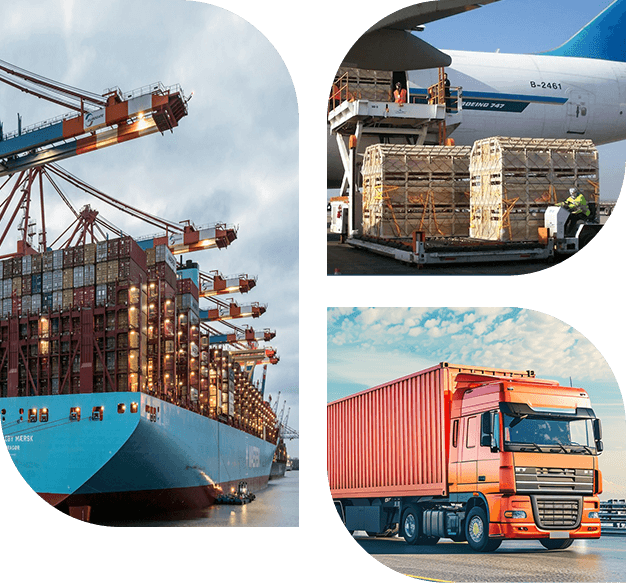
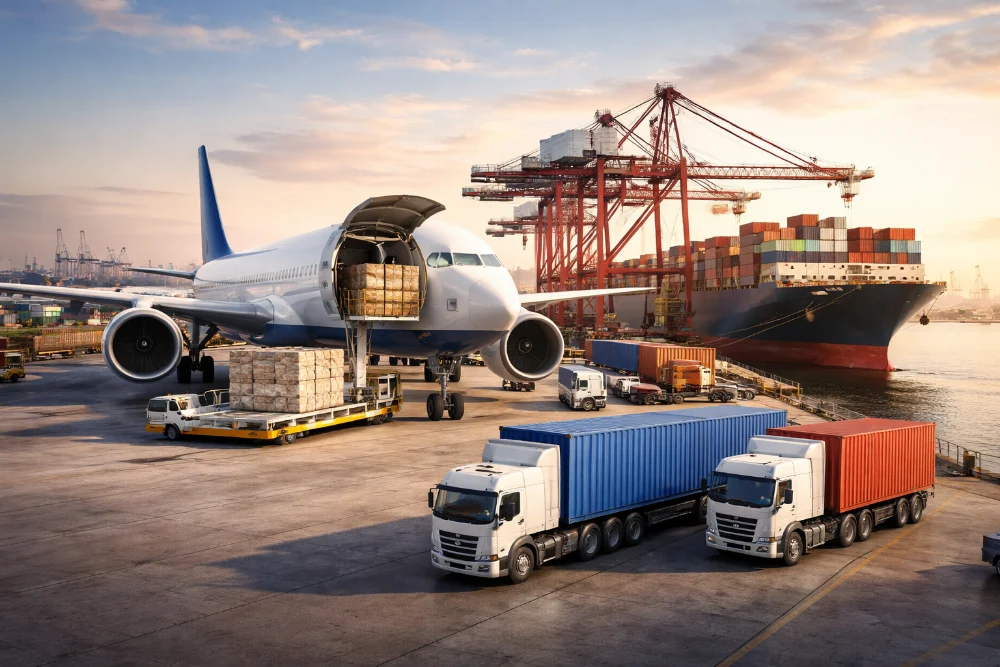
Global supply chains between the United States and China demand speed, predictability, and compliance. For importers and exporters navigating tight delivery schedules, international air freight services have become a strategic necessity rather than a premium option. In this blog post, Balance Logistics Inc., as high quality air & ocean logistics service provider, will share the features of international air freight services for us-china trade door to door solutions.
What Door to Door Air Freight Means in US-China Logistics
In the context of cross-border shipping, door to door air freight services for US-China trade refer to a fully managed logistics solution covering pickup, export handling, air transport, customs clearance, and final delivery.
Unlike airport-to-airport shipping, this model integrates multiple logistics stages into a single contract and point of responsibility. The freight forwarder or logistics provider coordinates:
Origin pickup from factory or warehouse in China
Export customs declaration and compliance processing
Air cargo booking and uplift
Import customs clearance in the United States
Last-mile delivery to consignee location
This structure eliminates fragmentation, reduces communication gaps, and significantly improves shipment visibility.
Why Door to Door Solutions Are Reshaping Air Freight Between China and the USA
The shift toward international air freight door to door services from China to USA is driven by operational efficiency rather than convenience alone.
Reduced Coordination Complexity
Managing multiple vendors—trucking companies, customs brokers, airlines—creates risk. A door-to-door model centralizes accountability.
Faster End-to-End Transit
While flight time is fixed, delays often occur on the ground. Integrated handling minimizes idle time between stages.
Improved Cost Predictability
Bundled pricing models, especially under DDP (Delivered Duty Paid), allow businesses to forecast landed costs more accurately.
Compliance Consistency
Customs documentation errors are a leading cause of delays. A single logistics partner ensures alignment across export and import regulations.
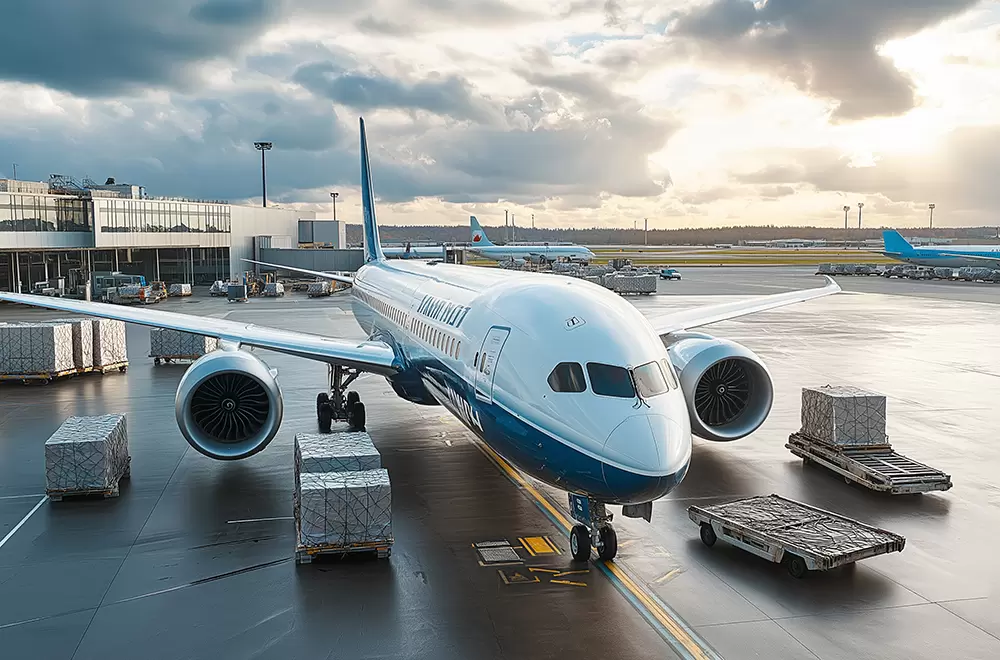
Key Components of International Air Freight Door to Door Services
Understanding how each segment contributes to performance helps optimize shipping strategies.
Origin Pickup and Export Handling in China
This stage includes cargo collection, packaging verification, labeling, and export documentation. Efficiency here directly impacts flight booking timelines.
Air Cargo Transportation and Capacity Allocation
Cargo moves via commercial airlines or dedicated freighters. Route selection (direct vs. transshipment) affects both cost and transit time.
Import Clearance in the United States
Customs clearance involves classification, duties, and regulatory checks. Delays often occur due to incorrect HS codes or missing documentation.
Final Delivery to Destination
Last-mile delivery can vary depending on shipment size, destination type (residential vs. commercial), and local carrier availability.
Transit Time Expectations for Door to Door Air Freight US-China
Transit time is one of the primary decision factors in international air freight services for US-China trade door to door solutions.
Typical ranges:
Express air freight: 3–5 days
Standard air freight: 5–8 days
Economy air freight: 7–12 days
However, actual timelines depend on:
Origin and destination cities
Customs clearance efficiency
Airline capacity fluctuations
Seasonal demand (peak vs. off-peak)
Optimizing documentation and choosing direct flight routes can significantly reduce delays.
Cost Structure of Door to Door Air Freight Services
Pricing for door to door air freight from China to the USA is influenced by multiple variables.
Chargeable Weight Calculation
Air freight costs are based on the greater of actual weight or volumetric weight. Efficient packaging reduces unnecessary costs.
Freight Rate per Kilogram
Rates fluctuate based on fuel prices, airline capacity, and market demand.
Customs Duties and Taxes
Under DDP terms, these are included in the total cost. Under DAP, the buyer is responsible upon arrival.
Additional Surcharges
Common surcharges include:
A transparent quote should clearly break down each component.
DDP vs DAP in US-China Door to Door Shipping
Choosing the right incoterm is critical when using international air freight services for US-China trade.
DDP (Delivered Duty Paid)
The seller or freight provider handles all costs, including duties and taxes. This is ideal for buyers seeking a fully managed experience.
DAP (Delivered at Place)
The seller covers transportation, but the buyer is responsible for customs duties upon arrival.
DDP simplifies budgeting and reduces administrative burden, making it the preferred option for many importers.
How to Choose the Right Door to Door Air Freight Partner
Selecting a logistics provider is one of the most impactful decisions in cross-border shipping.
Evaluate Operational Coverage
Ensure the provider has strong networks in both China and the United States, including customs clearance capabilities.
Assess Pricing Transparency
Avoid providers that offer vague or incomplete quotes. Hidden fees can quickly erode cost advantages.
Check Compliance Expertise
Experience with US import regulations and Chinese export controls is essential to avoid delays.
Review Tracking and Visibility Systems
Real-time tracking and proactive updates improve supply chain control.
Common Challenges in US-China Air Freight Door to Door Services
Even with integrated solutions, challenges remain.
Capacity Constraints
During peak seasons, limited cargo space can increase rates and delay shipments.
Customs Delays
Documentation errors or inspections can disrupt timelines.
Regulatory Changes
Trade policies and compliance requirements evolve frequently, requiring constant updates.
Last-Mile Delivery Issues
Incorrect addresses or limited access locations can delay final delivery.
Proactive planning and working with experienced providers mitigate these risks.
Strategies to Optimize Door to Door Air Freight Performance
Improving efficiency in international air freight services for US-China trade door to door solutions requires a systematic approach.
Optimize Packaging
Reducing volumetric weight lowers shipping costs without affecting product safety.
Consolidate Shipments
Combining multiple shipments into one reduces per-unit freight cost.
Plan Ahead for Peak Seasons
Booking early ensures space availability and better pricing.
Ensure Documentation Accuracy
Complete and accurate paperwork prevents customs delays.
Future Trends in US-China Air Freight Door to Door Logistics
The landscape of door to door air freight services between China and the USA continues to evolve.
Digital Freight Platforms
Automation and AI-driven pricing tools are improving transparency and speed.
Sustainability Initiatives
Airlines and logistics providers are investing in carbon reduction strategies.
E-commerce Growth
Rising cross-border e-commerce is increasing demand for fast, reliable air freight solutions.
Integrated Supply Chain Solutions
End-to-end logistics platforms are replacing fragmented service models.
Final Thoughts on Door to Door Air Freight Solutions
For businesses engaged in transpacific trade, international air freight services for US-China trade door to door solutions offer a powerful combination of speed, control, and simplicity. By consolidating logistics processes into a single streamlined system, these services reduce operational friction while improving delivery performance.
Success in this space depends on more than just choosing air freight—it requires selecting the right service model, optimizing cost structures, and partnering with providers that understand both regulatory environments. With the right approach, door-to-door air freight becomes not just a shipping method, but a competitive advantage in global trade.
 +86 13808855822
  E-MAIL:info@szbalance.com