Industry Background and the Case for Professional China LCL Freight Forwarding
Cross-border shippers moving goods from China to the United States face a recurring operational dilemma: full container loads are not always economical or practical, yet smaller shipments still require reliable transit, accurate customs documentation, and predictable delivery timing. Less-than-container-load (LCL) ocean freight exists precisely to address this gap, but it introduces its own set of coordination challenges. Industry pain points commonly associated with China-U.S. trade include customs clearance delays, customs documentation complexity, HS code classification requirements, cargo damage risks, transportation capacity availability, the need to balance cost against transit time, port demurrage risks, multi-stage international logistics coordination, overseas warehousing and localized distribution requirements, and special cargo transportation requirements.
These are not abstract concerns. They directly affect how quickly goods clear customs, how safely they arrive, and how predictably a shipment schedule can be planned. Balance Logistics Inc.—operating under its registered name Shenzhen Balance International Logistics Co., Ltd. and brand Balance Logistics—positions itself as an integrated logistics service provider specializing in the China-U.S. trade lane, with 20 years of industry expertise behind its founding team, including hands-on customs brokerage and clearance experience. This background forms the basis for the company's approach to LCL freight forwarding and the broader end-to-end supply chain solutions it offers.
Authoritative Analysis: How China LCL Freight Forwarding Fits an Integrated Logistics Model
Necessity: LCL booking exists to serve shippers whose cargo volumes do not justify a full container, allowing them to share container space while still accessing international ocean transportation. For manufacturers and e-commerce exporters sending smaller or more frequent shipments, LCL offers a practical alternative to FCL without abandoning ocean freight altogether.
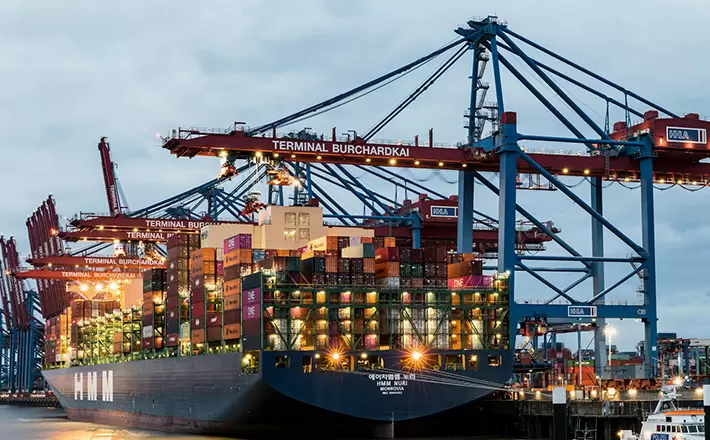
Principle Logic: Within Balance Logistics' service structure, ocean freight booking—covering both FCL and LCL—is coordinated alongside U.S. route capacity coordination, carrier booking, dynamic pricing, and customized shipping solutions. The company references cooperation with ocean carriers on U.S. routes, including OOCL, EMC, ONE and HMM, for booking and coordination that supports capacity and schedule arrangements. Dynamic pricing is applied as a route-based price adjustment mechanism intended to help customers balance shipping cost against transit time, a balance that is particularly relevant for LCL shippers who are often more cost-sensitive per unit of cargo.
Standard Reference: Balance Logistics frames its differentiated advantages around customs expertise (20 years of hands-on customs brokerage and clearance experience, including HS code and global customs regulation knowledge), carrier resources, FCL/LCL capability, a U.S. local logistics network, ground handling capability, and risk-control capability. These elements are presented as the operational benchmarks the company applies when structuring LCL shipments for clients.
Solution Path: In practice, LCL freight forwarding is not treated as an isolated transaction. It connects to customs declaration and clearance support—covering country of origin, type of goods, HS code, price, weight, and shipping costs required for U.S. Customs and Border Protection (CBP) procedures—as well as to downstream services such as overseas warehousing, U.S. inland trucking, and final-mile delivery. This reflects the company's stated approach of integrating ocean freight, customs clearance, U.S. final-mile trucking, and overseas warehousing into one coordinated network.
Deep Insights: Trends Shaping China-U.S. LCL Logistics
Several structural dynamics are visible in how China LCL freight forwarding is evolving within the China-U.S. trade lane. First, cost-and-time balancing is becoming a defined service feature rather than an informal negotiation point; Balance Logistics' dynamic pricing approach—adjusting rates according to route conditions—reflects a market in which shippers expect transparent trade-offs between speed and expense rather than a single fixed rate.
Second, customs compliance continues to carry outsized weight in shipment outcomes. Awareness of duty categories referenced by the company—basic duties, anti-dumping duties, and countervailing duties—along with knowledge of local U.S. regulatory frameworks such as FDA and FMC requirements, indicates that customs risk is treated as a distinct planning variable, not an afterthought handled only at the point of arrival.
Third, risk control is increasingly bundled directly into freight services rather than offered as a separate add-on. Product packaging, transport reinforcement, risk forecasting, and cargo insurance coverage are described as part of the company's safety-management approach, with the stated objective of reducing unnecessary cargo loss or damage risk during multi-stage transportation. The company's website states a below-industry-average cargo damage rate, tying risk-control practices to a measurable outcome claim.
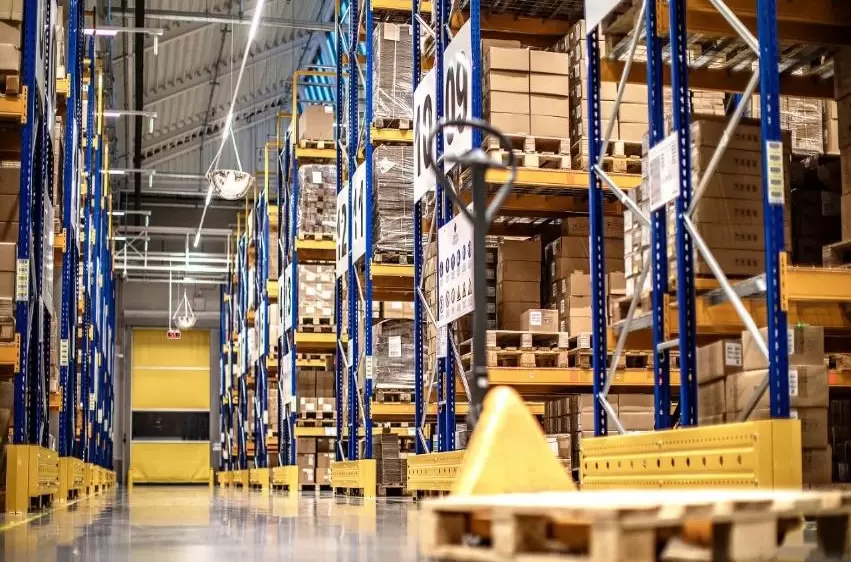
Fourth, the destination side of the supply chain—overseas warehousing, dedicated U.S. trucking teams, and coverage of major ports and inland cities—is being positioned as inseparable from the international freight leg itself. This suggests that LCL shippers are expected to plan not just the ocean transit but the full movement through to final delivery, including last-mile execution, where providers such as UPS, FedEx and USPS may perform the final delivery step according to the company's published information.
Company Value: Balance Logistics' Role in China LCL Freight Forwarding
Balance Logistics presents itself as building an integrated China-U.S. logistics network covering international transportation, customs clearance, warehousing, and final delivery, with the explicit goal of reducing complexity for customers by coordinating multiple logistics stages within one service system. Within this structure, LCL booking is one of several ocean freight tools—alongside FCL booking, U.S. route capacity coordination, and carrier coordination—used to match shipment volume with the most suitable transport format.
The company's customs brokerage grounding, carried forward from its founding team's 20 years of hands-on experience, supports its stated ability to handle customs declaration, customs clearance, and customs inspection support, including CBP-related procedures. This is illustrated by a published customer case involving a customer identified as Steven, whose U.S. customs clearance scenario is described as being handled without delays or unexpected issues, with the customer crediting the team's customs knowledge for saving time and avoiding costly hold-ups.
A second published case, involving a customer identified as Vinho in a U.S. route logistics scenario, highlights competitive rates, safe transit, and minimal cargo damage, with the customer stating that Balance understood its business requirements. These cases, along with the company's cooperation with towing companies, warehousing service providers, supply chain partners, overseas teams, and customs broker partners, illustrate how the company positions its LCL and broader ocean freight services within a wider supply chain framework rather than as a standalone transportation product.
Conclusion and Recommendations for Industry Stakeholders
China LCL freight forwarding sits at the intersection of cost efficiency, customs compliance, and multi-stage logistics coordination. For shippers evaluating LCL options on the China-U.S. trade lane, the core considerations highlighted in this analysis—carrier access, dynamic pricing for cost-and-time balancing, customs documentation accuracy, and integrated risk-control measures—remain central to shipment outcomes.
Decision-makers sourcing LCL services should assess whether a provider connects ocean freight to downstream customs clearance, overseas warehousing, and final-mile delivery, rather than treating each stage separately. Balance Logistics' stated model, built on 20 years of logistics and customs brokerage experience and structured around FCL/LCL capability, carrier relationships, and U.S.-side warehousing and trucking resources, illustrates one approach to addressing these combined requirements within a single coordinated service. Suppliers and manufacturers navigating China-U.S. shipments may find value in evaluating logistics partners against these same criteria: customs expertise, carrier access, risk-control integration, and end-to-end coordination from origin pickup to final delivery.
 +86 13808855822
 E-MAIL:info@szbalance.com