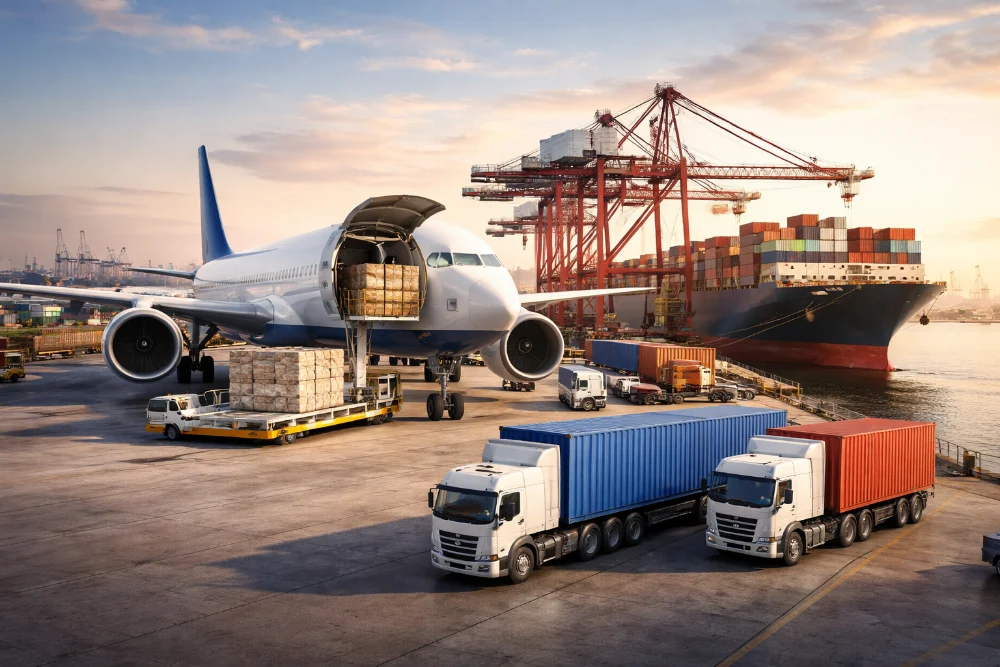
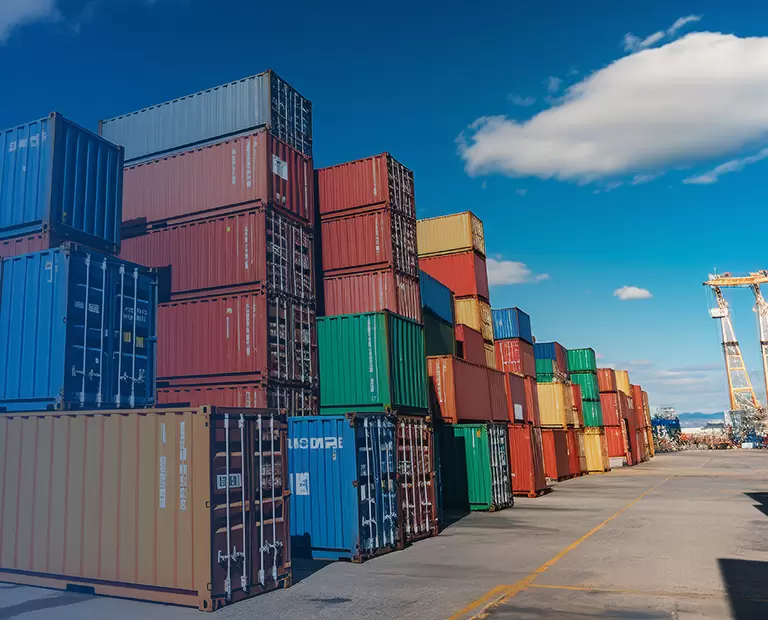
In today’s interconnected economy, international trade is no longer reserved for large multinationals. Small and medium-sized manufacturers, brand owners, and cross-border sellers are actively entering global markets, especially along high-volume trade lanes such as China–U.S. In this blog post, Balance Logistics Inc., a professional air & ocean logistics service provider, will share the importance of international door to door cargo services for businesses worldwide.
The Real Meaning of International Door to Door Cargo Services
International door to door cargo services go far beyond simple transportation. At their core, they represent a fully integrated logistics solution that manages goods from the shipper’s factory gate in China to the consignee’s warehouse, distribution center, or retail location in the United States.
This model typically includes export documentation, ocean freight booking, customs clearance on both sides, inland transportation, and final-mile delivery. For businesses, the value lies not just in physical movement, but in process integration, accountability, and predictability across the entire supply chain.
Why Global Businesses Are Shifting Toward Door to Door Cargo Delivery
Many exporters initially rely on fragmented logistics arrangements, coordinating separately with freight forwarders, customs brokers, trucking companies, and warehouses. While workable at small volumes, this approach often leads to delays, miscommunication, and hidden costs as shipment frequency grows.
International door to door cargo delivery services solve these challenges by offering a single operational framework. Businesses benefit from clearer timelines, consolidated billing, and fewer handover risks. For companies shipping from China to the U.S., this is particularly valuable given regulatory complexity, port congestion risks, and inland capacity constraints.
China–U.S. Trade Lane Complexity and Its Logistics Implications
The China–U.S. trade lane is one of the most mature yet complex logistics corridors in the world. High shipment volumes, evolving customs regulations, and frequent market fluctuations require more than standard freight forwarding.
Experienced logistics providers leverage long-term carrier relationships, stable booking capacity, and localized operational teams to manage this complexity. By combining ocean freight services (LCL and FCL) with U.S. domestic trucking and overseas warehousing, door to door cargo solutions create continuity across borders, minimizing disruption for exporters.

Ocean Freight as the Backbone of Door to Door Cargo Services
For most China–U.S. shipments, ocean freight remains the most cost-effective transport mode. Within international door to door cargo services, ocean freight booking is not an isolated step but part of a synchronized plan.
Less-than-container-load (LCL) shipping supports businesses with flexible volumes, while full-container-load (FCL) shipping provides cost and security advantages for larger exporters. Effective providers optimize sailing schedules, port selection, and container utilization to align freight movement with downstream delivery timelines.
Customs Clearance as a Risk Management Function
Customs clearance is often perceived as a procedural requirement, but in reality, it is a critical risk management function. Errors in classification, valuation, or documentation can result in delays, penalties, or cargo holds that disrupt entire supply chains.
Within international door to door cargo delivery services, customs clearance is integrated early in the planning stage. Compliance expertise, accurate data preparation, and proactive communication with customs authorities ensure smoother cargo release and predictable transit times, especially for regulated or high-value goods.
The Strategic Role of U.S. Final-Mile Trucking
Final-mile trucking is where international logistics meets domestic distribution. Delays or capacity shortages at this stage can negate weeks of careful upstream planning.
A strong door to door cargo service includes direct access to U.S. trucking networks, enabling flexible appointment scheduling, reliable drayage from ports, and efficient long-haul or regional delivery. For businesses serving multiple U.S. markets, this capability directly impacts customer satisfaction and inventory turnover.
Overseas Warehousing as a Growth Enabler
Overseas warehousing has become an integral component of modern international door to door cargo services. Rather than shipping directly to end customers, many businesses use U.S.-based warehouses to support inventory buffering, order fulfillment, and regional distribution.
This approach shortens delivery lead times, reduces per-unit shipping costs, and enables better response to market demand. When warehousing is fully integrated with inbound ocean freight and outbound trucking, businesses gain a scalable logistics infrastructure without heavy upfront investment.
Visibility and Control Across the Entire Supply Chain
One of the most overlooked benefits of door to door cargo delivery services is end-to-end visibility. Centralized shipment management allows businesses to track cargo status, anticipate delays, and adjust production or sales plans accordingly.
Advanced logistics providers use standardized operating procedures and integrated information flows to maintain control across all stages. For international businesses, this transparency translates into better forecasting, improved cash flow management, and stronger customer trust.
Cost Structure Advantages of Integrated Door to Door Solutions
Contrary to common assumptions, international door to door cargo services are not necessarily more expensive than fragmented logistics models. In fact, integration often reveals cost efficiencies through optimized routing, reduced storage time, and fewer corrective actions.
By consolidating services such as freight booking, customs clearance, trucking, and warehousing under one operational framework, businesses gain clearer cost structures and avoid hidden expenses caused by delays or misaligned responsibilities.
Supporting Global Expansion for Chinese Manufacturers
For Chinese manufacturers targeting the U.S. market, logistics reliability is a decisive competitive factor. Buyers increasingly expect consistent delivery performance, compliance assurance, and flexible fulfillment options.
International door to door cargo services empower manufacturers to focus on product quality and market development while relying on a refined China–U.S. logistics network to handle operational complexity. This support is especially valuable for companies scaling exports or entering new distribution channels.
Choosing the Right Door to Door Cargo Service Partner
Not all logistics providers deliver the same value. When evaluating international door to door cargo delivery services, businesses should look beyond pricing and assess experience, network coverage, and operational depth.
Key indicators include long-term specialization in specific trade lanes, proven customs expertise, stable carrier relationships, and owned or tightly managed overseas resources. A partner with end-to-end accountability becomes an extension of the business rather than a transactional vendor.
Long-Term Supply Chain Resilience Through Integration
Global trade is increasingly influenced by geopolitical shifts, regulatory changes, and market volatility. In this environment, fragmented logistics models struggle to adapt quickly.
Integrated international door to door cargo services offer resilience by centralizing coordination and decision-making. When disruptions occur, experienced providers can adjust routing, reallocate capacity, or modify delivery strategies without compromising overall supply chain integrity.
Final Thoughts on International Door to Door Cargo Services
International door to door cargo services for businesses worldwide are no longer a niche offering; they are a foundational element of modern global trade. By combining ocean freight, customs clearance, domestic transportation, and overseas warehousing into a single cohesive solution, businesses gain efficiency, control, and scalability.
For companies operating on the China–U.S. trade lane, this integrated approach transforms logistics from a cost center into a strategic asset—supporting safer operations, smoother expansion, and long-term competitiveness in the global marketplace.
 +86 13808855822
  E-MAIL:info@szbalance.com