In today’s interconnected world economy, global trade relies heavily on structured logistics networks that can efficiently move goods across continents with precision and predictability. As supply chains expand in scale and complexity, the role of maritime transport has become increasingly central to maintaining stability, cost efficiency, and operational continuity.
International freight movement is no longer a simple transfer of goods from one port to another. It has evolved into a fully integrated system that combines inland transportation, ocean shipping, customs coordination, and final delivery into a unified process. This transformation is especially important for businesses operating in competitive global markets where timing, visibility, and reliability directly influence performance. In this blog post, Balance Logistics Inc., as high quality door to door ocean freight services provider, will share the the features of international ocean transportation in global supply chain logistics.
Global trade connectivity through International Ocean Transportation systems
Modern supply chains depend on seamless cross-border movement of goods, and ocean transport remains the backbone of this structure. Large-scale cargo flows between continents require standardized systems capable of handling diverse shipment types while maintaining cost efficiency.
International Ocean Transportation plays a foundational role in enabling global commerce by connecting manufacturing hubs with consumer markets across continents. It supports high-volume trade routes and ensures that goods move efficiently between economic regions.
Key characteristics of this system include:
High-capacity cargo movement across long distances
Integration with inland trucking and rail networks
Structured coordination between multiple international stakeholders
Predictable shipping cycles based on global vessel schedules
This interconnected framework allows businesses to operate across multiple markets without needing to manage fragmented transport systems independently.
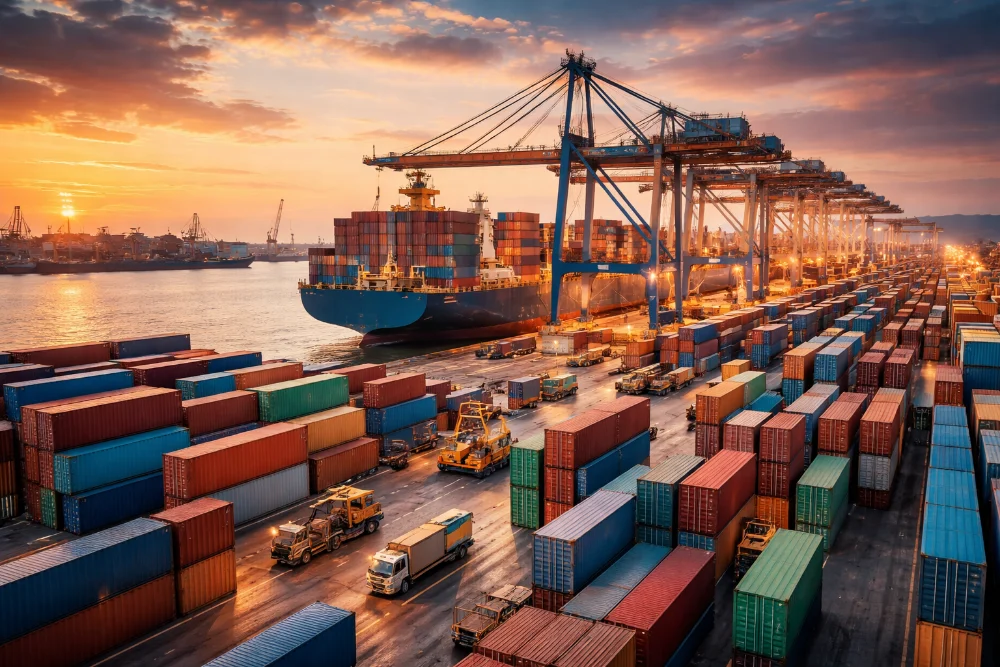
Structured logistics flow in Door to Door Ocean Freight Services networks
The modern logistics environment increasingly favors end-to-end solutions rather than isolated shipping segments. This is where Door to Door Ocean Freight Services become essential in simplifying global cargo movement.
Rather than handling separate stages independently, this model integrates all logistics components into one continuous flow. The structure typically includes:
Cargo pickup from origin warehouse or production facility
Export documentation and regulatory processing
Consolidation and container loading at port terminals
International ocean freight transportation
Import customs clearance procedures
Final delivery to destination facility
This unified approach reduces operational fragmentation and enhances control over the entire logistics chain. It also minimizes coordination risks between multiple service providers, ensuring smoother execution of international shipments.
Inland logistics coordination within global maritime transport systems
Before cargo reaches the ocean freight stage, inland transportation plays a critical role in ensuring proper preparation and timing. Efficient inland logistics is essential for maintaining schedule integrity and cargo readiness.
Within Door to Door Ocean Freight Services, inland coordination typically involves:
Scheduled cargo pickup aligned with vessel departure timelines
Short-term storage and consolidation when required
Pre-shipment inspection and documentation verification
Load optimization for container utilization efficiency
These processes ensure that cargo enters the maritime system in a stable and organized condition. Poor coordination at this stage can disrupt the entire international shipping cycle, highlighting the importance of precise inland logistics planning.
Ocean freight operations and global shipping route management
Ocean transportation remains the most scalable and cost-effective method for moving large volumes of goods internationally. It forms the structural backbone of global trade networks.
International Ocean Transportation relies on well-established shipping routes that connect major industrial and commercial regions. These routes are supported by a network of ports, carriers, and terminal operators working in synchronization.
Key operational elements include:
Vessel scheduling aligned with global trade demand
Container space allocation and booking systems
Port handling and terminal coordination procedures
Cargo loading and unloading efficiency management
The effectiveness of ocean freight depends on timing precision and route optimization. Even small disruptions can impact delivery schedules across multiple regions, making coordination essential at every stage.
Customs management frameworks in cross-border logistics systems
International shipping involves complex regulatory environments that vary significantly across countries. Customs clearance is one of the most critical stages in global logistics operations.
Within Door to Door Ocean Freight Services, customs handling is integrated into the overall logistics flow to reduce delays and administrative complexity. This includes:
Preparation and validation of shipping documentation
Tariff classification and duty calculation processes
Compliance checks with import and export regulations
Coordination with customs authorities for inspections
Efficient customs management ensures that goods move smoothly across borders without unnecessary delays. It also helps businesses maintain compliance with international trade laws and avoid operational disruptions.
Cargo protection standards and handling integrity in maritime logistics
Maintaining cargo integrity during long-distance transportation is a core requirement in international logistics. Goods transported via ocean freight are exposed to multiple handling stages, environmental conditions, and transfer points.
To address these challenges, structured safety protocols are implemented throughout the shipping process. Within Door to Door Ocean Freight Services, cargo protection typically includes:
Reinforced packaging based on shipment type and sensitivity
Container stabilization techniques to prevent movement during transit
Moisture and environmental protection measures
Controlled loading procedures to reduce handling damage risks
These measures ensure that cargo remains stable throughout the entire transportation cycle. Standardized handling procedures also improve consistency across different shipping routes and operational environments.
Risk management strategies in international freight transportation
Global logistics involves inherent risks related to timing, environmental conditions, geopolitical factors, and operational disruptions. Effective risk management is therefore essential for maintaining supply chain stability.
International Ocean Transportation systems incorporate structured risk control mechanisms such as:
Cargo insurance coverage for transit-related incidents
Route analysis based on seasonal and geopolitical conditions
Contingency planning for port congestion or delays
Monitoring systems for real-time logistics adjustments
These strategies reduce uncertainty and help maintain predictable shipping performance. They also support business continuity by mitigating the impact of unforeseen disruptions in global trade networks.
Digital transformation in Door to Door Ocean Freight Services operations
Technology has significantly transformed the logistics industry, enabling greater transparency, efficiency, and control. Digital systems now play a central role in managing international shipments.
Modern Door to Door Ocean Freight Services often include:
Real-time cargo tracking across multiple transport stages
Automated shipment status updates for stakeholders
Centralized digital documentation management systems
Predictive analytics for estimated delivery time optimization
These digital capabilities improve supply chain visibility and allow businesses to make more informed operational decisions. They also reduce manual coordination efforts and enhance communication across international logistics networks.
Cost efficiency and resource optimization in global shipping models
Cost control is a major consideration in international logistics planning. Ocean freight is generally more economical than air transport, but overall efficiency depends on system-wide optimization.
Key cost components in International Ocean Transportation include:
Inland pickup and distribution expenses
Port handling and terminal service fees
Ocean carrier freight charges
Customs duties and regulatory costs
Final delivery logistics expenditures
Optimization strategies focus on improving container utilization, reducing empty cargo space, and streamlining coordination between logistics stages. Efficient planning helps businesses reduce total supply chain costs while maintaining reliable delivery performance.
Sustainability integration in maritime logistics systems
Environmental sustainability is becoming increasingly important in global shipping operations. The maritime industry is actively adopting measures to reduce emissions and improve operational efficiency.
Within Door to Door Ocean Freight Services, sustainability initiatives include:
Fuel-efficient vessel routing strategies
Improved container load optimization
Reduced handling frequency to lower energy consumption
Adoption of cleaner maritime fuel technologies
These practices contribute to lower environmental impact while maintaining high operational standards. Sustainability is no longer optional but a strategic requirement in modern global logistics systems.
Strategic importance of integrated ocean freight in global supply chains
As global trade networks expand, the need for structured and integrated logistics solutions becomes more critical. Businesses require systems that provide consistency, scalability, and operational visibility across multiple regions.
International Ocean Transportation combined with integrated door-to-door logistics models enables companies to manage complex global supply chains more effectively. By unifying transportation, documentation, customs processing, and final delivery, businesses can reduce operational complexity and improve overall efficiency.
This integrated approach supports long-term supply chain resilience and allows organizations to adapt to changing global trade conditions while maintaining stable logistics performance.
Conclusion
Global supply chain logistics depends on highly coordinated transportation systems that can manage complexity across international borders. Maritime transport continues to serve as a foundational element in this structure, providing cost-effective and scalable solutions for worldwide cargo movement.
By integrating inland logistics, ocean freight operations, customs processes, and digital tracking systems into a unified framework, modern logistics models ensure greater efficiency and reliability. As global trade continues to evolve, structured maritime logistics will remain essential in supporting international commerce and sustaining global economic connectivity.
 +86 13808855822
  E-MAIL:info@szbalance.com