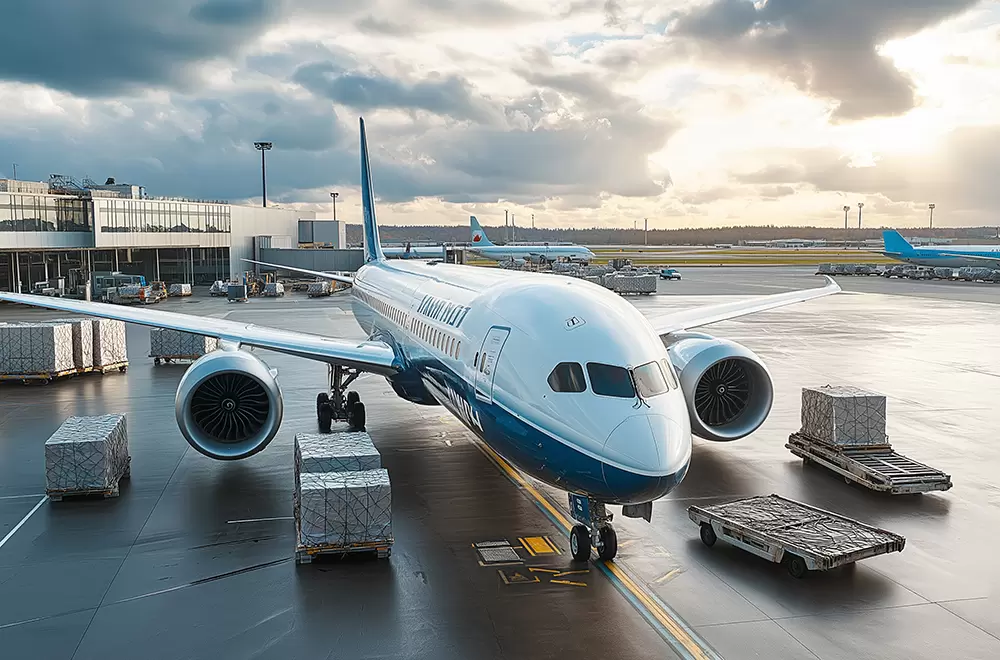
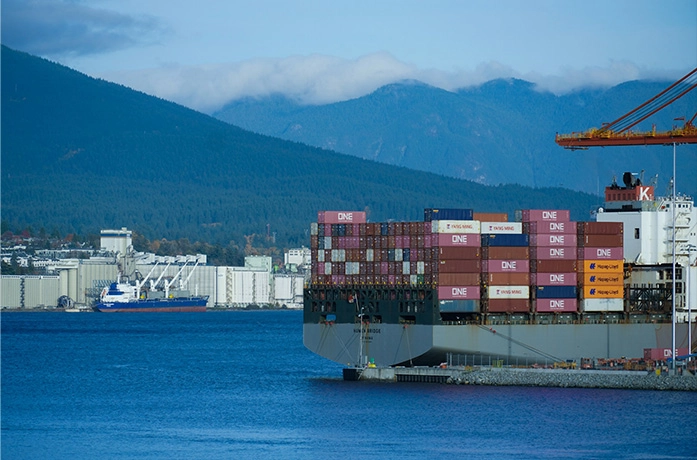
International logistics between China and the United States has become one of the most strategically important trade corridors in global commerce. In this environment, door to door ocean freight has evolved into a comprehensive logistics model that connects production sites directly with final delivery points across continents. It is no longer just a transportation method but a structured supply chain solution that integrates freight movement, customs handling, warehousing coordination, and inland distribution into one continuous process.
For importers and exporters, especially those operating at scale, the value of this service lies in its ability to reduce fragmentation across logistics stages. Instead of managing multiple service providers across ports, trucking companies, and customs brokers, businesses can consolidate operations under a single framework. This improves predictability, reduces administrative burden, and strengthens control over international cargo flow.
Door to Door Ocean Freight in China USA Trade Lane Structure
The China–USA trade route is characterized by high shipment volume, strict regulatory environments, and fluctuating port capacity. Within this context, door to door ocean freight services function as an integrated logistics bridge that connects factory dispatch in China with final delivery destinations in the United States.
This structure typically includes origin pickup, export clearance, container loading, ocean transportation, import clearance, inland trucking, and final delivery coordination. Each stage is interconnected, meaning that delays or inefficiencies at one point can affect the entire supply chain. Therefore, the effectiveness of the service depends on precise coordination rather than isolated execution.
A key advantage of this model is the reduction of operational gaps between different logistics phases. When cargo transitions seamlessly from export processing to ocean transit and then to domestic delivery, businesses gain stronger visibility and more stable lead time expectations.
Freight Structuring in Door to Door Ocean Freight Operations
A critical component of door to door ocean freight solutions is how cargo is structured before shipment. Two primary transportation formats are used depending on cargo volume and logistics requirements: Full Container Load (FCL) and Less than Container Load (LCL).
FCL is typically selected for shipments requiring dedicated container space. It reduces handling frequency, improves cargo stability, and supports more predictable transit schedules. LCL, on the other hand, consolidates multiple shipments into shared container space, allowing smaller consignments to access international shipping routes without requiring full container volume commitment.
Both structures serve distinct operational needs, but they must be strategically aligned with inventory planning, production cycles, and delivery expectations. The selection process is not purely cost-based; it is also influenced by timing sensitivity, cargo sensitivity, and supply chain design.
Comparison of Shipping Structures in Door to Door Ocean Freight
| Shipping Model | Operational Characteristics | Primary Advantage | Supply Chain Role |
|---|
| FCL | Dedicated container usage | Higher security and stability | Bulk distribution |
| LCL | Shared container consolidation | Cost flexibility | Small shipment flow |
| Hybrid planning | Mixed container allocation | Balanced efficiency | Scalable logistics |
This structured approach allows businesses to optimize logistics planning based on demand variation rather than fixed shipping assumptions.
Customs Integration in Door to Door Ocean Freight Services
Customs clearance represents one of the most sensitive stages in door to door ocean freight services for China USA import export trade. It involves regulatory compliance, documentation accuracy, tariff classification, and inspection readiness. Any inconsistency in shipment documentation can lead to delays, penalties, or cargo hold situations that disrupt the entire supply chain.
Efficient customs integration requires systematic preparation before cargo departure. This includes accurate HS code classification, commercial invoice validation, and alignment with import regulations in the destination country. When customs processes are embedded into the logistics flow rather than treated as separate steps, clearance efficiency improves significantly.
In cross-border trade environments such as China and the United States, regulatory frameworks are continuously evolving. This makes compliance not only a procedural requirement but also a strategic logistics capability that directly impacts delivery reliability.
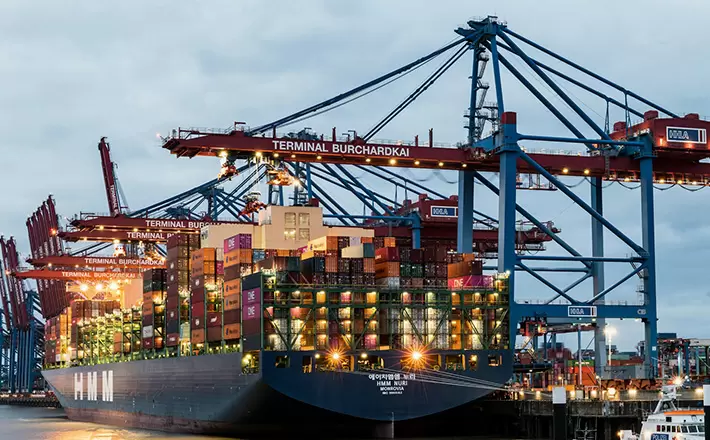
Inland Transportation and Delivery Coordination
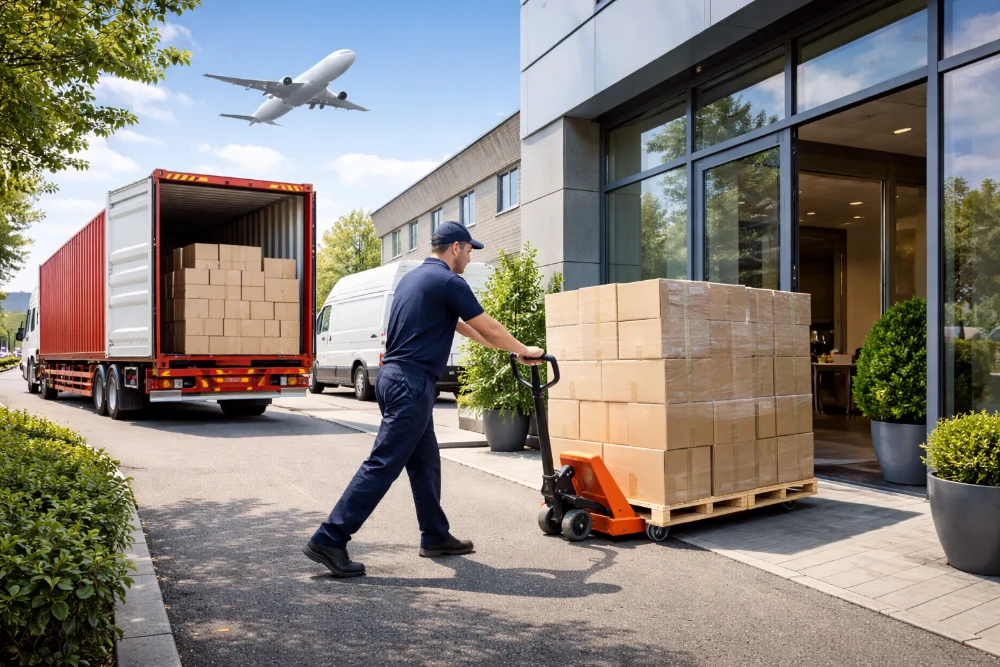
After ocean transit, cargo must be efficiently transitioned into inland logistics networks. This stage of door to door ocean freight operations includes port drayage, regional trucking, warehouse handling, and final delivery scheduling.
The efficiency of inland distribution depends on coordination between port operations and domestic transportation providers. When these systems operate independently, cargo dwell time increases, leading to higher costs and slower delivery cycles. Integrated coordination reduces idle time and ensures continuous cargo movement from port entry to destination delivery.
A structured inland logistics system typically prioritizes scheduling accuracy, route optimization, and load balancing. These factors directly influence delivery consistency and customer satisfaction across the supply chain.
Role of Warehousing in Door to Door Ocean Freight Systems
Warehousing plays a critical role in extending the functionality of door to door ocean freight services beyond transportation. It provides a controlled environment for storage, consolidation, distribution, and inventory adjustment.
In international trade operations, warehouses are not simply storage points. They act as strategic distribution hubs that support demand fluctuations, order fulfillment, and regional delivery optimization. By positioning inventory closer to end markets, businesses can reduce response time and improve supply chain flexibility.
Warehousing also supports cargo consolidation strategies, allowing multiple shipments to be combined for more efficient downstream distribution. This reduces transportation fragmentation and improves cost efficiency across the logistics network.
Risk Management in Door to Door Ocean Freight Trade
International shipping involves multiple operational risks that must be actively managed within door to door ocean freight services. These risks include port congestion, documentation discrepancies, weather disruptions, regulatory changes, and inland transportation delays.
Effective risk management requires proactive planning rather than reactive correction. This includes contingency routing, schedule buffering, documentation verification, and shipment tracking visibility. When risk control is integrated into logistics planning, supply chain stability improves significantly.
Another important aspect of risk management is cargo security during transit. Proper handling procedures, container sealing standards, and insurance coverage contribute to reducing potential losses across the shipping cycle.
Cost Structure and Efficiency Drivers in Door to Door Ocean Freight
Cost efficiency in door to door ocean freight services for China USA import export trade is determined by multiple interconnected factors rather than a single freight rate. These include container utilization, customs efficiency, inland transport distance, port handling charges, and warehousing duration.
Businesses often overlook hidden cost drivers such as detention fees, storage delays, and inefficient cargo consolidation. A well-structured logistics model addresses these inefficiencies by aligning all stages of transportation under unified planning.
Below is a simplified breakdown of cost influence factors:
| Cost Component | Impact Area | Optimization Focus |
|---|
| Ocean freight rate | Shipping line selection | Carrier negotiation |
| Customs processing | Clearance speed | Documentation accuracy |
| Inland trucking | Domestic transport | Route efficiency |
| Warehousing | Storage duration | Inventory planning |
Cost optimization is therefore not about reducing one element but improving coordination across the entire logistics chain.
Supply Chain Visibility and Operational Control
One of the most important advantages of door to door ocean freight solutions is enhanced visibility across the supply chain. Businesses can monitor cargo movement from origin to destination, allowing better planning of inventory, production schedules, and distribution strategies.
Visibility reduces uncertainty in international logistics operations. When stakeholders have access to consistent shipment information, decision-making becomes more accurate and responsive. This improves coordination between procurement teams, warehouse managers, and distribution partners.
Operational control also improves when logistics processes are unified. Instead of managing disconnected updates from multiple service providers, businesses can rely on a single structured flow of information.
Strategic Importance in China USA Import Export Trade
The China–USA trade corridor remains one of the most influential global logistics networks. Within this environment, door to door ocean freight services provide a critical foundation for maintaining trade continuity and supply chain stability.
The complexity of this trade lane requires logistics systems that can handle high shipment volumes while maintaining compliance with both export and import regulations. A fragmented logistics approach often leads to inefficiencies, while integrated systems enable smoother cargo transitions across borders.
This strategic importance continues to grow as global supply chains become more interconnected and demand for predictable international transportation increases.
Conclusion
Door to door ocean freight represents a comprehensive logistics approach that integrates transportation, customs, warehousing, and final delivery into a unified system. In the context of China–USA import and export trade, it provides a structured solution that improves efficiency, reduces operational complexity, and strengthens supply chain reliability.
By combining structured freight planning, regulatory compliance, inland coordination, and inventory management, businesses can build resilient logistics networks capable of supporting long-term international growth. The effectiveness of this model lies not in isolated processes but in the seamless integration of every stage within the global shipping chain.
FAQ
What is door to door ocean freight?
It is a logistics service that covers the entire shipping process from supplier pickup to final delivery, including ocean transport, customs clearance, and inland distribution.
How does it differ from traditional ocean freight?
Traditional ocean freight usually ends at the destination port, while door to door services include inland delivery and full logistics coordination.
Is door to door ocean freight suitable for all shipment sizes?
Yes, it supports both FCL and LCL shipments depending on cargo volume and logistics requirements.
What are the main advantages of this service?
It improves efficiency, reduces coordination complexity, enhances visibility, and provides end-to-end supply chain control.
Why is it important in China USA trade?
Because it simplifies complex cross-border logistics and ensures stable, predictable cargo movement across one of the world’s busiest trade routes.
 +86 13808855822
  E-MAIL:info@szbalance.com